





Standing out with its multinational structure that spans from Istanbul to Germany and Austria, MITTE draws attention with its balance of aesthetics and functionality in gastronomic venues. The studio, which uses natural stone not just as an aesthetic element but as a narrative tool that defines the character of the space particularly in restaurant, bar, and café projects develops a design language centered around durability, texture, and timelessness. Blending the strength of local stones with a global perspective, MITTE gives spaces not just a face but also an identity.
How does the name “Mitte” reflect you? Would you share the story behind choosing this name with us?
The word ‘Mitte’ means “center” in German, and this word reflects the essence of our design philosophy. For us, Mitte is not just a physical center; it is a shared space where ideas, emotions, and creativity converge. Our designs represent a process that originates from this center and spreads outward, drawing inspiration first from within ourselves, then from the teams we collaborate with, and ultimately from the spirit of the space itself.
When choosing this name, we were looking for a word that would define both our team structure and our approach to projects. We have a sincere, warm, and collective production process. We make decisions together and develop our designs with a collective mind. In every project, we create a sense of wholeness that radiates from that “central point”—from Mitte. The metaphor that this name gives us accurately reflects both our inner world and our outward-looking production language.
Mitte is a studio based in Istanbul, but you also have offices in Germany and Austria. How does this multinational structure give you perspective?
Having a presence in different geographical areas is not just a physical expansion for us; it is also a process of mental and cultural growth. The projects we carry out with our offices in Germany and Austria teach us to see design from a much broader perspective. Every country has its own unique material memory, cultural codes, way of life, and aesthetic understanding. We see these differences as a source of richness, and in every project, we strive first to understand them and then to transform them.
For our young and dynamic team, these international experiences are a great source of motivation to push creative boundaries and continuously evolve our design language. Bringing local materials together with global aesthetics, integrating the spirit of the geography into the design, and thus producing projects that each tell a different story is very important to us. Thanks to this multinational structure, Mitte continues to create sincere and unique spaces in every geography it is located in by blending the universal and the local.
You mention that you work in a “holistic” way with partners from different backgrounds. How do you manage this diversity in your design processes?
Mitte’s greatest strength lies in its ability to see differences as a source of richness. Working with partners and team members from different disciplines and geographies allows us to develop a multi-layered and multi-perspective approach to design rather than a single-minded one. For us, this diversity is not a potential source of conflict but rather a creative opportunity.
The most important way to manage this diversity in our design processes is to listen first. We believe that every idea has a story and every perspective has a valuable contribution to make. That’s why we structure all our projects through collective thinking and open dialogue. Making joint decisions, nurturing each other, and uniting around the same vision creates a natural harmony throughout the process.
How do you balance aesthetics and functionality when working on spaces such as restaurants, bars, and cafes?
For us, aesthetics is not just an element that appeals to the eye; it is a holistic concept that defines the spirit, feel, and connection of a space with its users. However, we are well aware that aesthetics cannot be separated from functionality, especially in constantly evolving, dynamic spaces such as restaurants, bars, and cafes. In such spaces, our priority is for the design to both meet operational needs and enhance the user experience.
The first step is to understand all the processes involved in the functioning of the space down to the smallest detail. The relationship between the kitchen and the dining area, the flow of service, the seating arrangement, acoustic balances, lighting scenarios… Each of these elements forms the cornerstones of functionality. Once we have meticulously established this infrastructure, we begin to layer on the aesthetic elements. When creating our aesthetic language, we focus on the character of the brand, the geography of the space, and the expectations of the target audience. Every detail, from material selection to color palette, furniture design to spatial flow, is shaped by this holistic approach.
(Image S4-1, 4-2)
How often and in which areas do you use natural stone in your projects? What are the advantages of this material?
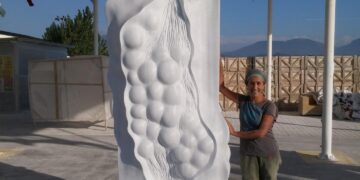
Natural stone is one of the indispensable building blocks of our projects. We prefer this material intensively, especially when working in gastronomy spaces, thanks to the advantages it offers in terms of both aesthetics and durability.
We use natural stone in many areas, from bar counters to floor coverings, table surfaces to wall panels. This material has both a functional and emotional weight; it instantly gives the space character, depth, and identity. The variety of forms, textural richness, and aging beauty of natural stone add a timeless expression to our designs.
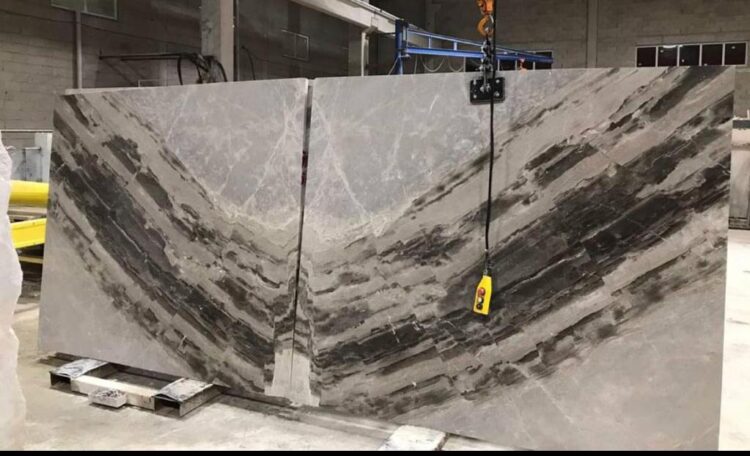
At the same time, its durable structure makes it ideal for high-traffic areas like bars, offering long-lasting and reliable solutions. Its connection to nature also fits perfectly with Mitte’s spatial narratives. Each stone’s unique vein pattern, color, and texture serves as a one-of-a-kind signature for every project.
For us, natural stone is not just a covering material; it is the physical embodiment of the design story we want to tell. That is why we see it not only as an aesthetic element, but as a fundamental component that completes the experience of the space.
How does the durability of natural stone play a role in spaces with high usage intensity, such as restaurants, bars, and cafes?
In high-traffic gastronomy spaces, material selection is not just an aesthetic decision but also a strategic choice based on performance. At this point, natural stone offers us both a long-lasting and timeless solution. Thanks to its high resistance to wear, impact, and heavy use, we can use it with confidence on bar counters, table surfaces, and floor coverings.
The fact that natural stone gains character over time rather than wearing out makes it even more valuable for such spaces. This material, which ages gracefully without losing any of its value, aligns perfectly with the nature of restaurants and bars. Additionally, maintenance requirements can be minimized with proper application techniques and surface treatments.
What criteria do you consider when selecting natural stone? (e.g., texture, color, local source, sustainability, etc.)
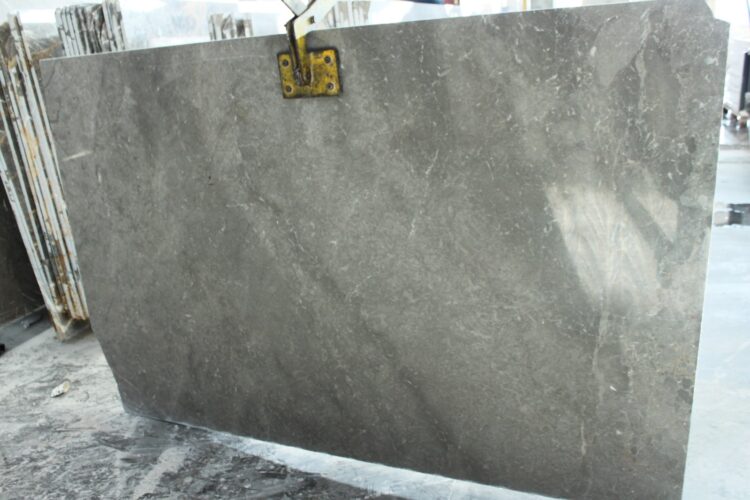
The selection of natural stone is one of the most meticulous stages of our design process. First, the texture and color scale of the stone must be consistent with the overall atmosphere of the design. We aim to create a unique feel for each space; therefore, the stone’s vein structure, surface texture, and interaction with light are crucial. In some spaces, we opt for dark-toned, intensely patterned stones for a dramatic look, while for a calmer, more natural ambiance, we use light-colored, homogeneous surfaces.
Prioritizing locally sourced stones is also a criterion we value for both logistical sustainability and reducing environmental impact. Additionally, local stones make it easier to integrate the natural language of the geography into the project.
Technical characteristics such as durability, porosity, and surface workability are also factors that influence our decision-making process.
We follow a process that combines both aesthetic and engineering data to select the most appropriate stone according to the intensity of use, climatic conditions, and maintenance requirements of the space.
Do you use local stones in your projects?
Yes, we frequently use local stones in our projects and are very satisfied with them. The use of local materials is very valuable to us, not only in terms of sustainability, but also in terms of establishing a deeper and more meaningful connection with the identity of the space. Turkey is a country with a rich variety of natural stones, and we strive to integrate this potential into our projects from both an aesthetic and technical perspective.
Local stones offer significant advantages in terms of contextual design, as they reflect the natural texture and character of the region in which they are found. At the same time, working with local producers makes the stone supply process more controlled and transparent. This gives us flexibility in terms of both timing and quality management.
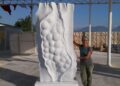
For example, travertine is one of the local natural stones we love to use. Travertine is a natural stone we frequently use in our projects due to its ease of shaping and its intense harmony with the surface it is placed on. Due to its material structure, it is suitable for processing, and we can make the surfaces more varied and artistic by applying artistic painting work on it, as in our Vava project. This highlights the impact of natural stone on versatile design.
(Image S8-1, 8-2)
When working with natural stone, what combinations do you prefer to use with other materials? For example, wood, metal, or fabric…
Natural stone is a material with a strong and dominant character, so the relationship between it and other materials requires a very delicate balance. When establishing this balance, we prefer to counteract the natural hardness and solemn expression of stone with warmer, softer materials. Wood, in particular, is one of the materials that interacts most effectively with natural stone. It adds both tactile and visual warmth to the space and balances the hardness of the stone.
We use metal details to modernize the natural elegance of stone and give it a contemporary frame. Metal surfaces such as brass, black steel, or stainless steel create a strong visual impact by contrasting with the veined structure of stone.
Fabric is an important companion for making the user experience more human and adding softness and comfort to the space. We take care to create a sense of unity with rich and natural-looking fabrics that complement the texture of the stone, especially in flooring details or on surfaces that require acoustic balance.
(Image S9-1, 9-2)
What advice would you give to those who are just starting out on their design journey or those who want to specialize in this field?
First and foremost, we recommend that they keep their curiosity alive. Architectural and interior design is not only about aesthetics; it is a multidimensional relationship with people, materials, time, and space. Therefore, it is very valuable to learn to observe, listen, and understand life itself, not just in a visual sense.
Another important piece of advice is not to be afraid of experience. Every project, every idea, every failure leaves a mark that will inevitably lead to the next step. The design journey is not an effort to reach a “single truth,” but a constantly evolving learning process. In this process, it is very valuable to come into contact with different disciplines, experience the power of teamwork, and be open to different perspectives.
We also recommend that they get in direct contact with materials, observe production processes on site, and make sure to follow how what they draw comes to life in the field. Seeing how a design on paper lives in the real world is the strongest teacher for a designer.
And finally, never forget that every design tells a story. The uniqueness and meaning of this story depend entirely on the designer’s passion, effort, and sensitivity.




 +90 532 585 51 95
 +90 532 585 51 95