


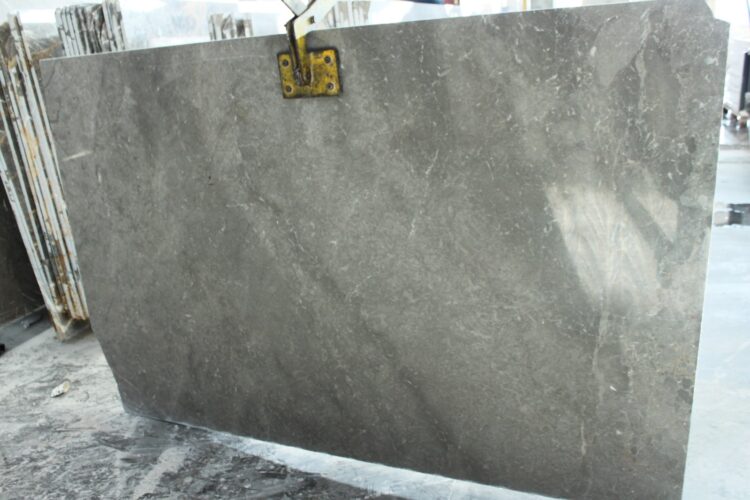


Prof. Dr. Nevnihal Erdoğan, who has left a significant mark on architecture education and academic studies in Turkey, highlights the aesthetic and cultural value of natural stone in architecture. With her long-standing academic expertise and experiences both domestically and internationally, Erdoğan emphasizes that natural stone is not merely a building material but also a cultural and artistic element. In our interview with her, we discussed the historical journey of natural stone in facade cladding, current technical criteria, prominent applications, and architecture students’ perspective on this material.
Could you briefly tell us about yourself and your professional background?
After completing my undergraduate and graduate education in architecture at ITU Faculty of Architecture, I received my PhD from the same university in 1992. From 1992 to 2006, I served as a faculty member at the Department of Architecture at Trakya University. From 1997 to 1998, I worked as a visiting faculty member at the Department of Interior Architecture at King Faisal University in Dammam. After being promoted to professor at the Faculty of Architecture at Trakya University in 2003, I began serving as a professor in the Building Science Department of the Architecture Department at the Faculty of Architecture and Design at Kocaeli University in 2006. From 2013 to 2016, I served as Dean of the Faculty of Architecture and Design and Head of the Department of Architecture at Kocaeli University.
In 1989, I studied as a doctoral student at the Centre for Development Planning Studies (CDPS) at the University of Sheffield in the UK. In 2001, I worked as a visiting professor at the Department of Urban and Regional Planning, School of Social Ecology, University of California, USA. During the 2001-2002 academic year, I taught a graduate course at the Gebze Institute of Advanced Technology. In 2007, I was a Visiting Scholar at the University of Wisconsin-Milwaukee School of Architecture and Urban Planning. From 2011 to 2012, I worked as a research fellow at Harvard University, Department of History of Art-AKPIA.
- What is the historical process of natural stone in facade cladding? What kind of heritage does Turkey have in this regard?
Natural stone has always been a material of interest to architects throughout history. However, until recently, it was not possible to prioritize the use of natural stone as a facade cladding in architectural practices and education in our country. As a result of the development, diversification, and, so to speak, enrichment of the construction sector in Turkey, this valuable material has begun to come to the fore. Frankly, as a design teacher with 40 years of experience, I did not have the luxury of directing my students toward this field during the first ten years of my professional life. However, in 2014, when I met Ms. Gülçin İpek, the then-director of the influential architecture organization Yapı Endüstri Merkezi, while working on an art and literature-focused project, my approach and inclinations toward these issues began to change. As you all know, Ms. Gülçin İpek was a highly knowledgeable manager in the field of materials. After some time, our communication began when she was appointed as an editor in the culture, art, and publishing department at STONLİNE. Ms. Gülçin demonstrated to us that stone is not merely stone, but an expression of quality and aesthetics as an element of culture, art, and vitality. Inspired by this approach, I quickly introduced my graduate students to this field from a theoretical perspective. We have published quite a few articles in this field [1].
- What are the technical criteria to consider when using natural stone in facade cladding today?
To be honest, we are not involved in the application side of things. We are more on the design and theory side. However, as you can appreciate, it is necessary to closely follow, examine, and monitor applications in order to achieve a sound design. Together with my students, we carefully examined some projects where natural stone was used. Based on this, our assessments are as follows: Technological developments and the discovery of new construction materials and methods have led to changes in the use of natural stone in today’s buildings. When compared to historical structures, natural stones are applied with different details today. It is observed that developments in construction materials and methods initially pushed the use of natural stones into the background. However, the recent interest in natural, eco-friendly, durable, and sustainable materials has facilitated the return of natural stones and marble to the construction and building industry. Unlike in the past, criteria such as color, texture, pattern, shape, size, physical and chemical properties, different application details, economic and aesthetic conditions are now prominent in natural stones used in today’s structures.
- Have any natural stone facade applications caught your attention in Turkey or around the world recently?
The thesis I prepared with Y. Architect Göksu Yıldırım as part of the master’s theses I conducted with my students provides a comprehensive overview of this field. Project selection was carried out for the thesis. For this purpose, architectural designs featuring natural stones were identified through online or printed architecture journals, taking into consideration the opinions of natural stone suppliers and architects in the sector. At this stage, 20 different architectural projects were selected and analyzed. The selected projects were limited according to the following criteria:
For the 20 different sample projects limited according to the specified criteria; Ds Mimarlık Restorasyon Peyzaj Mimarlığı San. Tic. Ltd. Şti.; Medipol University Kavacık Campus Entrance Square, Four Seasons Hotel Courtyard, Ulus Savoy Residences Landscape Project, Kemerlife XXI Landscape Project, Vicem Bodrum Yalıları and Karahan House Landscape Project, We’re Architecture Consulting Co., Ltd., Galata Apartment, GIG Office, NTA House, NTT Architecture Co., Ltd., Latus Park Residences, 9016 Architecture Construction Co., Ltd., Fatma Ana Cemevi and Cultural Center, BD House and Has-Kısakürek House by Paker Architecture Construction Trade Ltd. Co., Argülweave by BINAA/ Burak Pekoğlu Architecture, Zonguldak Caves Visitor Center by Yalın Architecture Construction Contracting Trade Co., Slash Architecture and Design Inc. and Arkizon Architecture Engineering Co., Ltd. for 38° 30° Farm, Rhizome Architecture Construction Industry Inc. and Toner Architecture Construction Trade Inc. for No. 45, SARD Studio for Danişment House, Folkart Blu Hotel and Residential Complex by DILEKCI Architects, Barbaros House by Onurcan Çakır and Önderler Construction Industry Trade Inc.,
Binnaz Hatun Mosque by ARCHIST Architecture and Consulting Construction Trade Ltd. Co.
- What is the perception of natural stone material among architecture students and young designers? Is there sufficient education on this subject?
There is great interest, admiration, and curiosity about natural stone among architecture students, architects, and even new users. However, there is neither sufficient education nor sufficient publication or promotion on this subject. We are striving to fill this gap. STONLİNE is also engaged in very serious work in this area. The publishing activities under the direction of Ms. Gülçin İpek are producing highly prestigious books. However, these books should be made accessible to a wider audience and the general public. Many activities, events, publications, and projects could be organized to highlight the aesthetic dimension of architecture and spark interest in structures that will free us from concrete jungles. We would very much like to share our comprehensive views on this subject with organizations working in this field.
- How do you evaluate natural stone-based structures from an architectural perspective? What are your thoughts on the shortcomings and problems seen in material selection and natural stone applications?
Our country is rich in underground natural stone resources and has a wide variety of natural stone types. Local stones extracted from different regions have been used as the primary structural material in buildings for centuries. Historical structures utilizing natural stone, one of the oldest building materials, can be found throughout our country. In the Master’s thesis we prepared in collaboration with Architect Göksu Yıldırım, we thoroughly documented our evaluations and the issues we observed in this area. If desired, this thesis can be obtained for a detailed analysis.
- In your opinion, what role will natural stone play in the future of architecture?
The future of natural stone is directly related to the future of our country and, in particular, its cultural development. As our country develops economically, socially, and culturally, our perception of aesthetics, architecture, and art will also change. Therefore, in order to escape from concrete jungles and achieve a more aesthetic environment, we must enrich ourselves as a nation, develop, and pass certain cultural stages. This is essentially the main concern of myself and my closest colleagues. In this sense, the books we have prepared together with the esteemed author HİKMET TEMEL AKARSU, namely ARCHITECTURE IN LITERATURE, ARCHITECTURE IN CINEMA, ARCHITECTURE IN CONTEMPORARY LITERATURE, and ARCHITECTURE IN PHILOSOPHY, are related to these concerns. In these works, we argue that architecture is not merely concrete, cement, and iron, and that we cannot build happy and prosperous cities and their surroundings without achieving a high aesthetic sensibility. This discourse has turned into a wave with the participation of hundreds of academics, and today, transformations in the perception of architecture have begun to take shape in our country. I believe that our most important common ground with STONLİNE is this: the desire to develop our cultural and aesthetic values as soon as possible in order to bid farewell to mediocrity.
When this progress is achieved in society, natural stone will have a much more meaningful and valuable place in our architecture.
[1] 1.Göksu Yıldırım, AN EXAMINATION OF THE USE OF NATURAL STONE AND MARBLE IN CONTEMPORARY ARCHITECTURAL DESIGNS. Master’s Thesis, Kocaeli University Institute of Science, 2023 (Advisor: Prof. Dr. Nevnihal Erdoğan)
2.The Use of Natural Stone and Marble in Contemporary Architecture: An Examination of Bursa Argül Weave,7th International Congress on Architecture Design, April 29-30, 2022, Istanbul, Turkey. (Yıldırım, G.,Erdoğan, N.,)[link:20220607100934760_c11fcb57-be88-4173-aadc-3f3015aa178c.pdf]
- “Natural Stone Facades” and Their Current Applications, idealkent, Issue 39, Volume 15, Year 2023-1, 227-234, Book Review(Yıldırım, G., Erdoğan, N.,) [LINK:Microsoft Word – 08.Göksu Yıldırım-Nevnihal_Erdoğan.docx]
4.Mustafa Enez Gülmez, Nevnihal Erdoğan, The Evaluation of Natural Stone and Marble in Contemporary Architecture, 9th International Congress on Architecture and Design, November 25-26, 2023, Istanbul/Turkey [LINK:9th International Congress on Architecture and Design − Congress Expert]
- Yıldırım, G., & Erdoğan, N. (2024). An analysis of the use of natural stone and marble in contemporary architectural designs. DEPARCH Journal of Design Planning and Aesthetics Research, 3 (2), 241-263 [https://dergipark.org.tr/en/download/article-file/3956966]


[1]1.Göksu Yıldırım, ÇAĞDAŞ MİMARİ TASARIMLARDA DOĞAL TAŞ VE MERMER KULLANIMININ İNCELENMESİ.Y.Lisans Tezi, Kocaeli Üniversitesi Fen Bilimleri Enstitüsü,2023( Danışman:Prof.dr. Nevnihal Erdoğan)
2.Doğal taş ve mermerin Günümüz Mimarlıkta Kullanımı: Bursa Argül Weave Üzerinden İncelenmesi, 7th Intenational congress on Architecture Design,29-30 April 2022 Istanbul/Türkiye. (Yıldırım, G.,Erdoğan, N.,)[link: 20220607100934760_c11fcb57-be88-4173-aadc-3f3015aa178c.pdf]
- “Doğal Taş Cepheler” ve Günümüzdeki Uygulamaları “Natural Stone Facades” And Practice Methods”, idealkent, Sayı Issue 39, Cilt Volume 15, Yıl Year 2023-1, 227-234, Kitap İncelemesi / Book Review (Yıldırım, G., Erdoğan, N.,) [LİNK: Microsoft Word – 08.Göksu Yıldırım-Nevnihal_Erdoğan.docx]
4.Mustafa Enez Gülmez, Nevnihal Erdoğan, Doğal Taş ve Mermerin Tarihi Binalarda Kullanımının Günümüz Mimarisinde Değerlendirilmesi 9th International Congress on Architecture and Design, 25-26 November 2023, İstanbul/Turkey [LİNK:9. Uluslararası Mimarlık ve Tasarım Kongresi − Kongre Uzmanı]
- Yıldırım, G., & Erdoğan, N. (2024). An analysis of the use of natural stone and marble in contemporary architectural designs. DEPARCH Journal of Design Planning and Aesthetics Research, 3 (2), 241-263 [https://dergipark.org.tr/en/download/article-file/3956966]



 +90 532 585 51 95
 +90 532 585 51 95