



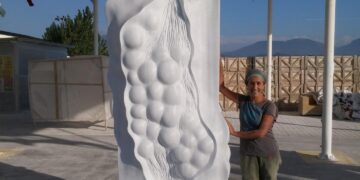



Architect Ilgın Sıla Ayhan positions natural stone in her designs not just as a tool, but as a partner that expresses the soul of a space. From the elegance of marble to the strength of basalt, she crafts contextual and original narratives through the language of materials. We spoke with her about the role of natural stone in architecture, her passion for sustainability, and her unforgettable projects.
How did you get into architecture? What influenced your decision to pursue this career?
I was drawn to design by the relationship between space and its users, and the way it responds to the physical environment. Early on in my academic career, I realized that design is not just about form, but also a layered way of thinking that is connected to context. The effort to strike a balance between aesthetics, functionality, and environmental interaction has permanently bound me to this field.
If you had to describe your approach to design in three words, what would they be?
Passionate, contextual, and original.
When did you first work with natural stone, and what attracted you to this material?
From the very beginning of my work with natural stone, I was struck by its aesthetic and structural properties. In my landscape designs, I prefer to use materials such as basalt, granite cubes, slate, and travertine, which are unique to the region, to ensure that my designs are in harmony with the environmental context and sustainable. This approach allows me to preserve the local character and create a conscious and functional language in my choice of materials.
How do you position natural stone in your architectural designs?
I position natural stone as one of the cornerstones of my design process. I use it in landscape and interior projects in particular, combining aesthetics and functionality. The texture, history, and physical presence of stone strengthen the contextual language of spaces and enrich their interaction with users.
What types of natural stone do you prefer to use in your designs? (Marble, travertine, basalt, etc.)
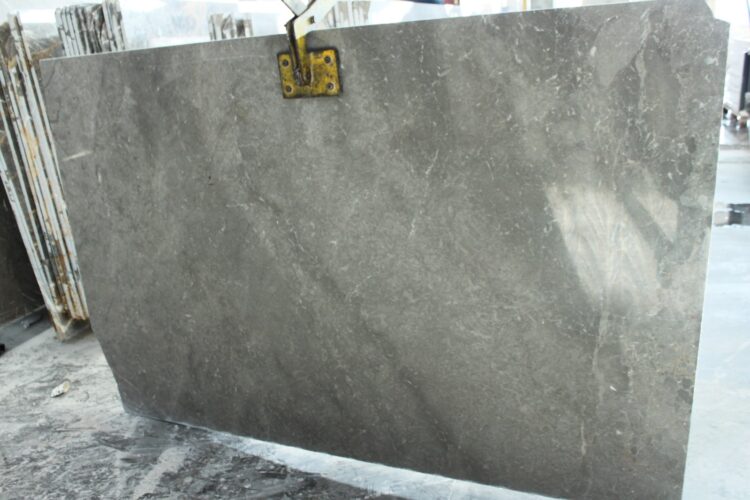
In landscape projects, I primarily use natural stones from the region, such as basalt, granite cubes, slate, and travertine. In interior and bar designs, I particularly benefit from marble due to its natural veins and historical depth.
What do you consider when selecting stone? (Aesthetics, durability, local material, sustainability, etc.)
In stone selection, I first prioritize aesthetic and contextual suitability. Durability and sustainability criteria are also critical. The use of local materials supports both environmental and cultural sustainability, adding uniqueness to the project.
Do you use stone not only on facades or interiors but also in furniture or detail solutions?
Yes, I also work with stone on a furniture scale. Especially in social areas, such as bars and large tables, stone is used both as a surface material and as a spatial accent element. In my landscape designs, I use the region’s natural stones in details such as transition areas and walkways to create spatial continuity and naturalness.
Can you tell us about a special project where you used natural stone? What was the role of the stone in that project?
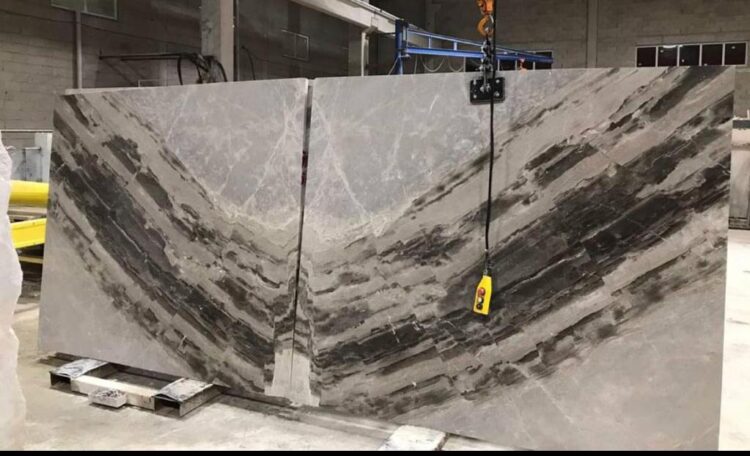
In a restaurant design that has special meaning for my career, I designed the bar area using dark-veined marble, distressed rose metal, and antique sculptures. The marble added elegance and historical depth to the space, while the natural veins and shiny surface of the material made it the focal point of the space. This project was important to me because it demonstrated why natural stone is preferred in bar designs.
What advice would you give to young architects working with natural stone?
I would advise them to understand the aesthetic and structural potential of natural stone. Discovering the historical and cultural context of the material will add depth to their designs. Additionally, using local stones to promote environmental sustainability offers a significant advantage both professionally and in terms of design.




 +90 532 585 51 95
 +90 532 585 51 95