


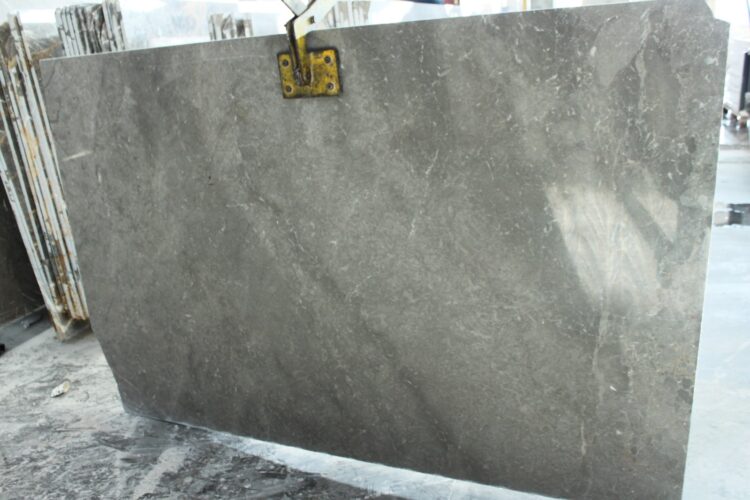


Fluctuations in the global economy, rising energy costs, and increasingly complex regulations… The Turkish marble sector is perhaps facing one of the most multidimensional challenges in its history. In this ancient industry, where once it was enough simply to be strong in the field, professionalization in every area, from financial discipline to brand management, from sustainability to human resources, is no longer a choice but a necessity. Ahu Çelik, Chairwoman of the Board of Mısra Marble, discusses the multilayered challenges currently confronting the sector, the strategic decisions taken during this process, and the path they are following toward sustainable growth. According to Çelik, marble is no longer merely a material; when managed correctly, it becomes a story that generates trust, brand value, and meaning.
We see that the marble sector has become significantly more challenging in recent years. What do you think are the main reasons behind this process?
Today, the marble sector is affected not only by economic fluctuations but simultaneously by increasing regulations, rising energy costs, labor supply challenges, and global competition. In the past, managing a single risk might have been sufficient; today, a multidimensional crisis management approach is required. Naturally, this situation has made the sector more fragile, but at the same time it has pushed it toward becoming more professional.
Compared to the past, in what ways does operating in the marble sector today require greater effort?
Being strong in the field alone is no longer enough. Financial discipline, sustainability, marketing, brand management, and human resources management must all be handled simultaneously. Marble is no longer just stone; it is a value proposition, a narrative, and a symbol of trust.
How are rising costs, energy prices, and labor conditions affecting your production processes?
Cost pressures have pushed us to work more efficiently, more strategically, and with greater control. As Mısra Marble, we have completely abandoned unplanned production. Every block, every cut, and every shipment is now part of a strategic decision. Although this discipline may be challenging in the short term, it guarantees sustainability in the long run.
Has it become more difficult to maintain the balance between field operations and management during this period? What kind of approach are you following?
It has definitely become more difficult, but I believe that managing without losing touch with the field is the most effective model. We make decisions at the table and test them in the field. It is very clear that no strategy that does not align with field realities can be sustainable.
As Mısra Marble, what strategies are you implementing to withstand these challenging conditions?
Focus and specialization. Instead of trying to do everything, we deepen our expertise in our own stone, our own quarry, and our own quality standards. At the same time, we invest in brand value. Because today the real goal is not merely to survive, but to be the preferred choice tomorrow.
What are the main challenges that teams working in the marble sector face today?
Uncertainty and physical hardship. Working in the field has always been demanding, but today concerns about the future have been added to this reality. Therefore, we prioritize providing our teams with transparency, trust, and a sense of continuity.
As chairwoman of the board, what was the most difficult decision you had to make during this process?
Giving up speed. We could have grown faster, but in order not to lose control, we deliberately chose to slow down. It was difficult in the short term, but in the long term it was the right decision.
How have contractions or changes in export markets affected you?
As markets shrink, quality and trust become even more important. Instead of competing purely on price, we focus on sustainable partnerships. We prefer to move forward with fewer but stronger clients.
In your opinion, what is the most critical factor for surviving in the marble sector today?
Resilience and vision. Companies that can read not only today but also the conditions two years ahead will remain standing. It is not reckless courage but strategic courage that leads to success.
How do you evaluate the perspective of young people and new entrepreneurs toward this sector?
Young people approach the sector with greater vision but also greater impatience. In this industry, patience, hard work, and continuity are essential. With proper mentorship, I believe young professionals can bring significant value to the sector.
Despite all these challenges, what keeps you motivated and committed to this industry?
Seeing the labor hidden within the stone. Transforming a rock into value, becoming part of a building, and leaving a lasting trace behind… This sector has given me not just a profession but an identity.



 +90 532 585 51 95
 +90 532 585 51 95