





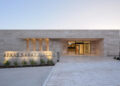
Located in the historic Liwa Oasis west of Abu Dhabi, Liwa Farm Village is a sustainability and community project rooted in the desert’s identity, designed by architect Inca Hernandez and her team. Situated near the Saudi Arabian border, on the edge of the Rub’ al Khali Desert, this project reinterprets the local identity of the UAE’s western region as a living space shaped by both nature and cultural heritage. Inspired by ancestral windbreaks, forts, and traditional irrigation channels called aflaj, the design forges a powerful link between past and future through contemporary sustainable strategies. The project includes a series of structures set within a working date plantation. These structures include cultural exhibition spaces, a veterinary center, a community farm, a Majlis meeting area, a farm-to-table restaurant, a spa, and guest bungalows. Each of these structures, built with natural materials compatible with the desert environment, reduces environmental impact while supporting local lifestyles.
In the architectural approach, rammed earth walls form the core character of the project. Soil mixed with desert sand is reinforced with concrete and compacted in molds to a thickness of 35 cm, resulting in durable walls with high thermal mass. This technique both respects traditional knowledge and meets contemporary durability standards. Most of the buildings are constructed on elevated platforms to provide protection from the intense desert heat and prevent wind erosion. The clay latticework used on the exterior facades filters light and supports natural ventilation; it also reinterprets the traditional aesthetics of the Liwa region in a contemporary language.
The main structure, located at the center of the complex, blends into the desert landscape with its organic form. Surrounded by reflective pools, this structure is inspired by traditional water channels – the qanat system. Inside, ceilings made of palm trees create a peaceful atmosphere for contemplation and community gatherings. The two nearby structures are arranged as a local cuisine restaurant serving products from the farm and a spa inspired by the “Sahn” structure. These areas are surrounded by gardens planted with lavender and lemon balm, as well as greenhouses and aquaculture areas supported by a reused groundwater system.
The palm trunk and fiber systems used in the project demonstrate how local craftsmanship can be sustained through modern applications. Domes woven from palm fibers and handmade clay lattices serve as both aesthetic and functional climate control elements. Furniture produced by local artisans in the interior spaces combines with contemporary designs to give the space a timeless character. Lime-based coatings provide thermal comfort while protecting surfaces from sunlight, extending the life of the structures.
Liwa Farm Village is not just an architectural project; it is an experiential space that brings together the heritage of the Al Gharbia region, social solidarity, and sustainable living. This settlement, which proposes a new way of life by conserving natural resources, embodies the idea of “carrying the bounty of the land into the future.” As Inca Hernandez puts it, this project symbolizes an architectural approach that revives traditions, drawing strength from the past and looking toward the future.



 +90 532 585 51 95
 +90 532 585 51 95