


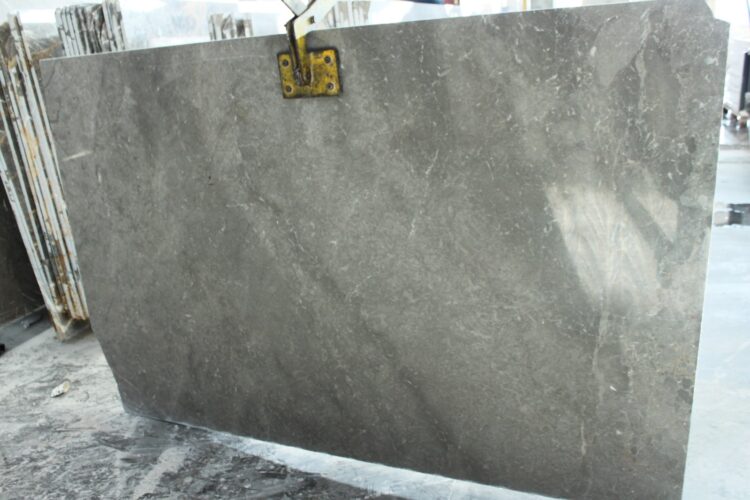


Embracing simplicity as a design ethos, Jen Alkema is known for his meticulous attention to materials and details, and stands out for his bold relationship with natural stone. Particularly in his interior projects, Alkema places stone at the very center of both functionality and aesthetics, skillfully redefining this heavy and challenging material from sliding doors to bathtub designs. For him, stone is not merely a building element; it is an architectural medium of expression that evolves over time and pushes boundaries.
How did your journey into architecture begin? Has coming from a family of builders influenced your architectural approach?
Not my minimalistic aprroach in architurture perse, which had to be developed later on in life, but the practice of my father being a carpenter and later on a contractor had a great influence on my interest in contruction, building in general. For example, assiting on many of his building projects during the school holidays, from a early age on.
What did being a finalist in the Prix de Rome mean to you? How did that period shape your professional direction?
That was a very special and exeptional time period, right after my graduation at the Academy of Architecture in Amsterdam. To be selected out of a pool of aprroximitely 500 architecture students at the time, as well as the public attention, was highly motivating and created foremost the instant possibilty to start my own office without any concrete project, at the time. Within the first year many projects followed.
You describe minimalism not as a style but as an attitude. If you were to define this attitude, how would you explain it?
The main objective is not to create a certain image or subjective perfect object perse. I believe in the power of the design process itself. This leaves the possibility open for the unexpected, that what we do not control, but simply manifests by itself over time, by it’s inner logic or DNA, so to speak. A continiously process of meticuliously shaping and refining.
Your designs are described as possessing a kind of “chaste” simplicity. How do simplicity and luxury come together in your work?
It’s simplicity is primirarily found in a clear concept, inner logic and sepcific characteristics of each project in itself. Luxury in material and detail is strongly dependent on the client and budget.
Concepts like light and structure play a major role in your designs. What do you pay attention to when working with these elements?
The more covert elements like daylicht, artificial lighting and structure fro example, play a key role in all of my designs, and are characterized by a sublte, fully integrated part of the whole.
What is your approach in using natural stone in your projects?
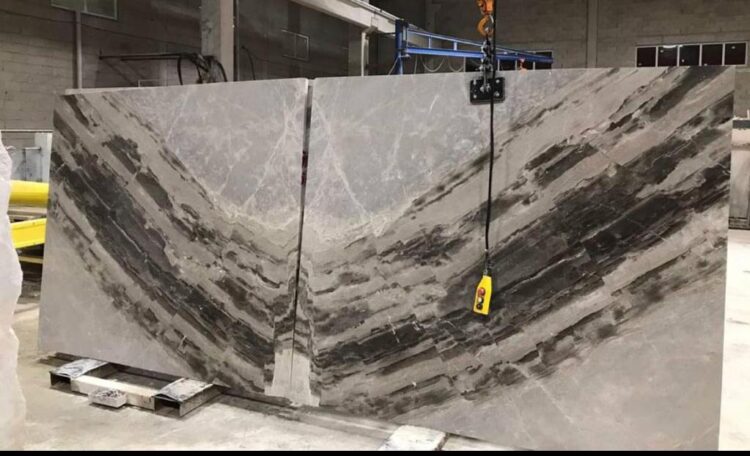
Stone in general plays a major part in many of my projects, especially in my interior projects. The main challenge was to integrate stone, as a exteremely heavy material, in ways witch were not common, especially 30 years ago, when I first started on my own projects. E.g. to design and construct cabinets, fully constructed out of stone with synchronically operating sliding doors and/or sinks and baths with hidden taps and drains, takes a lot of risks, know how and determination, from all parties involved.
In your view, what is the most powerful architectural quality of natural stone its texture, durability, or natural origin?
It’s duration and diversity espcially. The endless possibilties of it’s texture natural and/or mechanically redefined.
Do you have a specific type of stone you prefer to work with? If so, why that particular one?
My personal preference are the more lighter stones like Limestone, Moleanos especially.
What do you think is the biggest challenge in architecture today?
To carefully create a respectful and coherent architecture, fully embedded and integrated in our excisting urban fabric and architectural history.
What advice would you give to young architects and students?
To fully study ancient civilazations, and to visit many other contries and cultures especially.


 +90 532 585 51 95
 +90 532 585 51 95