


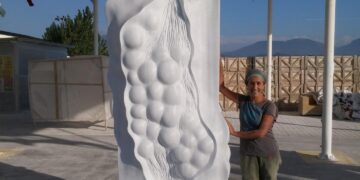



After completing her industrial design education, Gülşah Kamacı pursued a master’s degree in interior architecture, drawing attention with her design philosophy that centers on thinking through materials. As the daughter of a cartoonist, her creative questioning practice began in childhood, shaping her ability to approach design with both a critical and poetic eye. Her profound connection with natural stone and marble, in particular, invites us as a young designer to reconsider the material’s aesthetic and cultural dimensions. With her “Saturn” project, which merges cosmic references with nature, we spoke with Kamacı about her design journey, the sensitivity behind her material choices, and her message to young designers.
Who is Gülşah Kamacı? How did your design journey begin?
I am a designer who completed my bachelor’s degree in industrial design and is currently pursuing a master’s degree in interior architecture. I love designing, researching, and coming up with new ideas. As the daughter of a cartoonist, my relationship with art and design began at a very young age. . My father and I would constantly question things, identify problems, and come up with alternative solutions. These creative practices eventually evolved into something much more than a hobby; they became a process that directly influenced my way of thinking, my perspective, and my career choice. Today, this productive and critical perspective, which was established during those years, forms the basis of my design approach.
How was the transition from industrial design to interior architecture?
Initially, I wanted to specialize in my field, industrial design. However, over time, I realized that product-focused thinking created certain limitations in the design process. in the design process. I decided to pursue a master’s degree in interior architecture to be able to address the relationship between space, users, and objects in a more comprehensive framework. This transition allowed me to experience how interdisciplinary work can bring different perspectives to the design process. Interior architecture gave me a deeper understanding of a deeper understanding of spatial perception, material-space interaction, and scale transitions. Today, the balance I strive to achieve between these two disciplines allows me to develop a more flexible, richer, and more holistic approach in both conceptual and applied projects. approach in both conceptual and practical projects.
How did you first encounter natural stone and marble? What attracted you to this material?
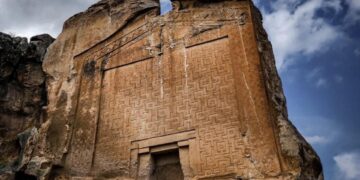
My first encounter with natural stone was during my undergraduate studies, when I developed a lighting project inspired by Göbekli Tepe. This lighting design was one of the first examples of the approach I developed in terms of sustainability, cultural context, and material transformation. After this process, I participated in various competitions on the theme of natural stone and marble, which further strengthened my connection with the material. In particular, the fact that marble takes on different identities in different geographies , its natural patterns, and color transitions, which tell a different story each time, are among the elements that have influenced me the most.
How did working with marble influence you as a young designer?
Working with marble for the first time brought a new awareness to my design approach. Designing marble in a way that is true to its nature requires thinking alongside it rather than pushing its boundaries. This approach creates a transformation that is effective not only in form but throughout the entire design process. its limits, but rather to think with it. This approach creates a transformation that is effective not only in form but throughout the entire design process. Concepts such as repetition, modularity, and speed, which come from industrial design education, have been replaced by values such as originality, timelessness, and sensitivity . Seeing marble not just as a material, but as an entity shaped by history, nature, and human labor, has given me a more holistic view of design. The natural texture of stone that has formed over the years, the veins, color transitions, and every detail on its surface have become design inputs for me. This experience has enabled me to establish a more sensitive and responsible relationship with the material.
The “Saturn” project is a very interesting idea. Can you tell us about the starting point for this project?
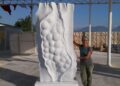
The “Saturn” project project was born from the desire to merge the sense of scale and depth of the cosmos with the timeless structure of natural stone. My curiosity about the sky and planets, combined with my aesthetic interest in the cyclical forms found in nature, inspired this project. A form that carries orbital movement, like the rings of the Saturn planet, offers both a dynamic and balanced visual appeal. By combining this effect with the weight and texture of natural marble, I aimed to create a balance that is both conceptual and physical. The project is not merely a piece of furniture; it is designed to serve as a focal point in a space, even a narrative element. Its reference to the cosmic order aiming to create a more poetic connection between the user and the object. The natural veins of the marble also provided a visual depth reminiscent of Saturn’s atmospheric layers. This layering strengthened the formal and semantic integrity of the project.
How did the idea of combining cosmic aesthetics with natural stone come about?
At the heart of this project was the idea of integrating the macro and micro dimensions of the universe. Both had been shaped without human intervention, within their own cycles. This shared naturalness conceptually guided the project. Connecting the geological and the infinity of cosmic formations was decisive for me both in terms of design language and conceptual depth. In this way, I began to produce not just an object, but a narrative. .
Can you provide information about the type of marble you used in the project, its form, and how it was used?
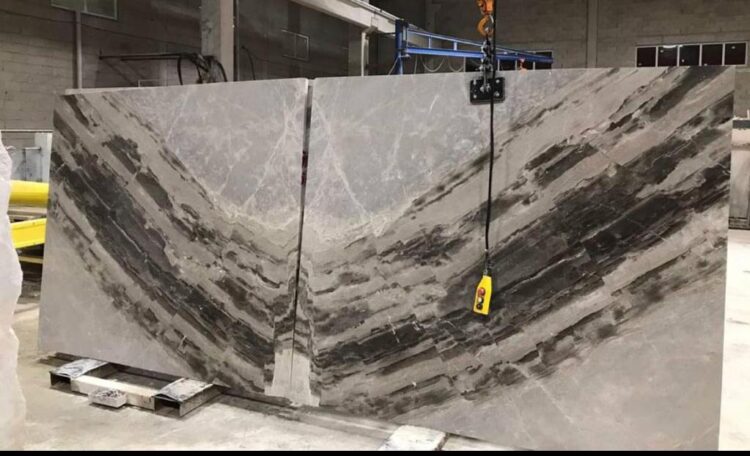
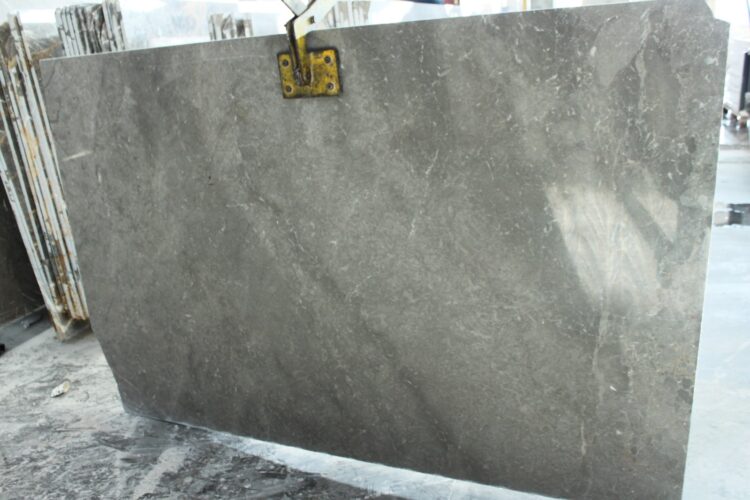
For the “Saturn” project, I used Onyx, a local natural stone with a multicolored vein structure. . My primary motivation for selecting this marble was its visual depth combined with its light transmittance. I realized that I could reflect the layered feel of Saturn’s rings through the natural patterns of Onyx into the space. Thus, both the physical character of the material and its metaphorical value were integrated into the design. In terms of form, I opted for circular and ring-shaped geometries; this choice was not only a reference to the planet’s form but also aimed to create a structural language that gathers energy at the center. The surfaces where the marble meets natural light have become one of the fundamental elements defining the project’s atmosphere. . During the design process, I took care to work with the stone in a way that pushed its limits both structurally and aesthetically, while remaining true to its nature. I would like to express my special thanks to the project sponsor, Basaranlar Marble general manager Mehmet SERTER, and project manager Ha san KURT, the project manager. Their trust in the design and the attention they paid to the production process played a crucial role in bringing this project to life in a high-quality manner.
Is the marble sector sufficiently open to young designers?
Due to its traditional structure, the marble sector is still largely production-focused and technical perspective. This situation can limit the areas where young designers can showcase their creative potential. However, in recent years, changing demands in the sector, increased interest in custom productions and boutique projects have begun to create a shift in this dynamic. Now, it is not only mass production that is in demand, but also works with a story, conceptual strength, and aesthetic value at the forefront. At this point, it is not only about producing aesthetically pleasing works ; it is also important to understand the identity of the material and propose new experiences with it. In the relationships I have established with the industry, I observe that such approaches are gaining attention and being valued. Nevertheless, to accelerate the sectoral transformation further, I believe that supporting young designers and fostering their participation in production processes is crucial. , I observe that such approaches are gaining attention and value. Nevertheless, I believe that in order for the sectoral transformation to accelerate further, young designers must be supported, more integrated into production processes, and creative ideas must be seen as opportunities rather than risks. .
How do you think natural stone, a traditional material, can be transformed by young designers?
Natural stone is a material that has been used throughout history in architecture and art, and it carries a lot of meaning and aesthetic value. For young designers, this is actually a big advantage because the material already has a strong narrative. What is important is to be able to reinterpret this narrative in line with today’s needs, technologies, and conceptual pursuits. This transformation should not only be formal; it should also be shaped by concepts such as story-based thinking, intuitive relationship with materials, reuse, and sustainability. In order for young designers to achieve this transformation, they need to not only be creative, but also have a good understanding of production processes, workshops, craftsmen, and technological infrastructure. , they must not only be creative but also have a command of production processes, workshops, craftsmen, and technological infrastructure. To transform the traditional, one must first understand it and then respect it.
You are continuing your master’s degree in interior architecture. Do you plan to continue working with natural stone in the future?
Yes, definitely. The aesthetic, physical, and cultural richness offered by the material aesthetic, physical, and cultural richness it offers, especially in terms of high-quality, long-lasting, and identity-defining space designs. The work I did during my master’s degree in interior architecture allowed me to evaluate this potential from a broader perspective. In the future, I plan to work on projects that incorporate natural stone with other materials and technologies, focusing on sustainability, conceptual depth, and production feasibility. a broader perspective. In the future, I aim to work on balanced projects that incorporate natural stone alongside other materials and technologies, focusing on sustainability, conceptual depth, and production feasibility.
Do you have a dream project you would like to realize using marble or natural stone?
E Yes. My primary goal is to bring to life the lighting project I designed for Göbeklitepe during my undergraduate studies. The project is not merely an exploration of form; it also aims to bridge the gap between cultural heritage and contemporary design practices. At the same time, it is a product that is compatible with the texture of the region and sustainable. To this end, I plan to contact the relevant authorities and teams at Göbeklitepe and teams in Göbeklitepe to bring the project to a level where it can be implemented on site.
Beyond that, I aim to further strengthen my portfolio with innovative, conceptual, and aesthetically valuable projects by continuing to work with natural stone.
Do you have a message for young designers who are trying to make a name for themselves in the natural stone sector? ?
Working with a material as deep-rooted and powerful as natural stone can be both challenging and transformative for young designers. For designers who want to make their voice heard in this field, I would first recommend that they keep up with current trends and actively participate in both local and international competitions. Such platforms not only provide visibility, but also allow you to test yourself in different contexts and develop your design language. In addition, remaining original is very valuable in terms of being able to read both the present and the future. Working with a traditional material




 +90 532 585 51 95
 +90 532 585 51 95