


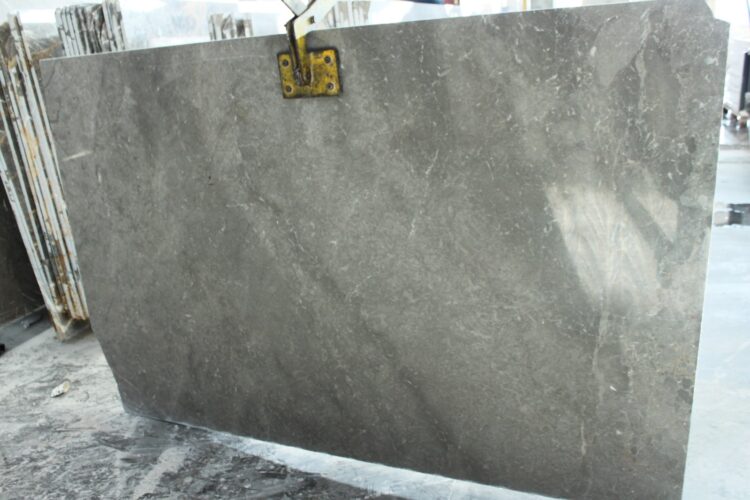


Born as an artist in the heart of France, Theodore Psychoyos draws attention in his Paris-based design studio by exploring not only the aesthetic but also the deep philosophical and functional dimensions of art. In the studio he founded in 2021, Psychoyos focuses on the historical journey of marble, aiming to explore not just the stone’s outward appearance, but also the deep meanings and spiritual dimensions it carries. After studying law, Psychoyos discovered art and honed his true craft in a marble quarry in Naxos and under the mentorship of the renowned sculptor Ingbert Brunk. His art is built on creating functional and meaningful works that go beyond mere visuality, with each piece establishing a strong connection to human nature and universal concepts.
Could you briefly tell our readers about yourself?
My name is Theodore Psychoyos. I ask from Greek origins but grew up on France. I founded my young design studio in Paris in 2021. We focuse on functional art and architecture, with a commitment to upcycling materials. The studio specifically explores the properties and applications of marble—from its origins and extraction process to its natural transformations.
How did you start your career as a sculptor? Whenand how did you decide to become interested in art?
l entered the Art School of Paris after obtaining a degree in Sorbonne law school. I loved law very much. However, I had a game change conversation with my mother at the time. She basically told me there are enough good lawyers in the world, and not enough good artists.
It just made me realize that I understood so much about law and so very little about art. In other words, my interest in art came out of a deep curiosity. The art school did not help me much in this sense. My true formation and interest grew by working part time as a worker in a Marble quarry in Naxos and partly assisting the sculptor Ingbert Brunk.
What emotional or aesthetic messages do you aim toconvey in your artistic works? What kind of reactionsdo you hope to get from the audience?
Although my work is often described as aesthetic , I have to say that I am not very interested in making things look good. Paradoxically, it is this absence of aesthetic that probably people see as easthetic. I am interested in functional art precisely because I believe function overrides aesthetics . In other words, something which as a reason to be is necessarily easthetic, while the opposite is not true. The function of my objects is not only practical but also a philosophical and spiritual . My work is essentially about movement, space and gravity in a practical sense but also a more abstract sense. My objects are heavy and designed to occupy a space. This is not obviously practical, but it propose a practical reflection on free movement, adaptability, matter and gravity, which by itself is as important to human nature as confort itself.
What do you pay attention to when choosing themarble you use in your sculptures? Which marble do you prefer and why?
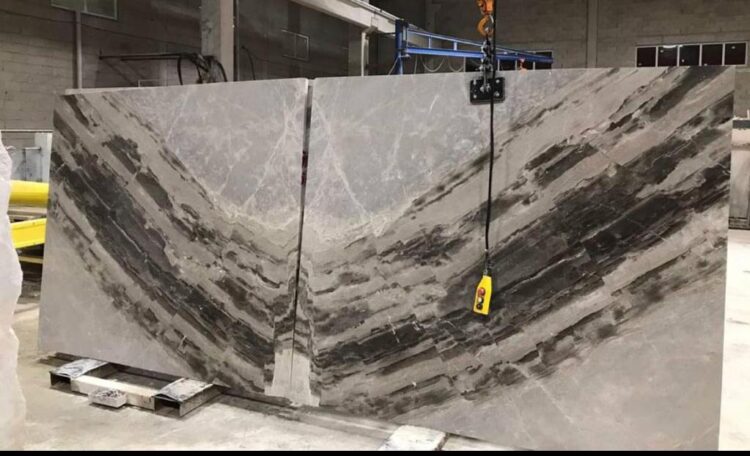
We mostly work with marbles which surface or shape bear the marks of natural alteration or human process. Also marbles that have imperfections or crystallisation accidents. All together, everything that expresses a memory of an incident or an effort. However, I think when one understands the formation of marble, it apprears every stone as its own geological secret, often related to high pressure events.
What are the biggest challenges you face whenworking with marble and what strategies do you useto overcome these challenges?
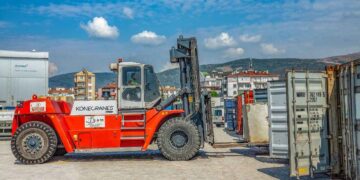
The logistics related to working with marble is often overwhelming for people that are not used to this material. Wether it concerns availability, operation management, timeframe, process , transport, fragility, storage, the backstage of working with marble demands full commitment.
concerning transport , I am more and more reluctant to send pieces to long journeys because of environmental impact and gas emissions. I prefer more and more to locate and study marble quarries and marble factories at the vincinities of the place of delivery and work nomadically.
In other words I rather send myself than send tones of marbles for a show or a client.
Also I realised quite fast that it is better to work in very small teams when it comes to handling or processing marble. Therefore I have opted for a limited volume of work, each piece being unique. I only do projects which I really believe have a reason to be. In our times , I feel there is no reason to do something just becacause I can. Everybody does things, there are enough things already.
Which projects and goals in your artistic journeyexcite you? What are your plans for the near future?
I am genuinely interested in what I do not fully master or comprehend, so with marble I still have a long way to go, and this in itself is very exciting to me. My relation with architecture has developed into something really exciting. Maybe overruling my concern or relation to galleries and retail market. So I really enjoy working with architects right now. It allows us to develop and propose concepts that are really game changers.
Can you share the names and characteristics of a fewof your favorite projects?
I recently collaborated on a series of massive pieces at the historic Dionysos marble quarries, the same quarries that supplied marble for the Parthenon. Today, these quarries provide material for the Acropolis restoration, a project that will continue for another generation. We created a multi-purpose venue within the quarries, hosting limited public events.
I’m currently working on public benches using leftover materials from urban construction sites. This approach involves reusing the city’s own fabric to serve the public, rather than importing new materials. Fortunately, much of Athens was built with marble, so there’s plenty to repurpose.
My favorite project is of course always the one to come. However, closer to you, The Zeyrek Çinili Hamam project is probably my favorite so far. It aligns perfectly with our studio’s philosophy—using local materials, relying on expert craftsmanship, and fully immersing ourselves in a new cultural context. The silent dialogue with Sinan’s masterpiece challenged us to grow and evolve in ways I hadn’t anticipated.



 +90 532 585 51 95
 +90 532 585 51 95