






Shahab Mirzaean Mahabadi, who has signed nearly 300 projects across a wide geography stretching from Iran to Canada and from Iraq to Oman, defines architecture not as a technical field of production, but as a way of reading context, culture, and human scale. With L.E.D Architects, the firm he founded, Mahabadi has been analysing different climates, social structures, and material cultures for over twenty years, drawing attention with his design approach that centres on spatial character. The architect, recognised with numerous national and international awards, reinterprets the changing role of contemporary architecture with his views on the atmospheric effect of natural stone, the power of geography and cultural layers in guiding design, and how the language of materials transforms in large-scale projects and personal-scale spaces.
Shahab Mirzaean Mahabadi, born in 1983 in Tehran, has been active in the field of architecture for more than 20 years. He founded L.E.D Architects in 2010.
He has designed approximately 300 projects across Iran, Canada, Iraq, Oman, and the United Arab Emirates, of which around 70 have been completed or are currently under construction. His work has received significant recognition through numerous national and international awards.
Shahab is a three-time recipient of the Iran Architecture Award, a four-time winner of the Iran Interior Architecture Award, and has also been honored with the Architizer Award, the Middle East Architecture Award, the Asia Architecture Award, the World Architecture Festival Award, the Cityscape Festival Award, and the CID Architecture Award.
His fundamental design philosophy is rooted in social engagement, the redefinition of spatial boundaries, and the establishment of a deeper, more meaningful relationship between architecture and the city.
What was the core vision you established when founding L.E.D Architects, and how has this vision evolved over time?
When I founded L.E.D Architects, my initial ambition was to establish an agile, research-driven practice—one where architecture was not merely a final product, but a process grounded in understanding context, human scale, and culture. From the beginning, I believed architecture should bridge technical logic with poetic sensitivity.
Over time, through international work and exposure to diverse conditions, this vision matured. Today, our practice focuses less on signature forms and more on precise problem-reading, project economics, and cultural adaptability. The original vision remains, but with deeper insight and a more realistic understanding of contemporary complexities.
You have produced projects in diverse cultural contexts such as Iran, Canada, and Iraq. How has this international experience enriched your design approach?
Designing in three entirely different contexts taught me that architecture has no universal formula. Iran taught me sensitivity to culture and historical layering. Canada introduced me to systematized quality, standards, and disciplined construction processes. Iraq pushed me to respond to extreme conditions—harsh climate, rapid decision-making, and execution under constraints.
Together, these experiences shaped an architectural approach that is multi-sourced: culturally grounded, technologically aware, and adaptable to real-world limitations.
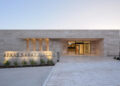
Picture1: Afagh Basrah. Iraq
Picture2:Atlas Tower. Iran
In what ways does Iran’s strong cultural and geographical identity influence your design decisions?
Iran does not possess a single homogeneous identity; it is a mosaic of climates and geographies.What I extract from this diversity is simple:Iranian spaces have always been responses to climate and privacy.
These principles—light control, layered transitions, spatial depth, and materials with a grounded presence—are embedded in my thinking, even when I design in Vancouver or Erbil. They are not stylistic signatures; they are the natural continuation of centuries of spatial intelligence.
Picture3: Kolbadi House.Garmsar.Iran Picture: Hamoon Moghaddam
When selecting natural stone for your projects, what is the first criterion you evaluate: texture, color, durability, or its impact on spatial character?
My first criterion is always the stone’s impact on spatial character—its atmospheric contribution.If the stone does not support the intended mood—calmness, solidity, clarity, or groundedness—its color or durability becomes secondary. Only after defining the spatial role do I evaluate texture, durability, and detailing.
Among the commonly used stone types in Iran, which one do you believe aligns best with your architectural expression, and why?
If I had to choose one, it would be Abbasabad or Atashkouh travertine.
Not because it is common, but because:
- It has a neutral yet deep character
- It behaves honestly under different lighting conditions
- It transitions well between contemporary and traditional architecture
- It can be processed at multiple scales
- It supports calm, quiet atmospheres—an important aspect of my work
Stones like Aligudarz or Neyriz crystal are so beautiful .
Picture4:Restaurant No.5 Picture: Hamoon Moghaddam
Picture5:Cabbok Teb. Architect:Elham Ebrahimi & Shahab Mirzaean Mahabadi Picture: Hamoon Moghaddam
Picture 6 : Namvaran Offfice
How does your approach to using stone differ across various scales such as Lojmall, Merinos Tower, or private villas? What technical limitations do you encounter when choosing stone for large-scale projects?
In large projects like Lojmall or Merinos Tower, stone becomes an industrial system:
- Limited thickness
- Modular dimensions
- Structural behavior at height
- Weight control
- Installation speed
- Consistency in large quantities
Here, my focus is on durability and continuous visual rhythm rather than fine detail.
In private villas, stone becomes a tool for dialogue—with the site, with light, with scale.
I can work with richer textures, volumetric blocks, mixed materials, and micro-spatial articulation.
Large-scale limitations: uniform coloration, thinner sections, standard fixing systems.
Small-scale limitations budget or client preferences.
Design culture and urban needs are rapidly changing. In this context, how do you envision the future of architecture and the evolving role of architects in this new era?
Architecture is shifting from the role of the “author” to that of the “interpreter.”
The future is shaped by:
- Data-driven cities
- Adaptable, low-energy, transformable buildings
- A shift from form-making to relationship-making
- Spatial quality becoming more important than luxury materials
- Blurred boundaries between architect, experience designer, and urban analyst
Architects of the future will not merely produce beauty; they will craft meaning and spatial strategies.
Finally, is there a message you would like to share with our magazine readers and those interested in architecture?
If you look at architecture only through form and aesthetics, your perspective becomes limited.
The best path is to read the world like an architect—but without formal obsession:
- Study climate
- Observe human behavior
- Engage with materials
- Travel
- Listen to space
Architecture is the accumulation of lived experiences, not the accumulation of beautiful words.




 +90 532 585 51 95
 +90 532 585 51 95