




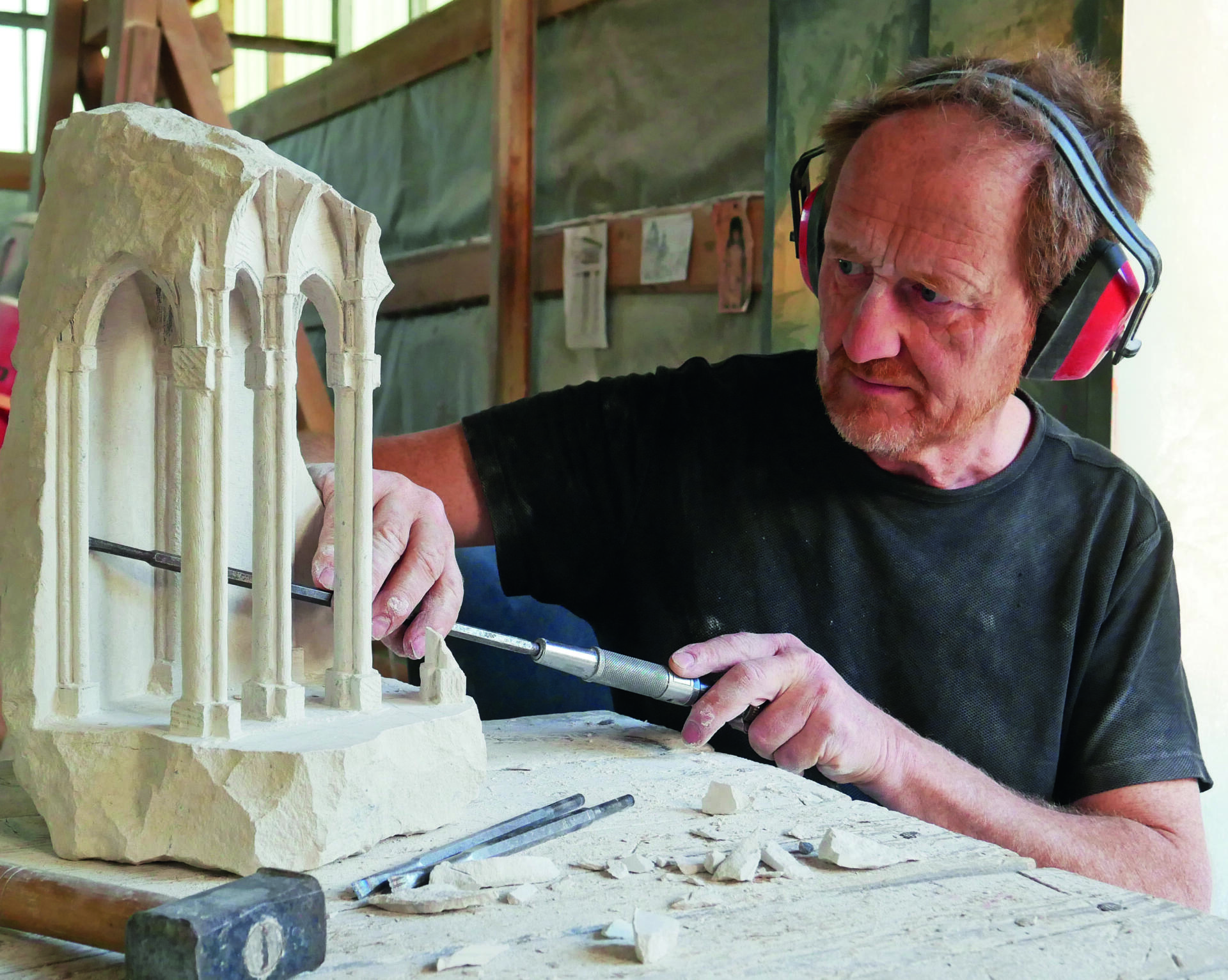
Sculptor Matthew Simmonds, who gives new forms to stone, shares his artistic journey, the inspirations of his works, his relationship with marble and the parts of the art of sculpture. Transforming historical architectural forms into miniature interiors and adding a spiritual dimension to the spaces he creates, Simmonds’ sculptures reveal the vitality and beauty of the stone. We examined Simmonds’ artist identity, work structure and image in this interview.
Before moving on to your works, can you introduce yourself briefly? How did you drive your passion for giving new forms to stones or clay? Can you give information about the trainings you have taken, exhibitions you’ve participated, subjects you have dealt with in your works so far … etc
I studied art history from 1981 to 1984 at the University of East Anglia, England, specializing in medieval art and architecture. For several years after this I did a lot of different jobs, including working as a freelance illustrator. I have always had a great passion for medieval architecture, particularly religious buildings in stone. In 1989, during a visit to Chichester Cathedral in England, I saw a photo exhibit of the stonemasons working on the restoration of the building and realized that this was what I wanted to do with my professional life. In 1991 I studied to be a stonemason at Weymouth technical college in England.
When I first started working with stone it was as an artisan, not as an artist, participating in the restoration of several historic monuments, including Westminster Abbey and Ely Cathedral. When I moved to Pietrasanta, Italy in 1997 I came into contact with a community of sculptors and I started to see the potential for using my skills for my own artistic expression. This lead to the first of my architectural sculptures dealing with internal spaces, Hidden Landscape, in 1999. During my first few years as a sculptor in Italy I balanced this with also working as an artisan, producing traditional classical carving in marble. During this time I participated in a series of sculpture symposia, which gave me the opportunity to work seriously on my own sculpture on quite a large scale. I had a first solo show in Pietrasanta in 2006, and I have since participated in several group shows. In particular, since 2012 I have been a fairly regular exhibitor at the On Form sculpture biennial exhibition at Asthall Manor in Oxfordshire, England.
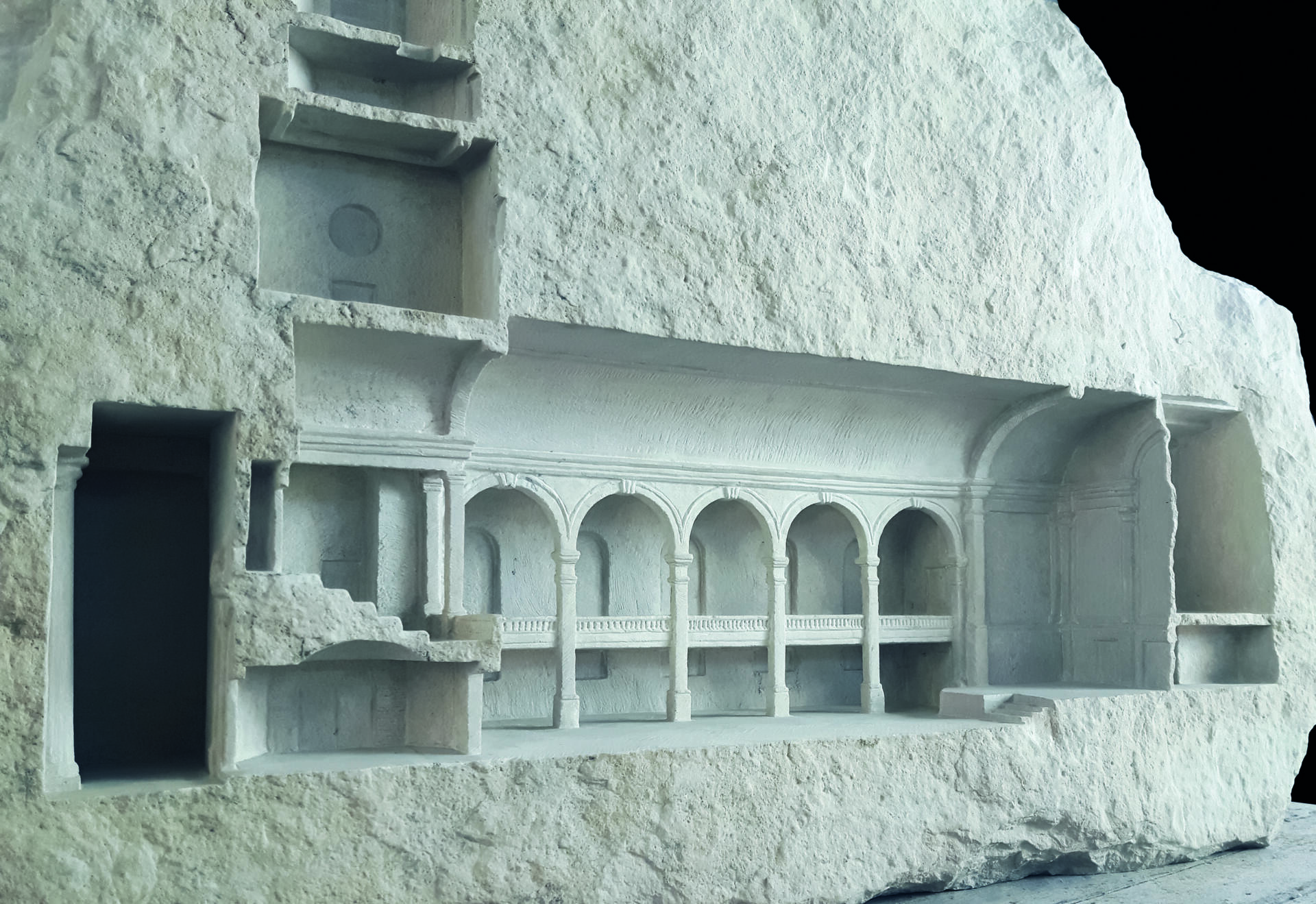
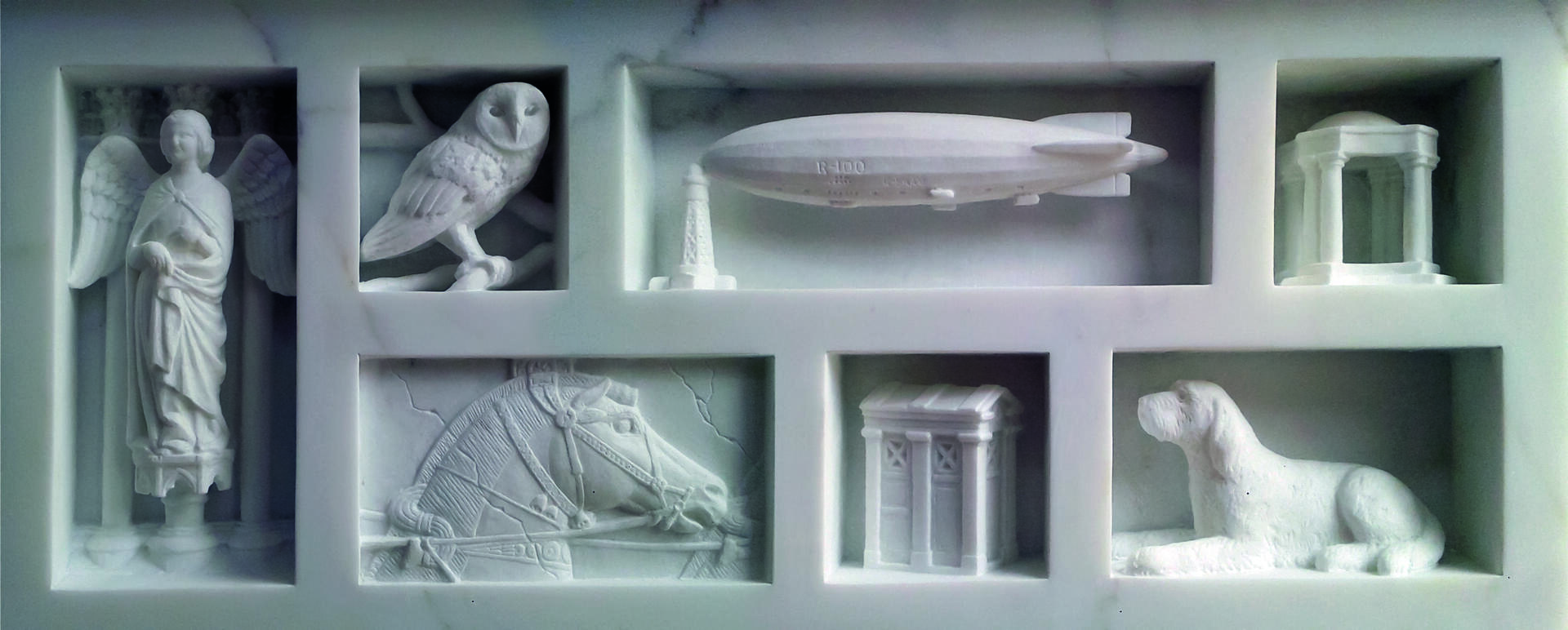
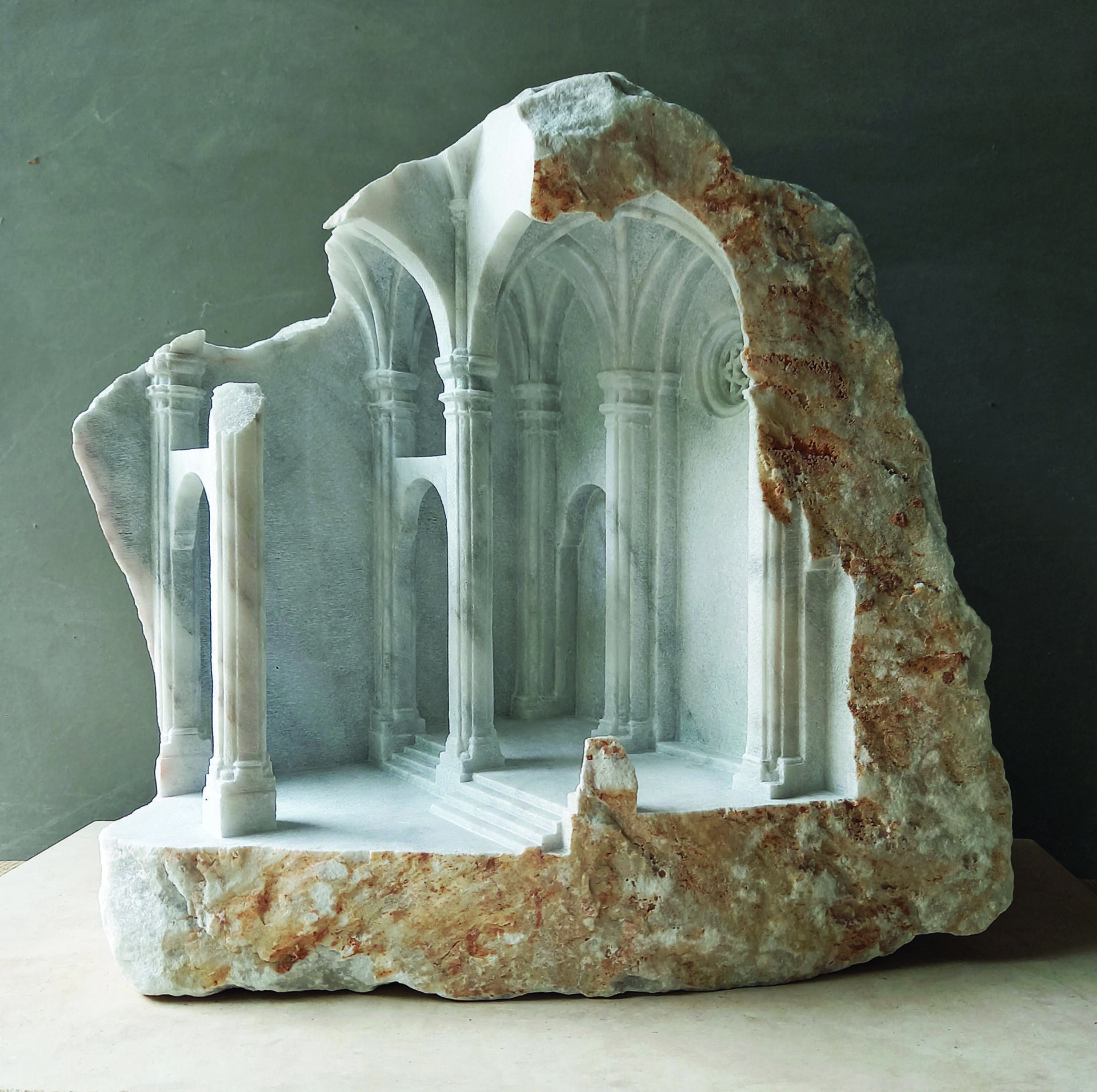
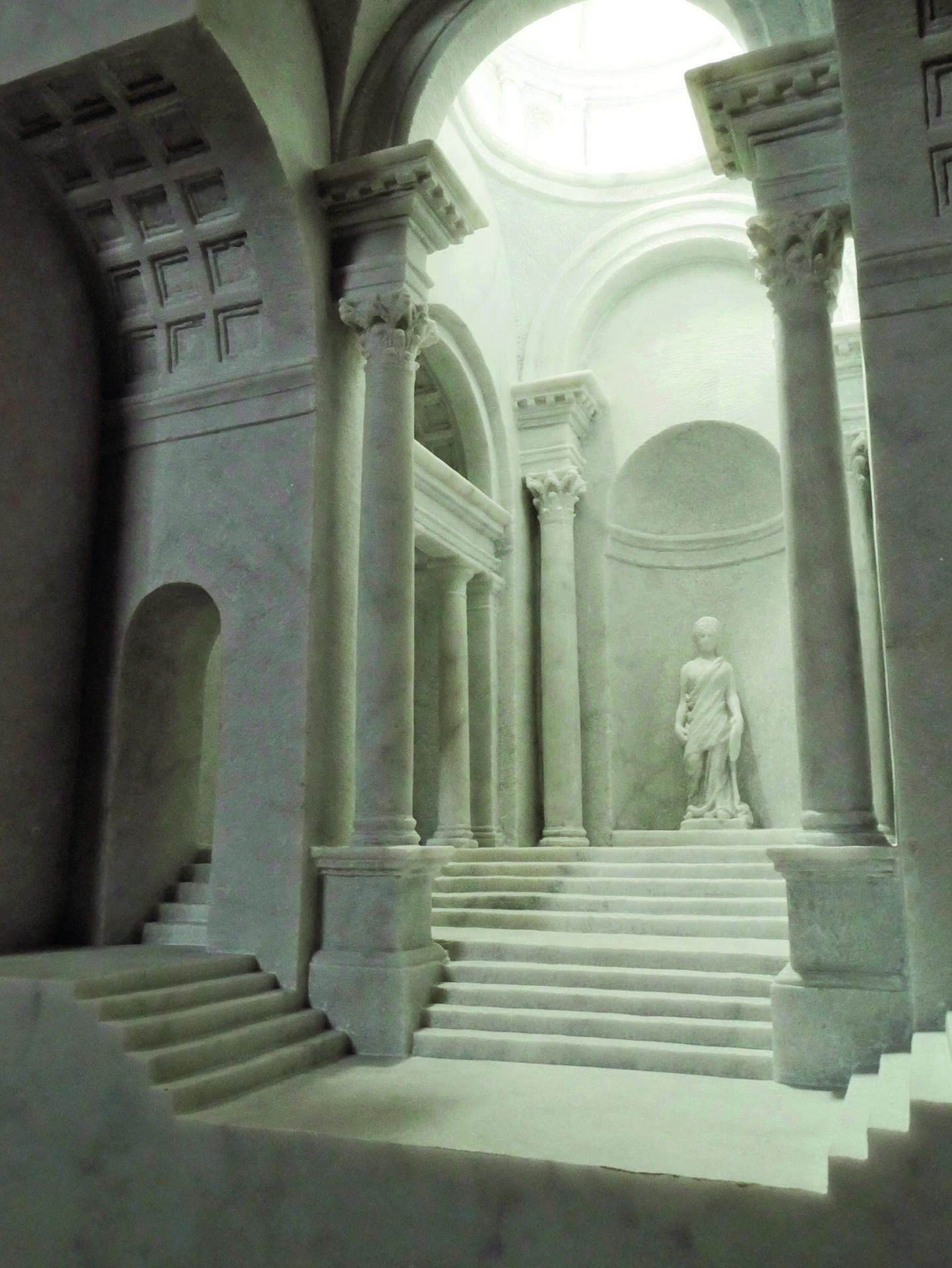
My work has mostly dealt with architectural spaces carved directly into the stone, most often using natural stone boulders. These have been largely in the form of miniature interiors inspired by the architecture of religious buildings, but with some sculptures being more abstract in nature. A theme running through all the works is the idea of creating a sense of meaning in the spaces I create, reflecting the spiritual nature of the architecture I am inspired by. In addition I have also produced a series of Windows sculptures in high relief. In these, I have carved a series of panels depicting different objects and scenes into a single piece of stone, expressing the diversity of possibilities inherent in the material and the way these have been explored by different cultures throughout history.
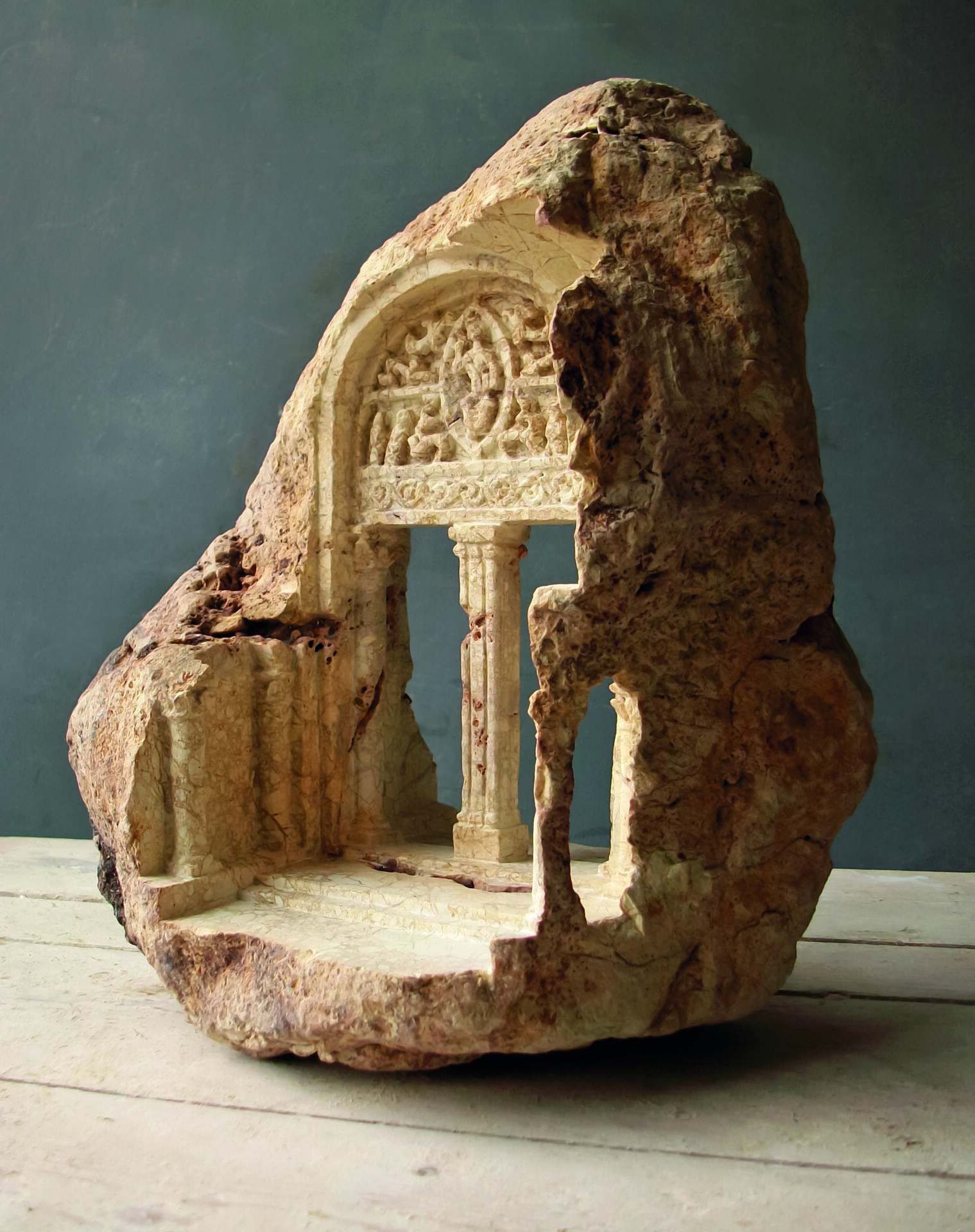
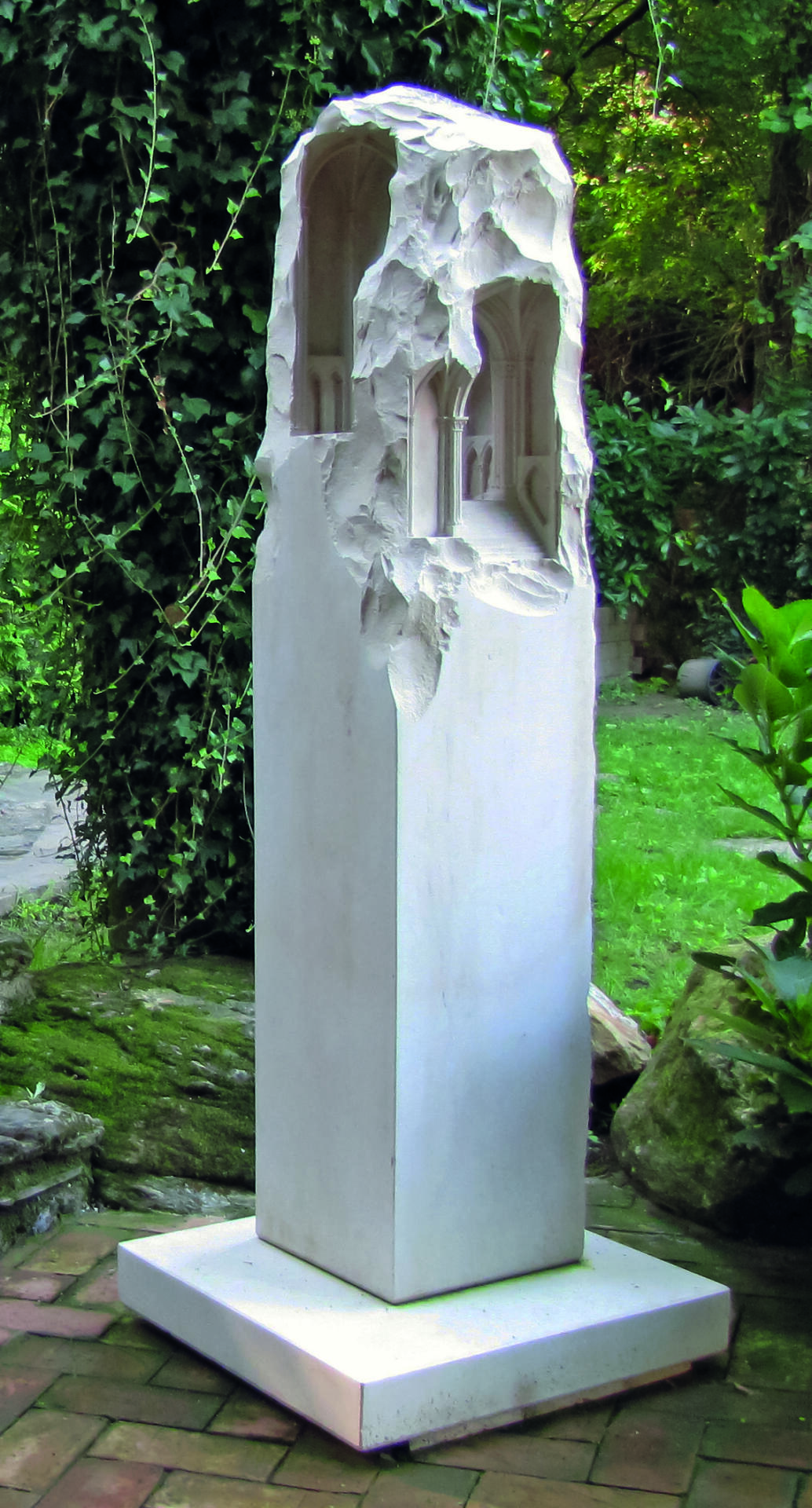
1.
2.
3.
You are using different materials other than marble. What does marble make you feel while working on projects made of marble? What does sculpture and marble mean to you?
My works are in marble or limestone. I don’t model in clay beforehand, preferring to work out the designs directly in the stone. The love of stone as a material is central to my artistic expression. Limestone and marble are the materials that most of the buildings and sculptures that I am inspired by are made from, and so are the natural choice of material for me. I feel a natural affinity with stone, and its use throughout history, and working with historical architectural forms in stone gives me a sense of a connection to something greater than myself. Also, both marble and limestone are formed from once living material, which gives them a special significance for me compared to other stones.
Which marble do you use mainly?
I mostly use Carrara marble, both Ordinario and Statuario. It’s a good versatile material suitable for most sculptures, and living in Italy for many years has made this also the most convenient marble for me to source. The limestone I use the most is Thala beige from Tunisia, a fairly hard and close-grained limestone that I buy from suppliers in or around Carrara. Since being in Denmark I have also been using Faxe limestone, a coral-based stone quarried South of Copenhagen, which has similar qualities to Travertine.
Do you choose the material you will work on from the marble quarries in person? When choosing a stone, how do you understand that it is the right stone among others? How do you feel that it is the marble that best reflects what you feelings and your dream work? Do you have certain criteria when choosing stones?
I choose all of my stone personally. I source rough marble boulders directly in the quarries in Carrara, and I buy cut blocks from marble suppliers in the same region. The stone must be free of cracks, and not “cooked” (when the marble has become soft and powdery in the sun). When choosing a natural boulder it is also important that the stone has a good shape. I have to get a good feeling about the volume contained within it. Even though I usually don’t have a specific sculpture in mind when I choose a stone, I like to be able to feel the potential for the stone to contain a sculpture, preferably with an external shape that could compliment or contrast with the sculpted space in a dynamic way.
Have you ever used Turkish stone in your works before? Are there any Turkish marbles that you know, that interest you and want to work with?
Being based in Italy for so long has meant that I generally use Carrara marble. I haven’t tried Turkish marble before, but it has a good reputation and I would be happy to work with it.
1.
2.
3.
4.
How much do you use technology while making your sculptures? How important is the manual practice of sculpture in your art?
All of my works are made by hand by myself, both with traditional hammer and chisel and hand-held electric and pneumatic grinding tools. I have not yet used robotic carving methods at all. I tend to work the designs of sculptures out as I make them in a series of stages, and so using a CNC machine isn’t an option. When working with natural boulders it is virtually impossible to predict how the carved spaces will look and feel beforehand, particularly the line of intersection between the carved space and the natural exterior stone surface. My work is a direct response to the particular stone that I am using, and this designing through the process of creation is an important part of the artistic concept. Having said that, if I was given a very large commission it could be interesting to work a design out more thoroughly beforehand, and in this case to try working more with current technology.
You have an amazing ability to make stones look flexible. What is the secret of your success?
Thank you. My architectural sculptures need to be fairly precisely worked because of the geometric nature of the forms, but this is balanced with the fact that it is always clear to see that the work is hand carved. This direct manual contact with the material is probably what gives it a sense of life, despite the forms being very formal and precise. With the Windows series of sculptures I work with a greater variety of carved subjects, including figurative and animal forms. These are all directly carved, that is they are not modelled first and then transferred to stone. There can be a lot of risk to working like this, but it is also very exciting. I think it also gives the sculptures more life and spontaneity.
Is there an inspiring sculptor in the classical art literature who impressed you with his works, what would you like to ask him if he were alive?
Most of the artists I am inspired by are from the medieval age, and so are anonymous. The explosion of creativity in stone sculpture in the 12th century in France and Western Europe is one period that is particularly inspiring for me, with the development of Romanesque and Gothic sculpture and architecture. The great religious buildings in stone throughout the world are among our greatest lasting achievements. Technically I would love to ask the builders of these monuments how they set out the designs and worked out how to construct these incredible engineering feats, as this knowledge has largely been lost to us.


 +90 532 585 51 95
 +90 532 585 51 95