


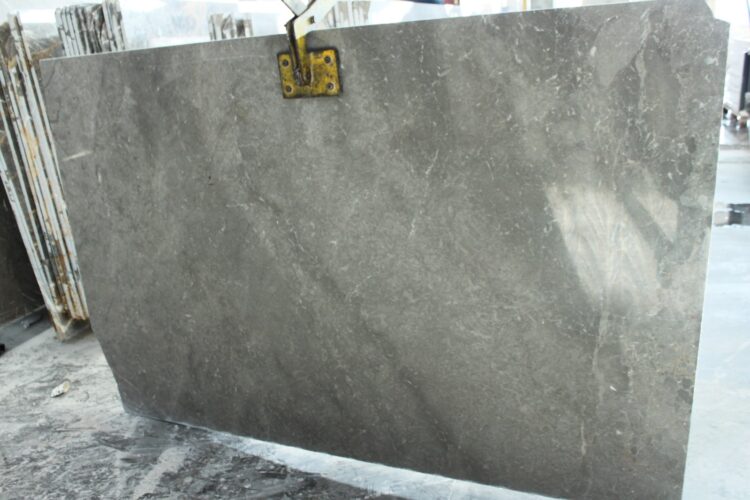


Located at the intersection of architecture, economy, and research, Spaceworkers® brings together the perspectives of Carla Duarte, Henrique Marques, and Rui Dinis, merging them into a shared vision. The studio’s story began with a series of creative opportunities rooted in small-scale projects, which evolved through a deep understanding of context and architecture attuned to user experience. Starting from functional requirements, Spaceworkers® explores an emotional architectural language, enhancing their projects with timelessness and depth through a thoughtful use of natural materials particularly natural stone. In this interview, we take a closer look at the team’s design philosophy, material preferences, architectural approach, and future visions.
How did the idea of creating Spaceworkers® come about? How did the different approaches of Carla Duarte, Henrique Marques, and Rui Dinis, coming from various
Spaceworkers® emerged almost by chance, stemming from a series of opportunities that presented themselves. These included small projects for family members, minor renovations of commercial spaces funded by community grants, and an overwhelming desire to leave a mark on the region. And out of the meeting of three professionals who, despite sharing the same enthusiasm for architecture and innovation, bring complementary backgrounds and perspectives:
Carla Duarte, with a financial background, ensures the solidity and sustainability of projects by analyzing economic viability and contributing to the studio’s strategic management;
Henrique Marques, an architect, drives the conceptual and formal aspects, exploring creative and functional solutions that balance aesthetics, context, and client needs;
Rui Dinis, also an architect, adds a focus on research and continuous exploration, challenging traditional methods and promoting a more experimental and interdisciplinary practice.
This blend of financial, architectural, and research-driven approaches shaped the unique vision of Spaceworkers®. The dialogue between pragmatism, experimentation, and creativity underpins a culture of constant questioning and innovation, resulting in projects that reconcile economic solidity, conceptual boldness, and a mindset attentive to the experiences of those who inhabit or use each space.
How do you manage to present a new perspective and method of perception towards space in your projects?
We’re not sure we can present a new perspective, so to speak. What we are always looking for is an honest approach, able to explore the opportunities that the context provides us and at the same time able to express in the projects the personality of our clients.
Could you elaborate on your understanding of “form clearly following emotion”? How does this concept reflect in your projects?
Our understanding of this maxim, the form follows the emotion, results from the way we seek to creatively approach all projects. It is true that we have to be pragmatic in responding to the functional programs of our projects and to the challenges of our clients, but this is almost like the zero degree of the project, it is understood that as architects we have to give a functional response to a problem, the way we give this functional response is that we can, and must, explore the emotional side of architecture, play with the sensations that spaces provoke in those who experience it. For us to think about a project is above all to think about the sensations we seek to explore in each space and how this sensory stimulation can be translated into the built element. Think about how we can sensorially sculpt the space, while simultaneously doing a synthesis exercise, so that the project can be clear, simple, and without excess elements.
As Spaceworkers®, what is your approach to natural materials, especially natural stone? How do you evaluate using this material in your projects?
Being able to use natural materials is always a privilege in any project, natural resources, whatever they may be, allow greater plasticity and always carry an increased responsibility, as it forces us to greater respect and consideration when choosing the material. We are using small pieces of nature in our projects, and this must be done with great care and respect. Natural stones are like small testimonies of history, capable of giving a unique personality to the space, and we like to believe that they also say a lot about the personality of those who choose them.
It is undeniable that natural stones are increasingly an element of high value in a project, either as an interior or exterior coating, or even as a constructive methodology or as a mere compositional tool.
What are the advantages of using natural stone in exterior designs such as pools and facades?
First of all, your exclusivity. The same material always translates into different results from each other. The spontaneity of nature is perhaps the most valuable factor in the use of natural stones, even the most homogeneous ones are different from each other. No two stones are the same and this is perhaps the greatest fascination in the use of natural stones. In addition, we necessarily have its resistance capacity and all other technical characteristics, which always contribute to the final result of the project, including when the technical characteristics are even an apparent problem or fragility, which once understood can also be an element of high aesthetic value.
How do you create different effects by playing with the surface texture, color, and form of natural stone in your designs?
Nowadays, with all the technology of transformation and stone cutting, the ability to explore the stone and all its different forms of use is practically unlimited. We like to play with textures, the less “conventional” use of stone in coating situations as a covering element for example. We like to play with the patterns and different shades to accentuate the architecture or to give it more rigor. We like to use stone as an element of integration that dialogues with nature and also allows other forms of nature to also be part of the project, from lichens, small mosses and the like.
What factors do you consider when working with natural stone suppliers? What are your priorities in terms of quality, aesthetics, or cost?
When we look for suppliers of natural stones, we always worry about the origin of the stone and extraction process, naturally its quality is important and the aesthetics of the block or plate. The cost, despite being a decisive factor, is not at all the first focus of our analysis.
Can you describe a project where natural stone played a prominent role, providing details of the work?
In reality, in our work they are mainly interior remodeling, where the Stone assumes a great preponderance. I remember an apartment that unfortunately we are not authorized to photograph, where the stone coatings are responsible for 50% of the surfaces of the project, assuming themselves as a compositional and identity element of the space. It was undoubtedly a great challenge to choose a series of natural stones, which combine with each other but at the same time can claim for themselves the ability to check different spatial hierarchies and different environments throughout the apartment.
How do Portugal’s rich natural stone resources inspire your projects? What are the advantages of using this material as a local resource?
We are not quite sure how it inspires us, it is something that is implicit in the way of designing in Portugal, we are lucky to still have good masons, and a lot of tradition in granite walls and sidewalks, and I think there is no project where the use of stone in its most diverse forms and by-products is not proposed. Stone is almost always a local resource, more sustainable, low technology and above all accessible to almost everyone, so it is almost mandatory to use natural stone, not always in its most refined state, but still widely used.
What are your forecasts regarding the emerging trends and innovations in the use of natural stone in outdoor spaces?
This question is difficult to answer. Even because we know that the industry has led us to an increasingly versatile use of this natural resource and we are still at the beginning of this industrial revolution in the sector. But even if the industry does not evolve, I believe that the stone that has been used since time immemorial will always continue to have a prominent role in architecture and outdoor spaces.
It will be undeniable that innovation will bring new opportunities, new ways of using the stone, new ways to overcome your physical limits and architects and designers will certainly follow this evolution and create new uses and new technical solutions.


 +90 532 585 51 95
 +90 532 585 51 95