




Founded in Barcelona in 1986 by Felipe Pich-Aguilera Baurier and Teresa Batlle Pagès, Picharchitects stands out for its approach to architecture that prioritizes sustainability and harmony with nature. Since its inception, the firm has centered its work around the pursuit of “dialogue with nature,” integrating natural stone into its projects both to adapt to the topography and to create durable, reusable material components. Felipe Pich-Aguilera summarizes the essence of their design philosophy, stating, “We see architecture as a tool to heal the ecological wounds created by our artificial lifestyle.”
What are the core principles or values that define Picharchitects’ architectural approach?
Since the beginning of our practice, we’ve been searching a dialogue between ecology and building. A way to stand as architects with one foot in each side, because we refuse to consider construction essentially as a problem for our environment. Architecture should be a tool to regenerate ecological wounds caused by our artificial way of life.
You speak about creating a “more stimulating relationship with nature.” How does this idea manifest itself in your projects?
Nature is not a scenario or just a landscape for architecture but rather the essence that embraces it, as we humans are part of nature. Whatever we think about or how deep we go, we realise it is not possible to isolate ourselves into a bubble. It is quite evident when we analyse our cities, in spite of its infrastructure, urbanization and density we can’t consider cities as artificial systems, because they are still deeply related to natural conditions as weather, soil, plants, virus, etc. In this sense we rather identify nature as a Resource to use, a Value to preserve and a Logic to consider.
How often, and for what purposes, do you use natural stone in your projects?
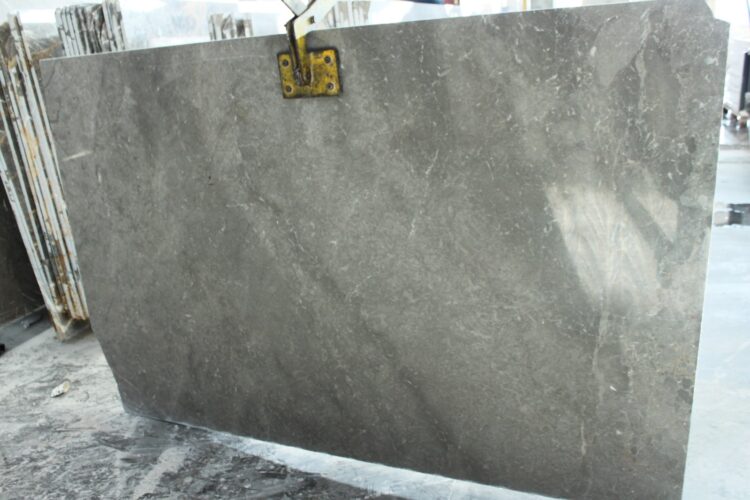
Normally we use natural rocks of a plot to accommodate topography on which to build. Otherwise, we tend to use ways of natural stone mixed with hydraulic cement and other polymers, to obtain pieces of higher performance with less materiality.
What are the key factors that influence your preference for natural stone during the material selection process?
Mainly we appreciate quality of natural stone; Strength, Stability and Appearance. But beside that, we need a mechanical system to assemble pieces in a dry way, to be able to be disassembled in the future preserving its value.
We like to consider our buildings as “Material Banks”, a shelter of material components whose value goes far beyond its temporary purpose.
In fact, most of stone pieces coming from the past have been reused into other buildings, so its cultural information stands for us as a layer of historical comprehension.
What kind of work do you carry out under the umbrella of “PichInnovation”? How does this structure support your R&D processes?
At the office we always had a R&D department to develop ideas and test systems, before implementation into real projects.
I’d say it is a innovation process rather than research. In early 90s we started being involved in EU granted research projects and it has been very useful for us to pop up ideas, search knowledge and involve partners.
PichInnovation is a node of industries, material suppliers, research departments and universities, focused on reality by improving projects at our office.
How have new-generation simulation and analysis tools transformed your architectural decision-making process?
Simulation process by fluent dynamics IT programs are the most disruptive and efficient tools nowadays, also for our traditional building sector.
We can test our intuitions before spending money and time to build them, and this is opening our minds and the framework of innovation.
Somehow, we are accelerating the way tradition used to work and even though innovation vector still has the same sense (thesis, antithesis, proposal), it is astonishing how speed is increasing nowadays.
Although you are based in Barcelona, you operate on a global scale. How has working across different geographies enriched your architectural perspective?
Our central office is in Barcelona and that brings us a specific approach to architecture. Coming from a polytechnical practice into a dense sociocultural context, we believe it is possible being poets and engineers at the same time.
This is the point of view we offer internationally, developing projects all over the world dealing with a particular context each time (cultural, environmental, technical…). We can say we feel able to understand other places, because we feel part of our own place.
Which of your completed or ongoing projects excites you the most, and why?
The projects we are doing now are always the more exciting ones, because these are promises of things to come. At starting a new project, we have big expectations on building our ideas, that will be finally balanced with reality constraints.
Even though the result of the final build architecture can be sometimes a bit deceiving for us most of the time it is far better wed imagine, if we succeed to express constraints into the resulting shape.
What advice would you give to young architects who aim to focus on sustainability and technology-driven design?
I don’t have any advice to give to young architects because I’m afraid experience isn’t a real value anymore, at least the way we used to consider it.
It might help to question here some ideas that seem established nowadays as unreliably certain.
. Is it reasonable the weight of our buildings is normally higher than the loads they can bear?
. For architects, should be form an objective rather than a result?
. Should we continue to consider the whole building process as two separated parts: Project in one side and Construction in the other?
. Should we consider infrastructure as architecture? Or architecture as an infrastructure?
. Does architecture must be related to materiality in any case?


 +90 532 585 51 95
 +90 532 585 51 95