




Artı3 Architecture, which positions architecture as a means of expression, carries out its projects through a process based on the unity of theory and practice. In this interview with the firm’s founders, Uğur Yıldırım and Assoc. Prof. Dr Ülkü İnceköse, we examined the team’s minimalist architectural language, design principles and material choices for the Arkas Art Alaçatı project. Treating natural stone as a fundamental component that defines the building’s memory and sense of time, the team highlights the importance of interdisciplinary coordination during the implementation phase. In this interview, we focused on architectural production processes that are enduring and contextually appropriate, rather than fleeting trends.
Could you briefly describe Artı3 Architecture’s founding process and architectural approach? What does the name “Artı3” signify to you?
For Artı3 Architecture, architecture is a production process based on the unity of theory and practice. We believe that every architectural creation involves touching life in different dimensions and having something to say. We view architecture as one of the tools through which we express ourselves in this world.
How would you describe your firm’s design approach and core principles?
Our design approach is to create a simple, serene yet powerful architectural language that allows each project to speak for itself. The priorities that define our design practice are:
Reading the problem and transforming it into our own understanding,
Understanding and analysing the context correctly,
Prioritising spatial experience, spatial atmosphere and sensory interaction,
Viewing detail design as one of the core challenges of design,
Establishing a balanced relationship between function and spatial composition.
What are the most distinctive features that set you apart from other architectural practices?
We treat every new problem, regardless of its nature, scale or content, as our most important project. We actively participate throughout the entire process, from the inception of the design to the completion of the build, and even beyond. We produce projects where a direct relationship between the designed and the built is ensured.
How do you assess the role of natural stone in architectural design?
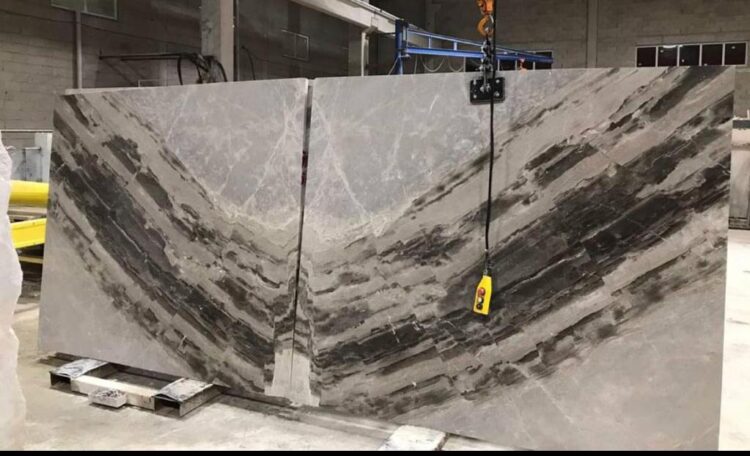
We believe that natural stone plays a very powerful role in architecture, reinforcing the tectonic expression. The colour, texture and form inherent in the material, along with the randomness and variations within these characteristics, can make it one of the fundamental elements of architectural design.
The way the stone is worked, the detailing of joints, the surface effect and the way the stones are arranged side by side become elements that directly determine the spatial atmosphere and, consequently, the experience. For this reason, we regard natural stone as a fundamental component that guides the design.
One of our favourite characteristics of natural stone is its timelessness. The qualities it possesses reveal a formation rooted in long-term processes. And this formation continues in a way even when you use it. Its colour may change, and variations may occur in its texture; we appreciate this ongoing process as well.
In which projects do you particularly favour natural stone, and why?
We do not evaluate natural stone based on a specific project type, but rather in conjunction with design decisions, just as we do with other material choices. In every project, we reassess the material decision based on the design’s requirements.
How do you assess Turkey’s diversity and potential in natural stone?
Our site observations during project processes have also shown that our country possesses a very rich variety of natural stone. This diversity offers significant potential for use. However, the production of natural stone is limited in terms of high added value, and consequently, its use is also limited. In recent years, we have seen more initiatives in this regard from manufacturing firms. We believe that this potential will be realised to a greater extent.
Could you tell us about the design process for the Arkas Sanat Alaçatı project?
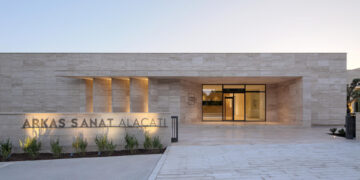
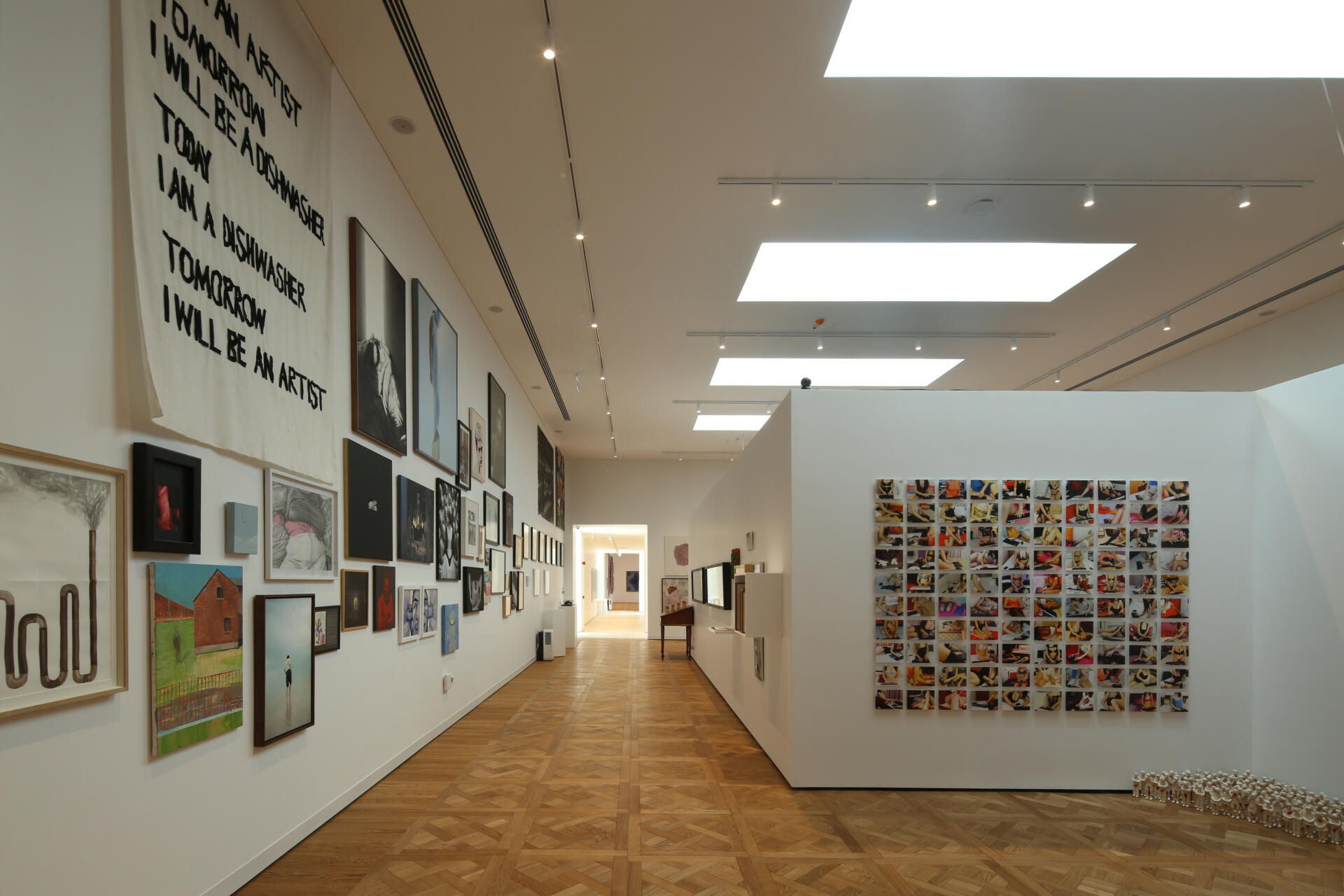
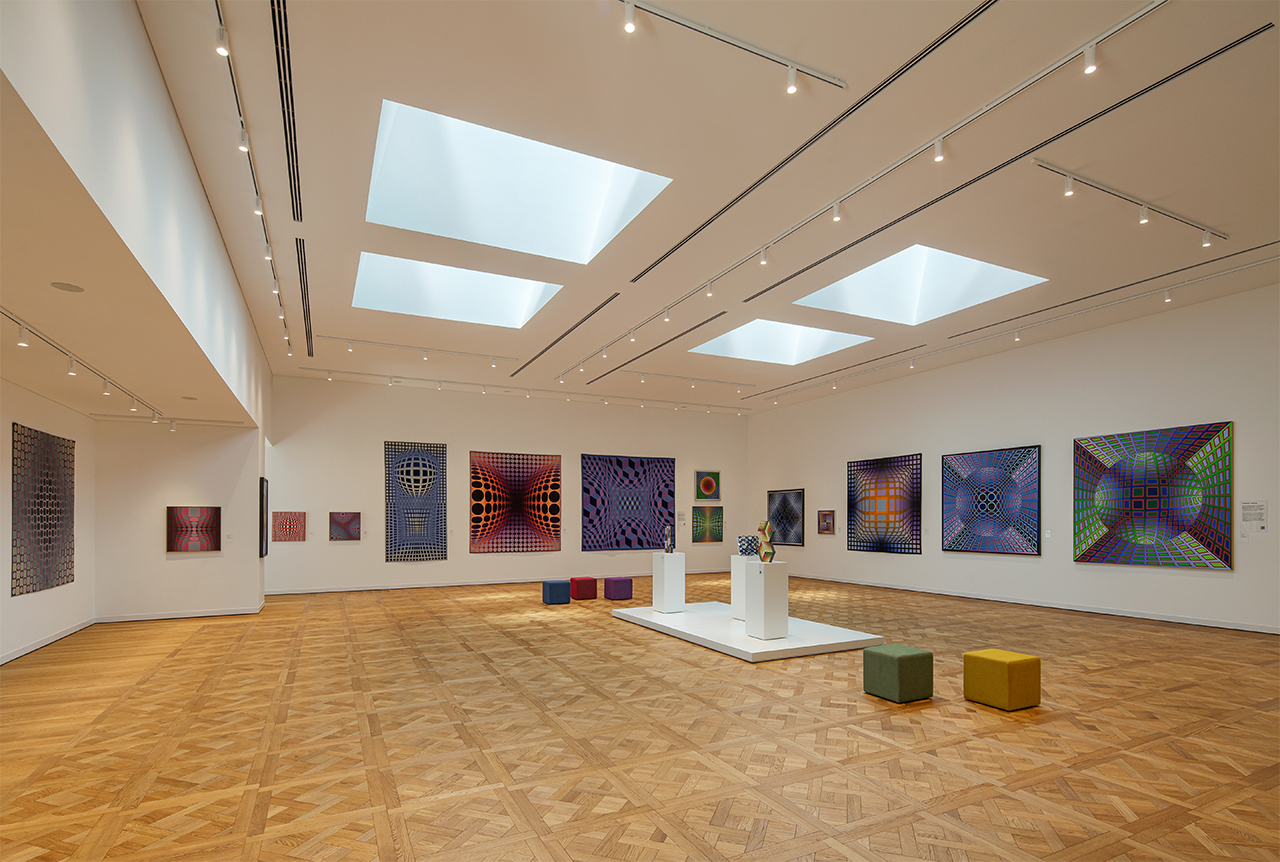
Arkas Sanat Alaçatı was designed around the idea of creating a new, art-centred public space and an alternative spatial experience to everyday life, in response to Alaçatı’s consumption-driven transformation, which has accelerated in recent years. The design process began with imagining this spatial experience.
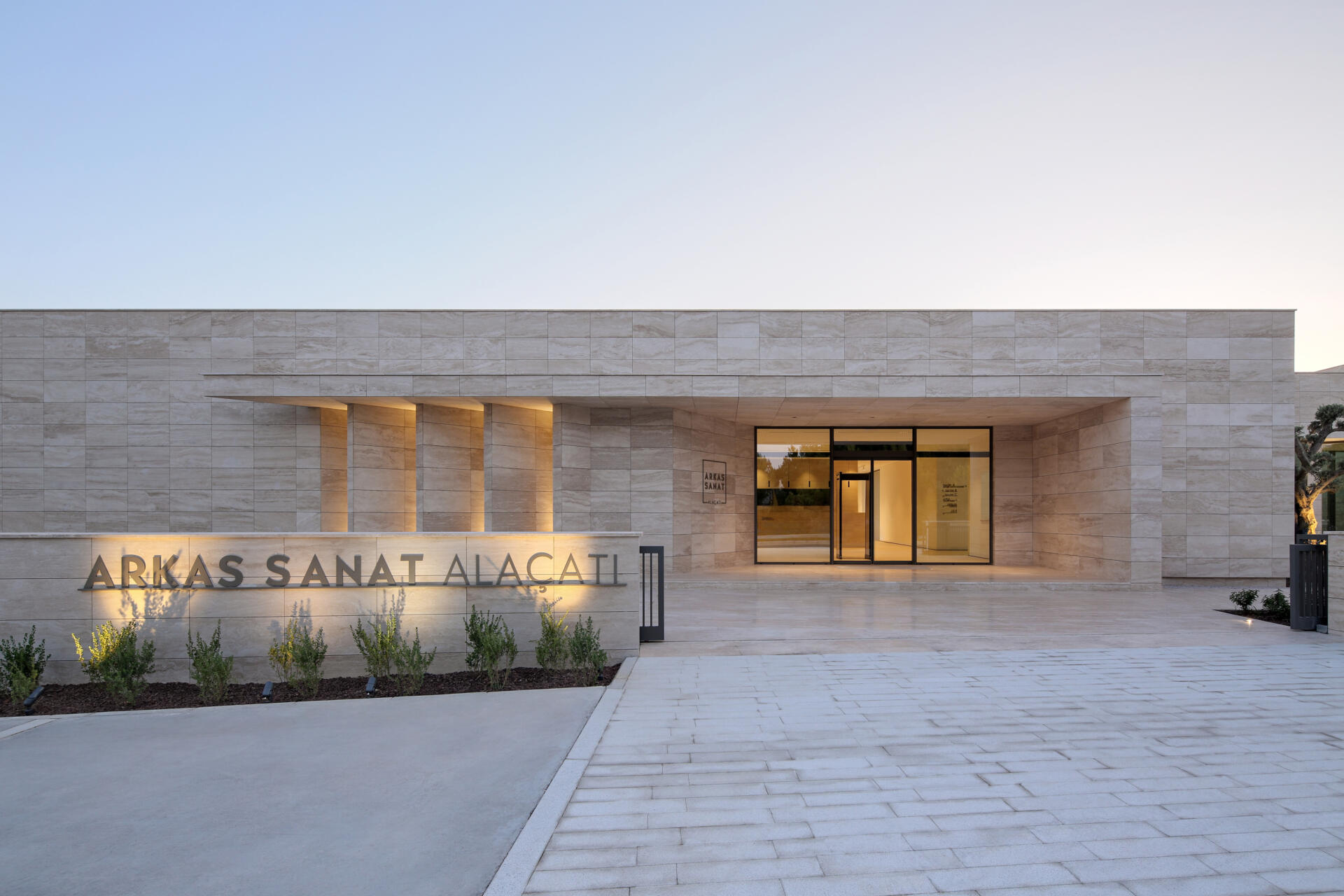
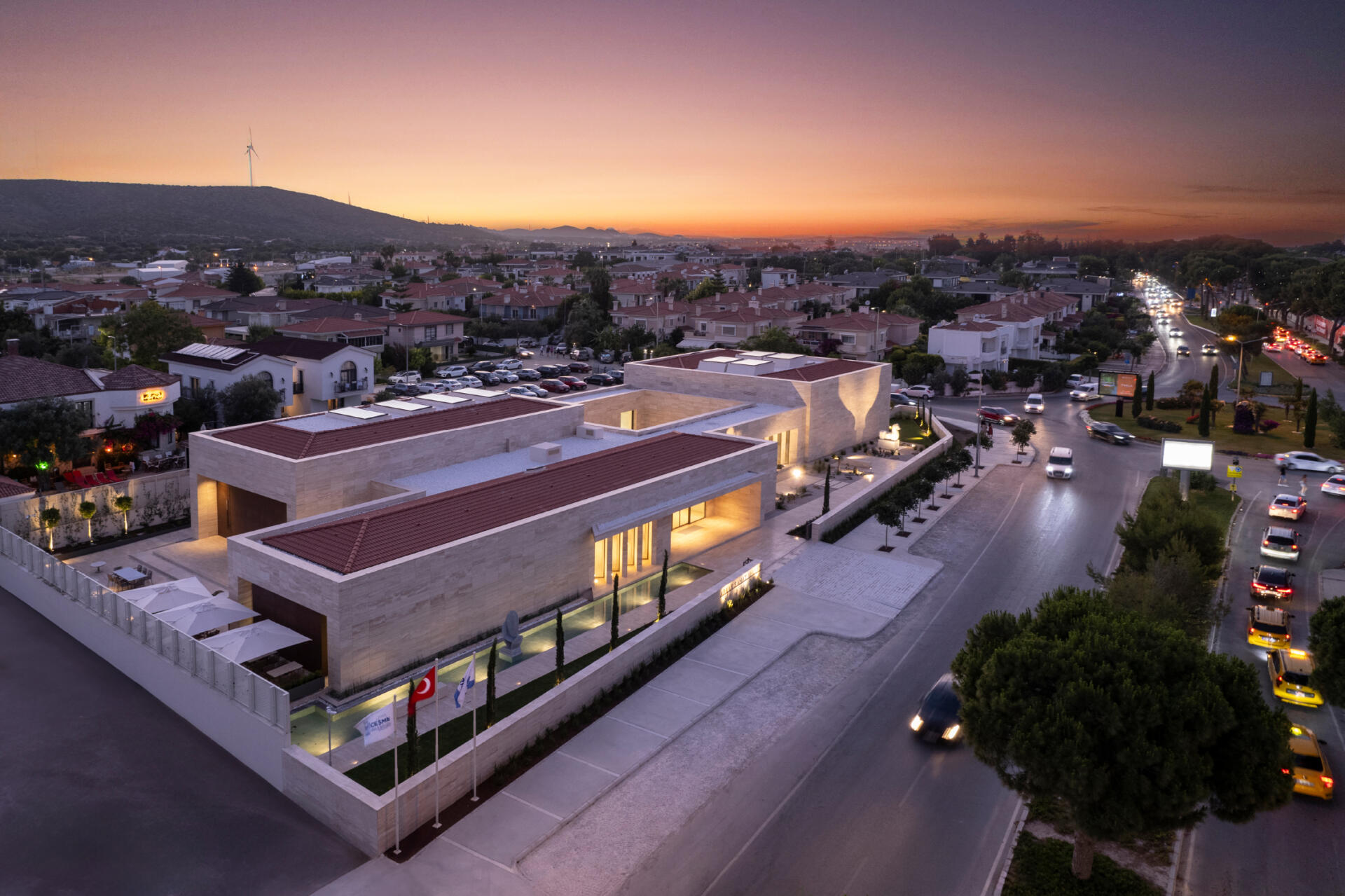
The building was conceived with a spatial composition that gradually directs visitors from the surroundings inwards, transporting them from the town’s existing atmosphere to a new, art-focused spatial experience. The design process was carried out in parallel with the structural, mechanical and electrical teams. During the construction phase, a coordinated process was implemented to ensure that the design was executed in its entirety, adhering to all details, with all teams working together in a coordinated manner. As the architectural team, we were involved in the process from the very beginning of the design phase right through to the day the building was put into use. Through a strong and productive dialogue with our client, we underwent a highly qualified building production process in which every design decision at every point of the building was generated by us.
How did the project’s context (the fabric of Alaçatı) influence the design?
Arkas Sanat Alaçatı is situated within a built environment characterised by fragmented and small-scale structures in Alaçatı. Ensuring the building remained an integral part of the settlement fabric, despite the large volumes specified in the architectural programme and the constraints of the plot, was one of the key design decisions. The interpretation of the architectural programme, and the design decisions regarding the definition and interplay of volumes, masses and surfaces, were shaped by the defined relationship with the context that we sought to establish.
What role did natural stone play in this project? Which types of stone were chosen?
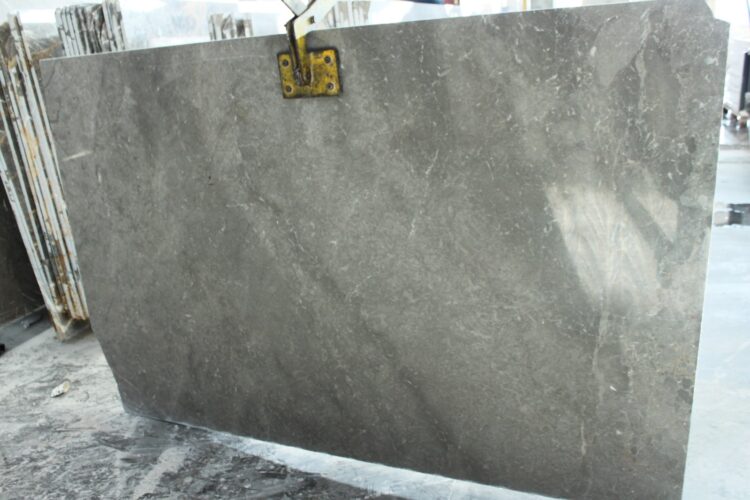
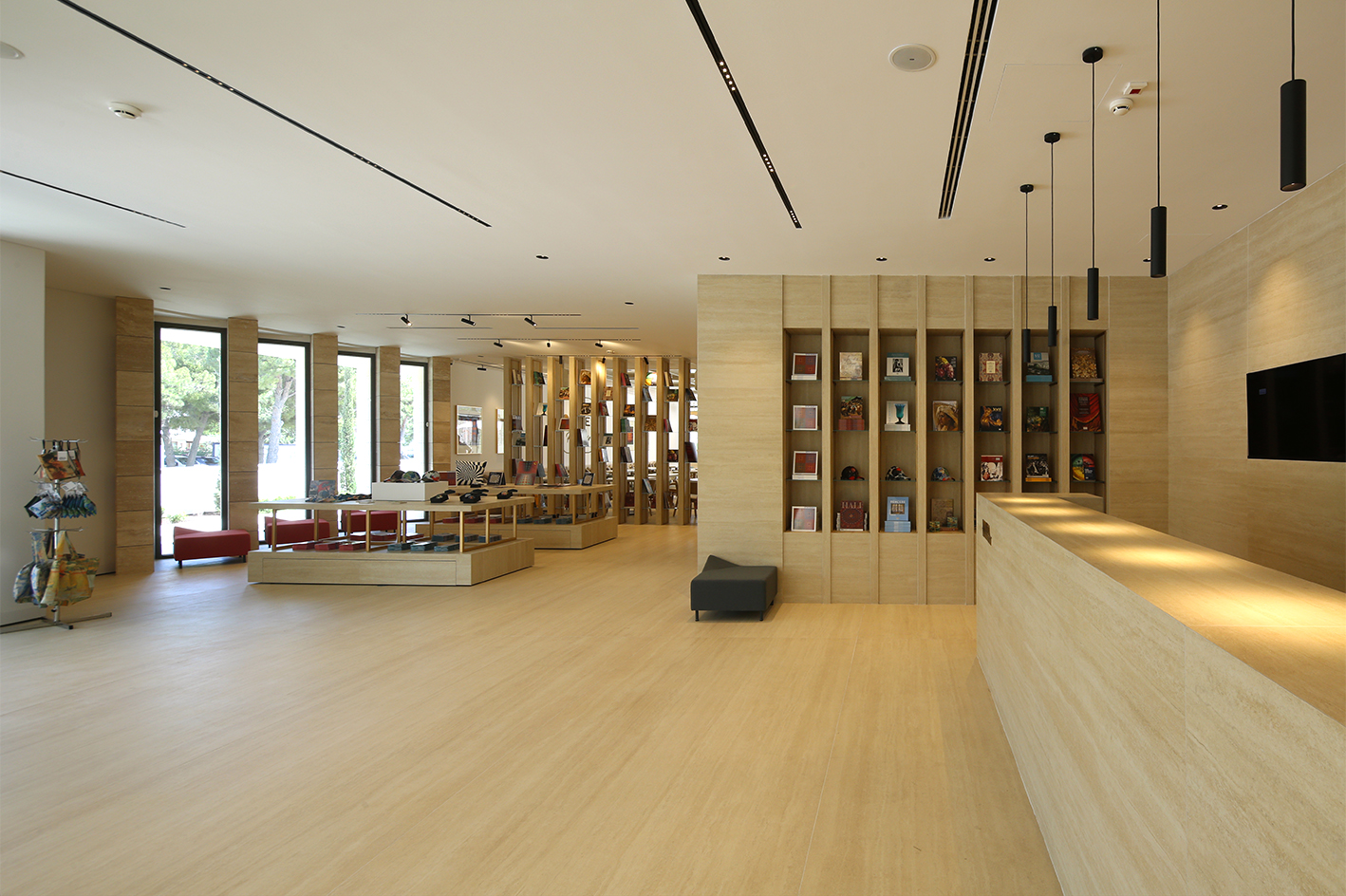
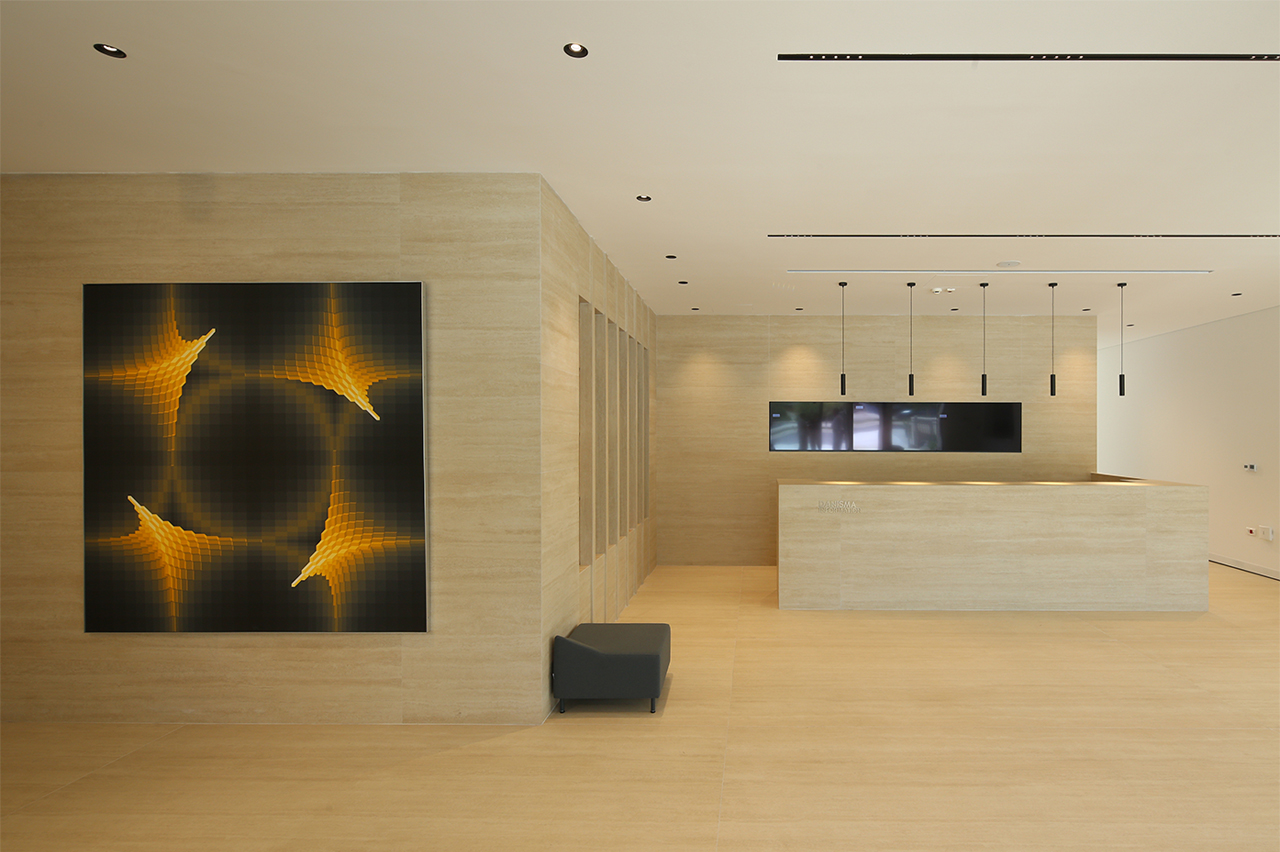
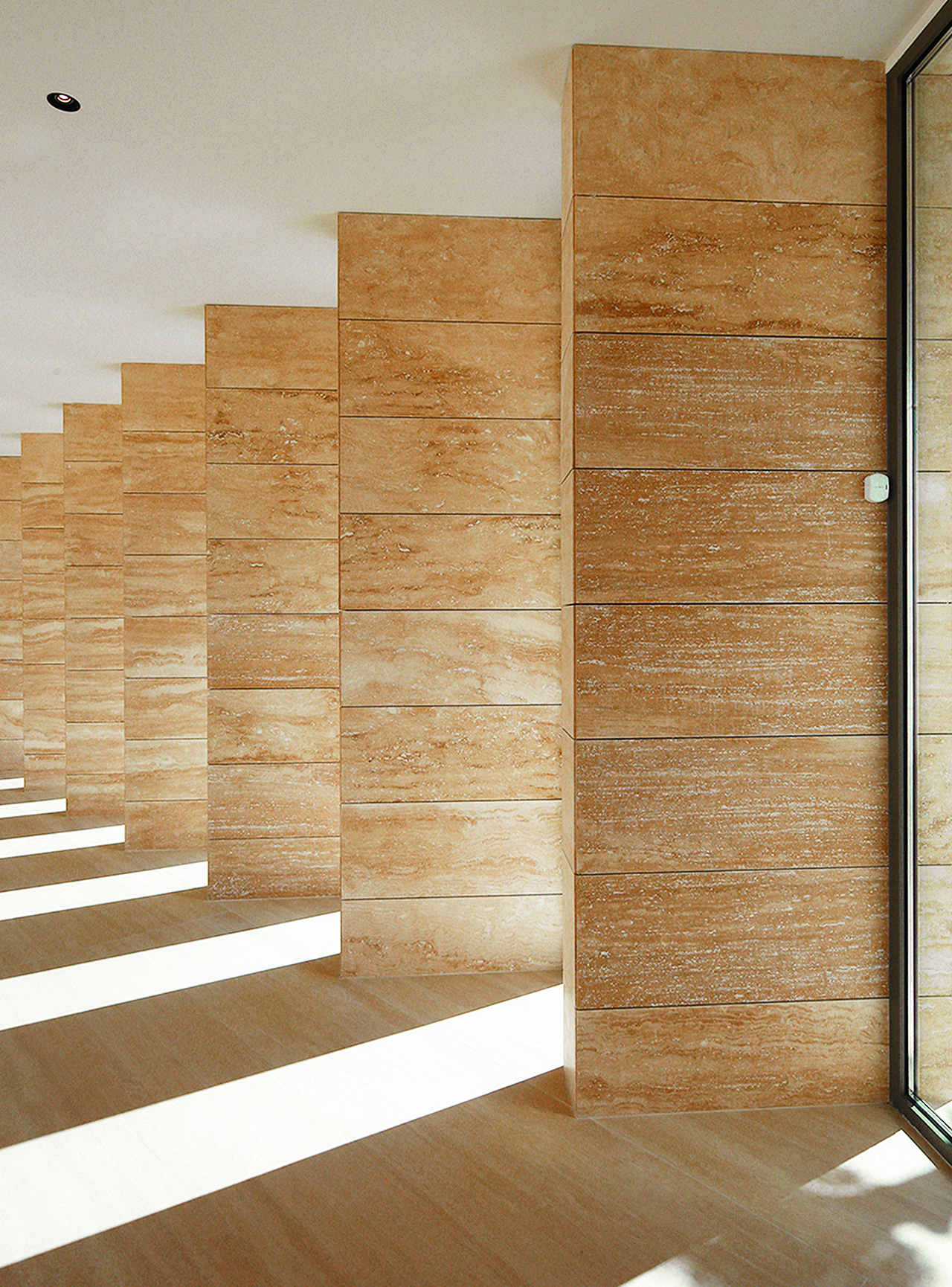
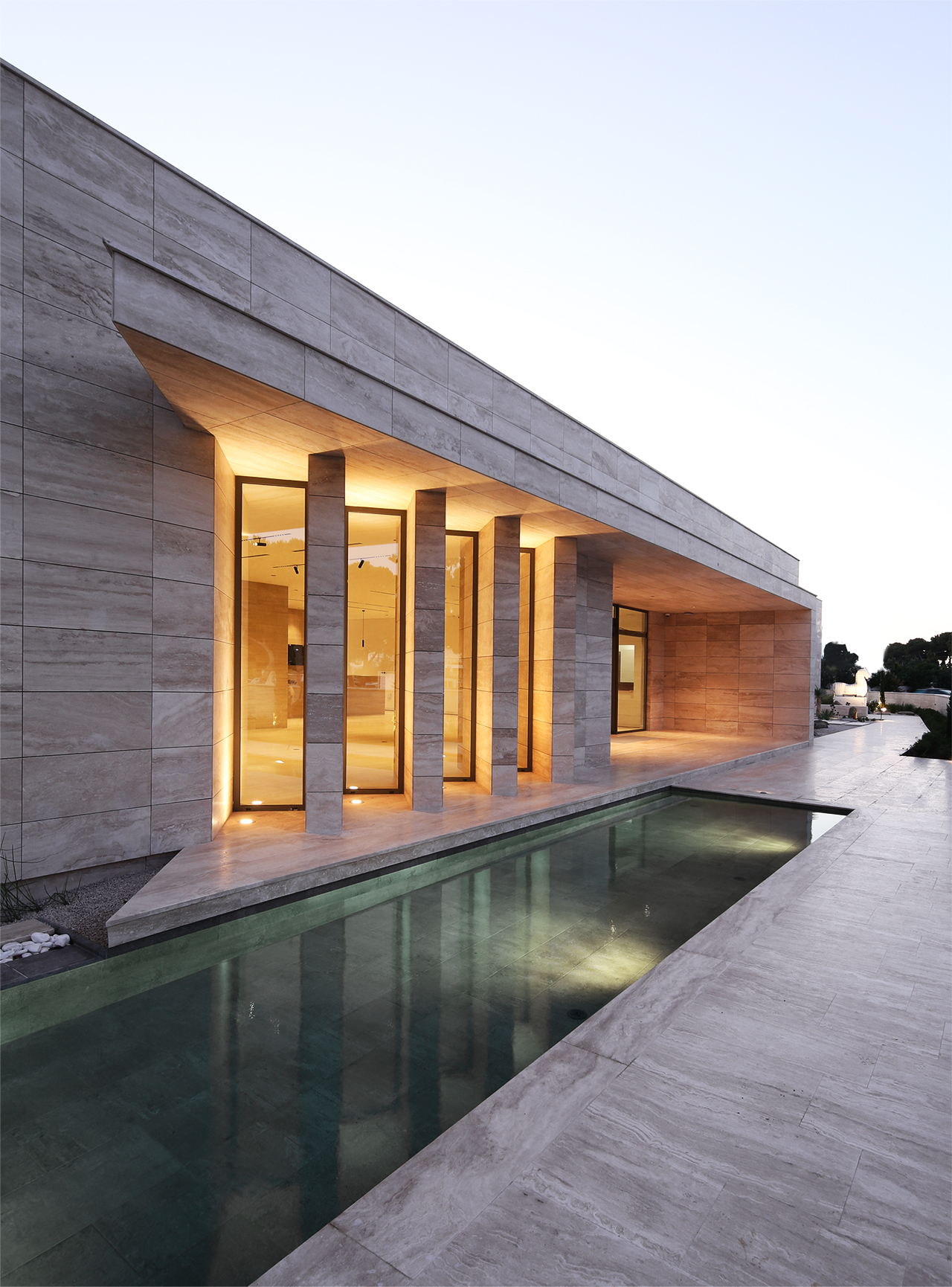
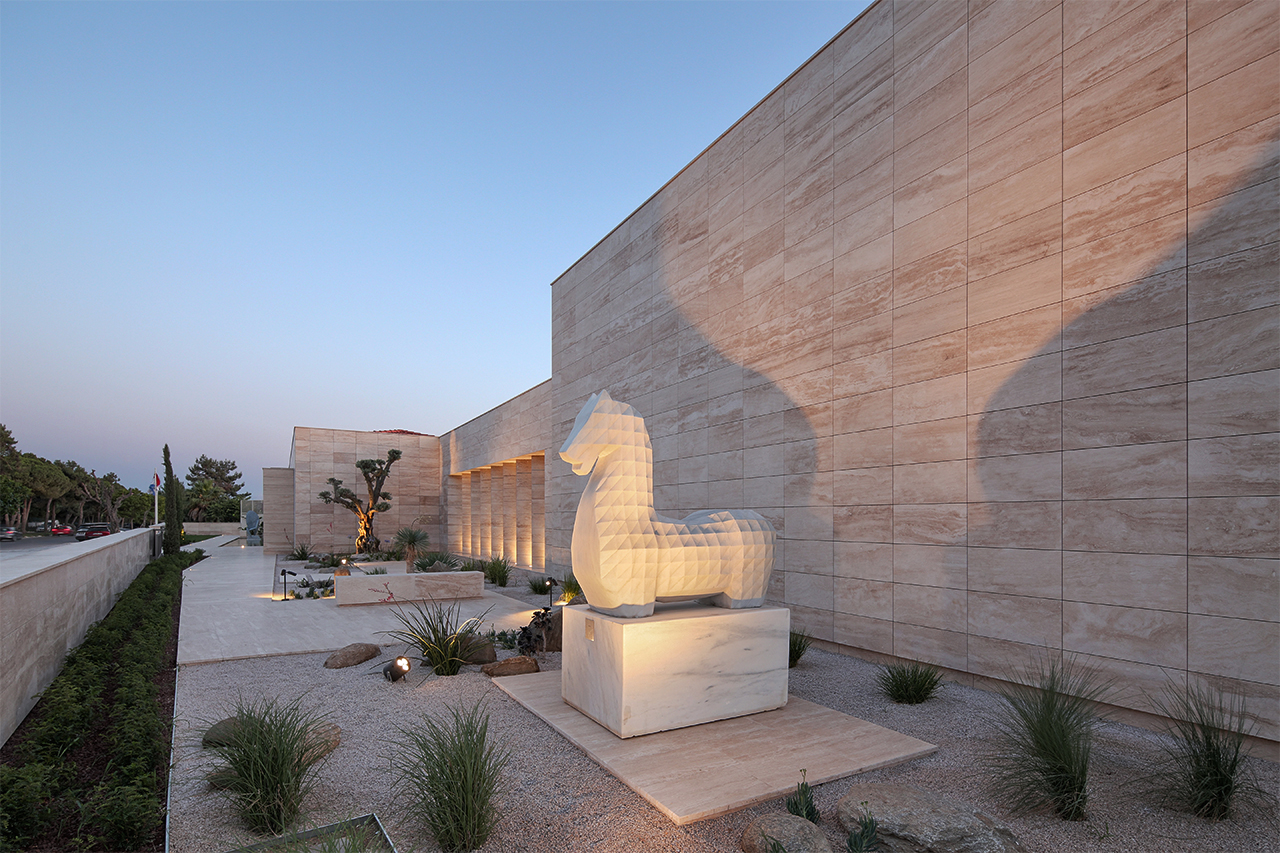
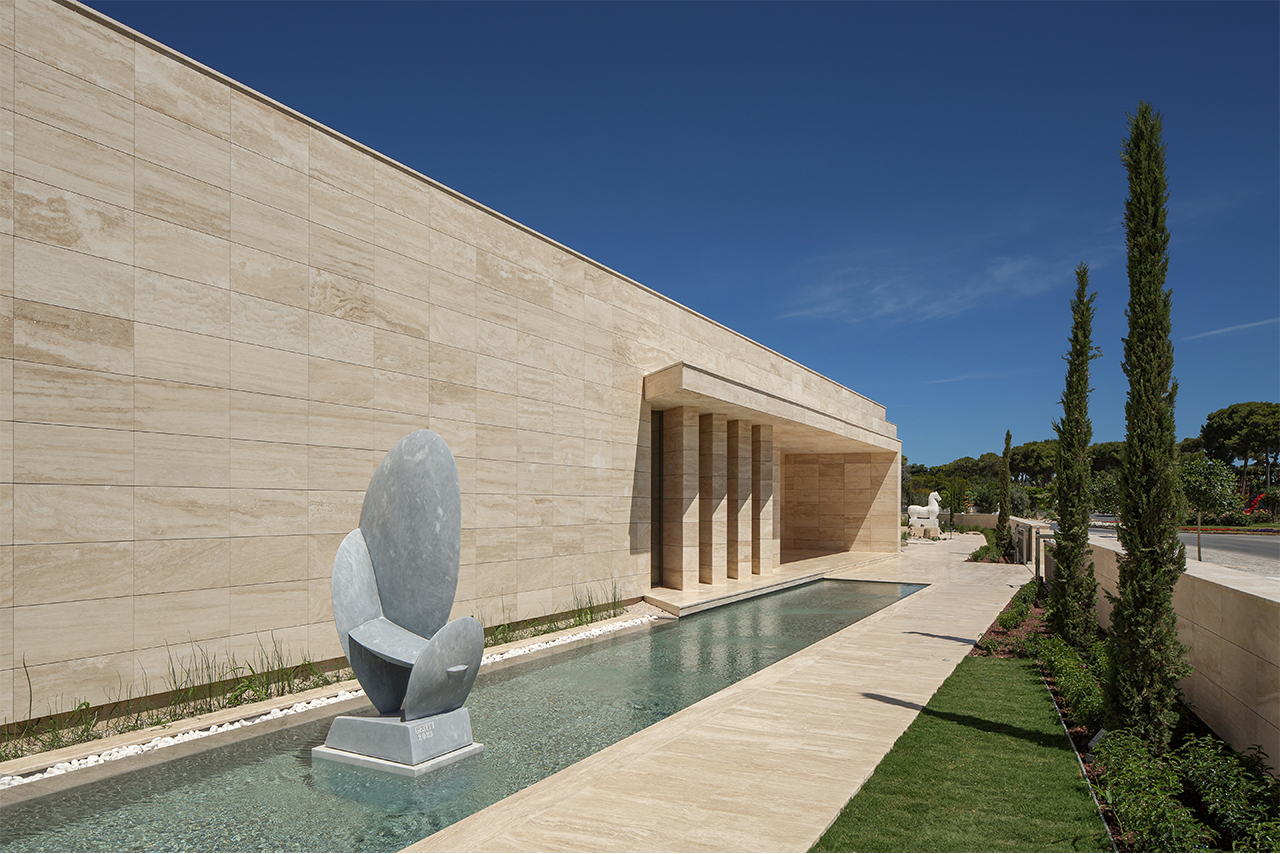
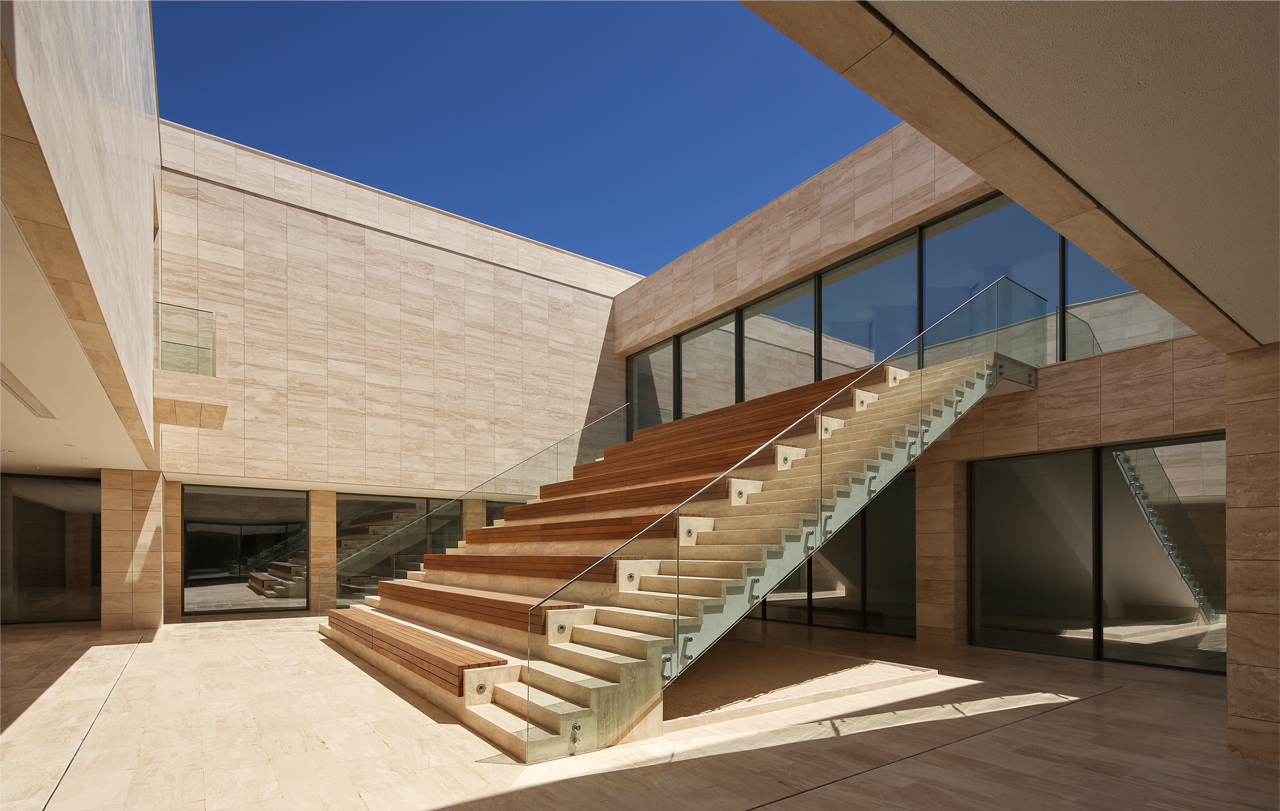
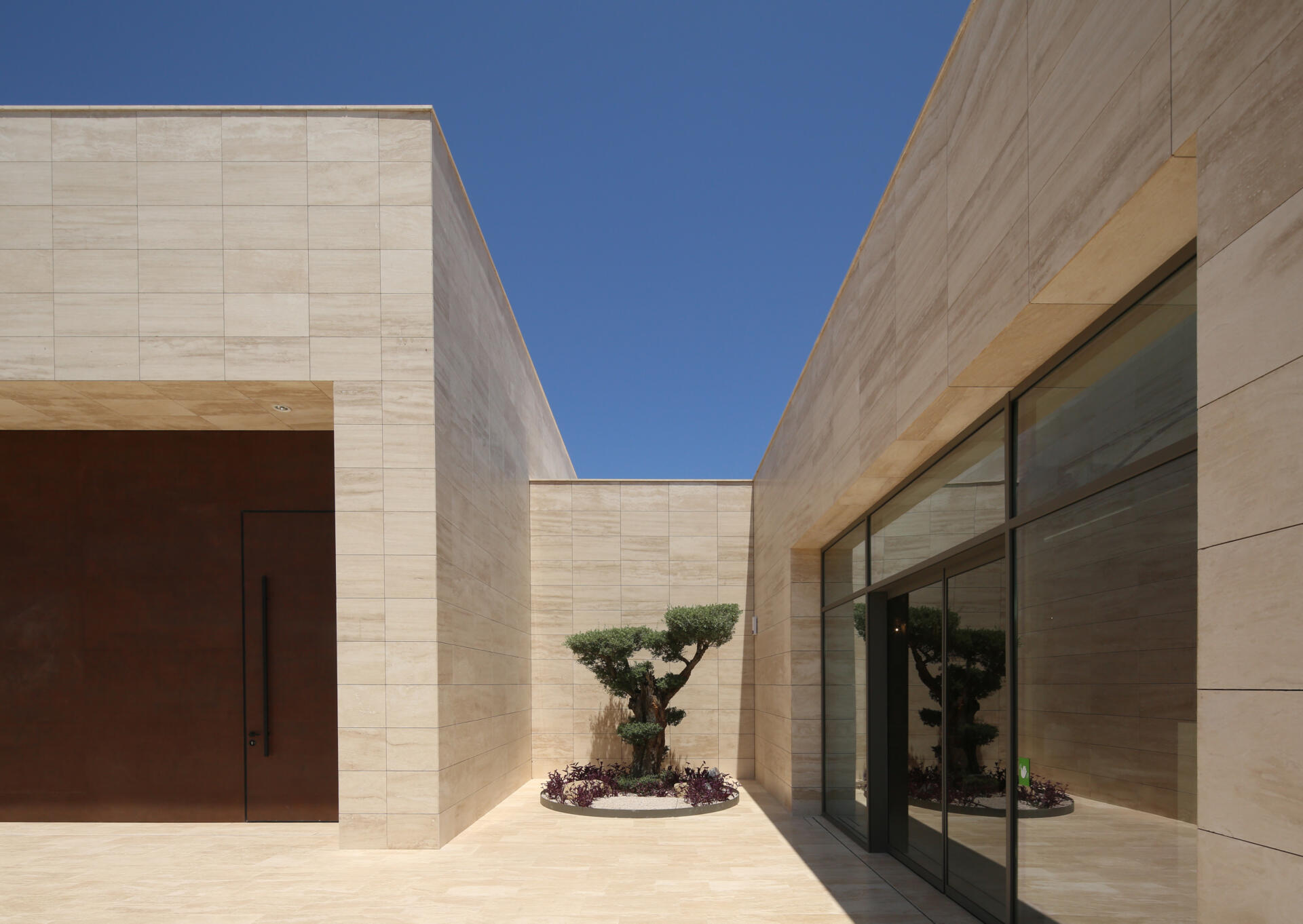
The travertine material used is the most important element defining the building’s architectural character. It was identified from the very outset of the design as one of the key elements that would help create the spatial atmosphere we envisioned. In establishing a spatial atmosphere focused on the perception of time, and in the expression of a simple yet powerful architectural character, the use of a single type of natural stone plays a decisive role. Natural travertine stone was used on the building’s walls, floors, the floors of open spaces, and outdoor furniture. The travertine-clad surfaces allowed the sensation of daylight to vary with the time of day and the seasons, ensuring that the sense of time became a foundational element of the spatial composition.
How do you think the role of natural stone in architecture will evolve in the future?
We believe that in the future, natural stone will assume a stronger role in architecture as a fundamental architectural tool that carries the building’s memory, its relationship with the climate, and a sense of timelessness.
Whilst architecture today is increasingly being driven towards a form of production that is rapidly consumed, short-lived and focused on visual impact, natural stone offers a powerful alternative thanks to its longevity, capacity to age gracefully and the sense of belonging it establishes with its geographical context. Particularly in the Mediterranean region, stone ensures that a building continues to generate value over time, thanks to its thermal behaviour, texture, relationship with light, and the character it acquires as it ages.
We believe that as discussions surrounding the climate crisis intensify in the coming period, the use of local materials and low-carbon construction will gain greater importance. In this context, natural stone could reclaim a central position due to its longevity, low maintenance requirements, and the fact that it necessitates fewer processing stages compared to many industrial materials. What is important here is the ability to reinterpret stone in conjunction with contemporary details, new production techniques, and current spatial requirements.
In our view, the role of natural stone in the architecture of the future will be defined as a material that is site-specific, enduring, reusable, and capable of generating powerful spatial atmospheres.
Do you have any brief advice for architects at the start of their careers?
They must not forget that the architectural design process is a holistic, thought-based and practice-oriented process from the very definition of the problem. To produce quality architecture, this process requires mastery of the requirements of different disciplines, an understanding of materials, and the ability to produce detailed solutions.
Furthermore, we advise them to focus on producing works that are enduring and of high quality, that speak for themselves, and that are sensitive to their surroundings and the wider community, rather than adopting fleeting, popular approaches.



 +90 532 585 51 95
 +90 532 585 51 95