


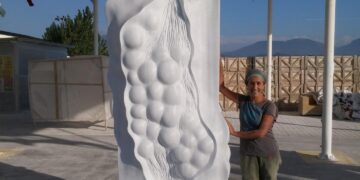
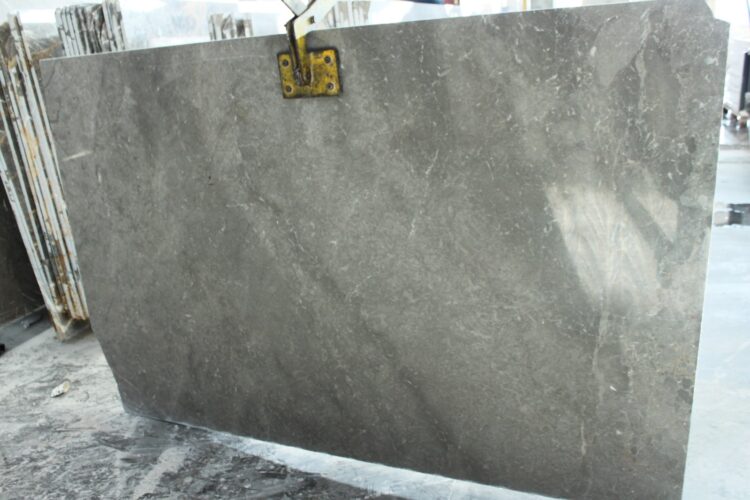


“Stone doesn’t reveal itself to you right away; it demands patience and respect from you.” Ebru Akıncı, who structures her artistic practice around the tension between opposing principles in nature, views marble not merely as a material but as a narrative partner. In this approach to creation, where the outer form invites the viewer while the true story lies hidden within the inner voids, we spoke with Ebru Akıncı about what local stones, from Afyon to Muğla, bring to her art.
How did your artistic journey begin? Could you share with us the pivotal moments that led you toward sculpture?
I’ve been deeply involved with and interested in painting since I was very young. But during my university years, I had turned toward the social sciences, and art was second on my list of priorities at the time. While studying in the History Department at Ankara Hacettepe University, encouraged by my friends in the sculpture department, I began taking drawing classes. Soon after, I found myself taking the special talent exam and had been accepted into the sculpture department. As you might expect, I transferred from the history department. I then continued my education in stone carving at the Istanbul Fine Arts University (MSÜ) Sculpture Department and completed my undergraduate studies there. I conducted studies on stone carving at the Carrara Academy of Fine Arts in Italy.
The moment I would call a turning point was when I first worked with stone. Encountering the resistance of the stone was, in fact, like encountering my own limits. From that point on, there was no turning back.
How would you define the concept of “the balance of opposites,” which you frequently emphasize in your artistic practice? How does this approach reflect in your work?
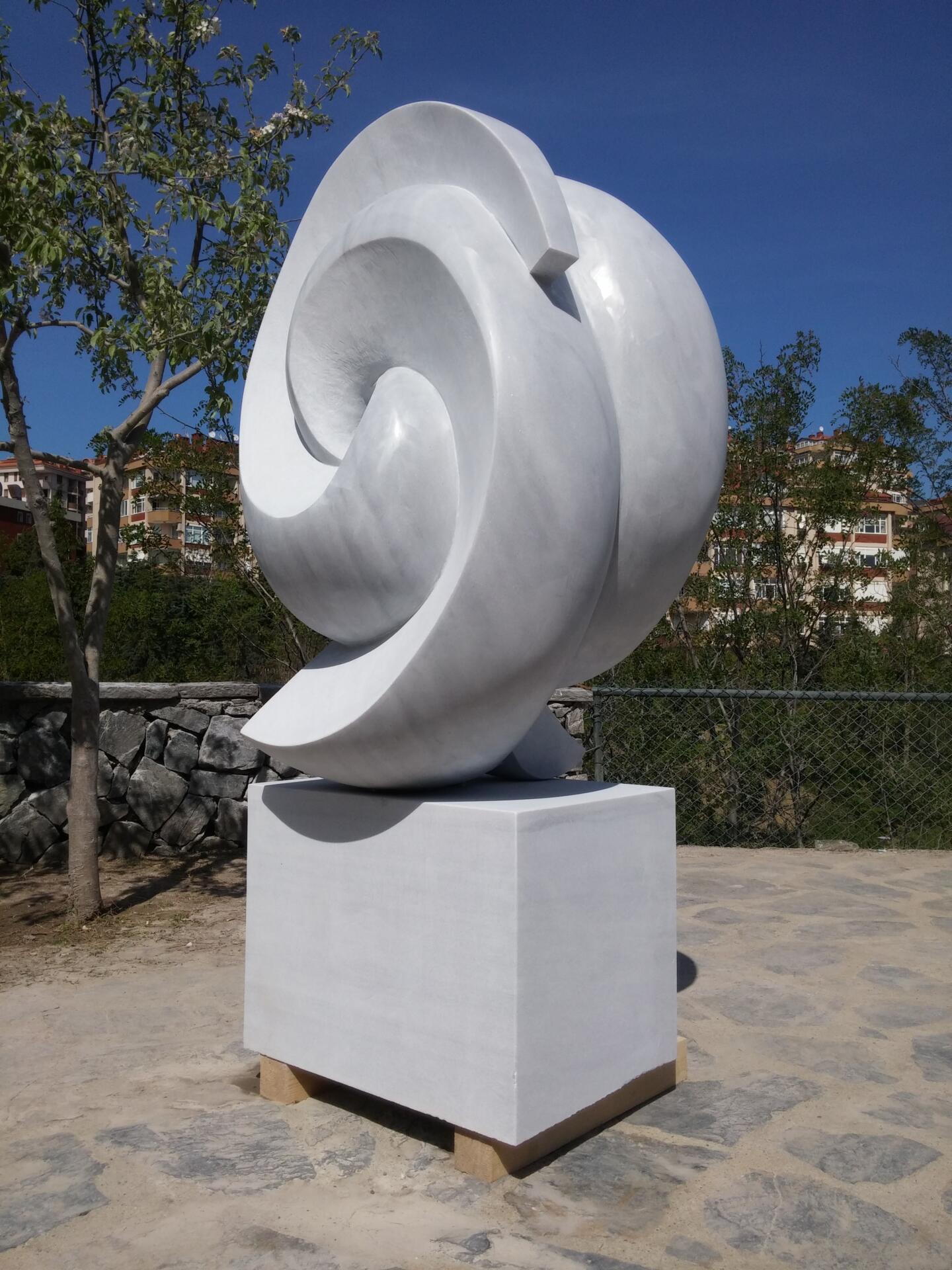
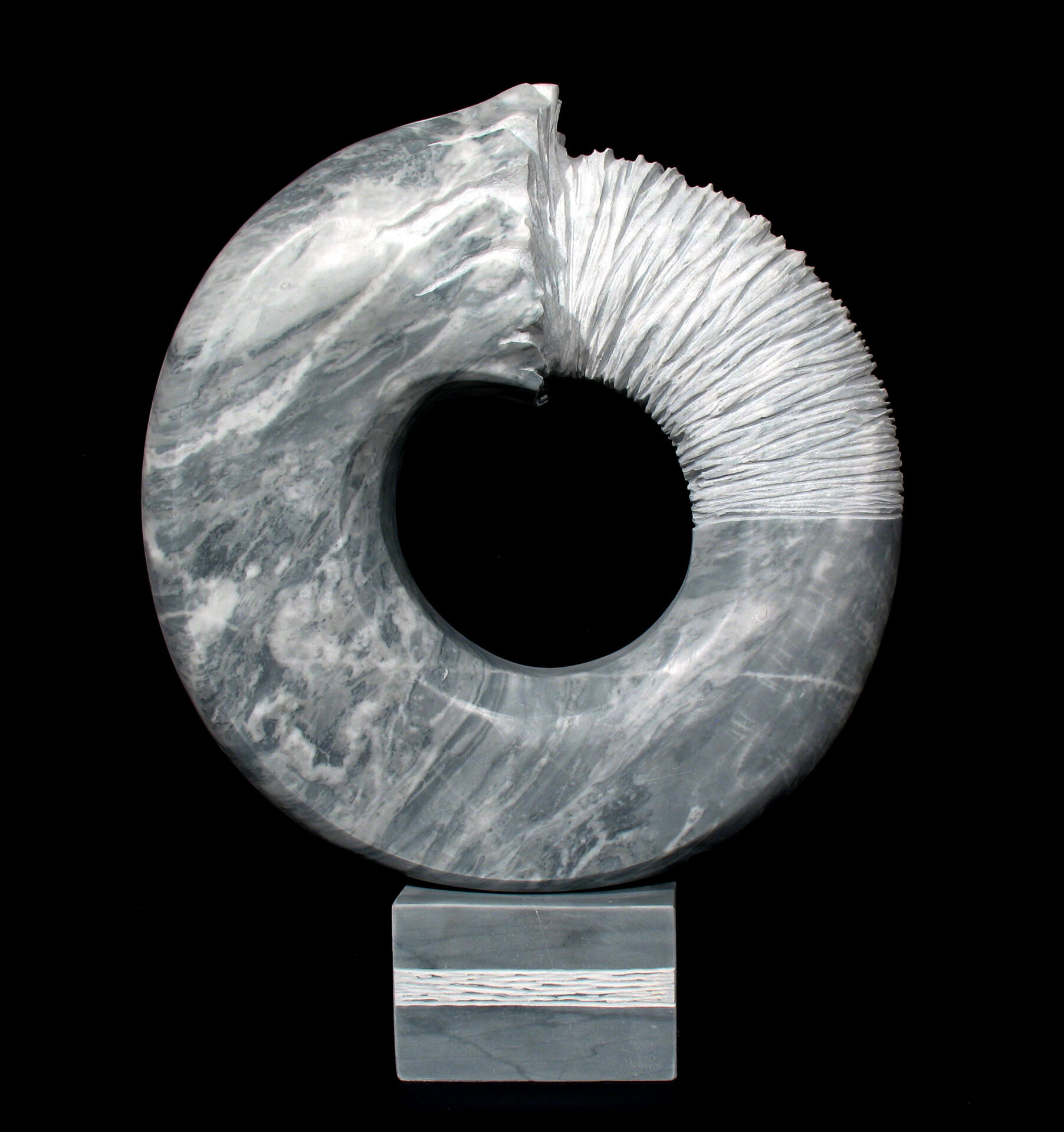
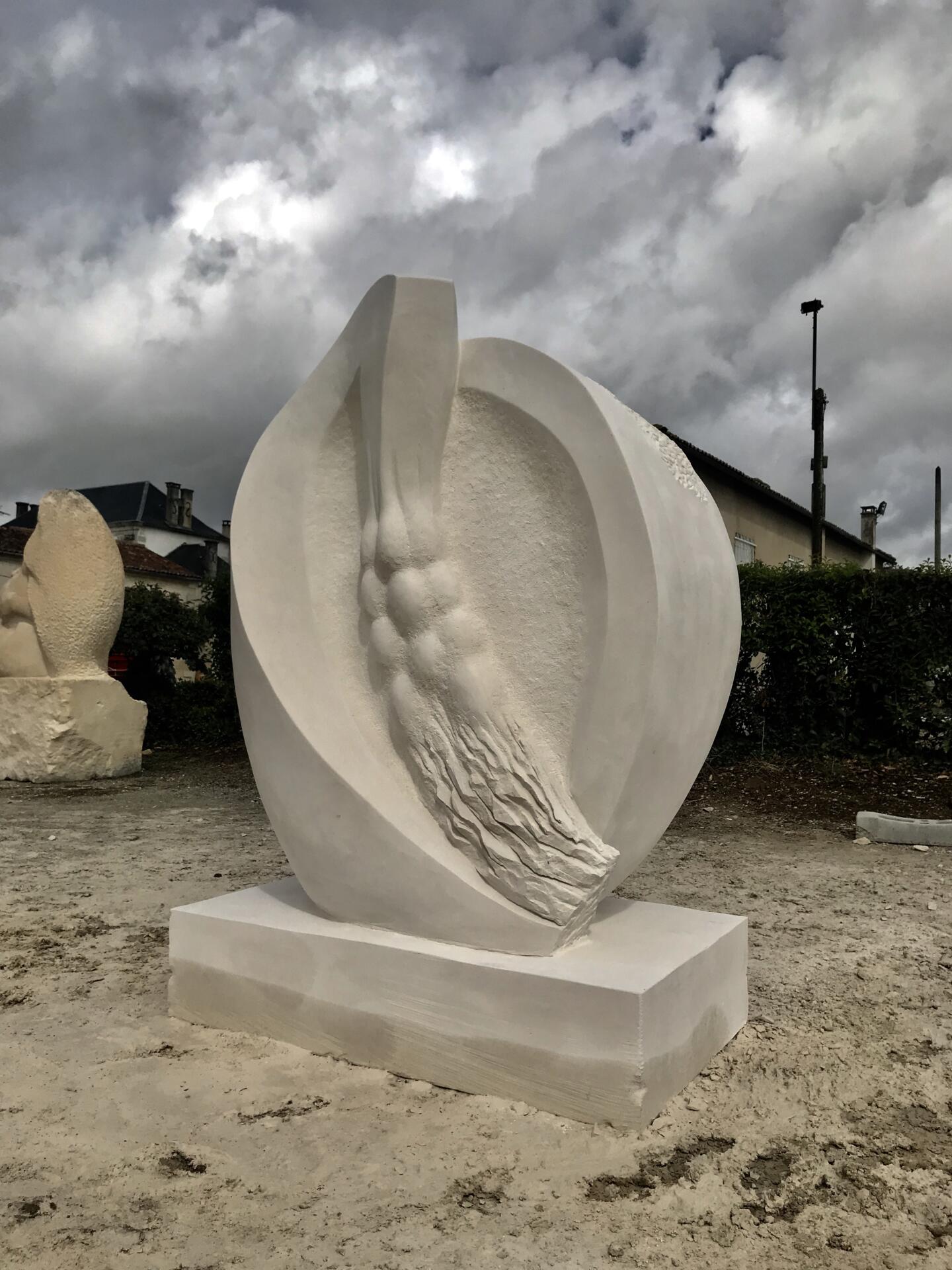
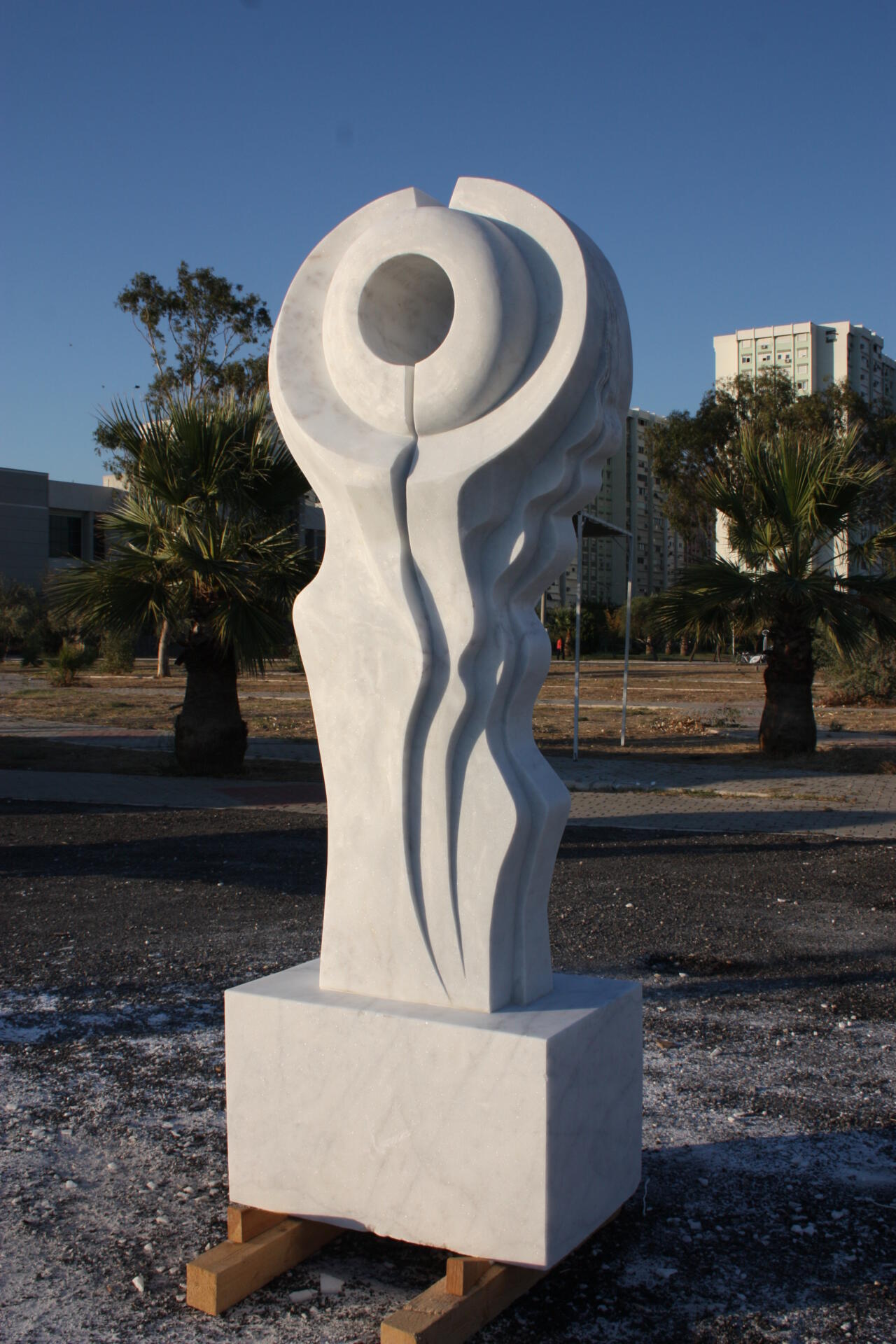
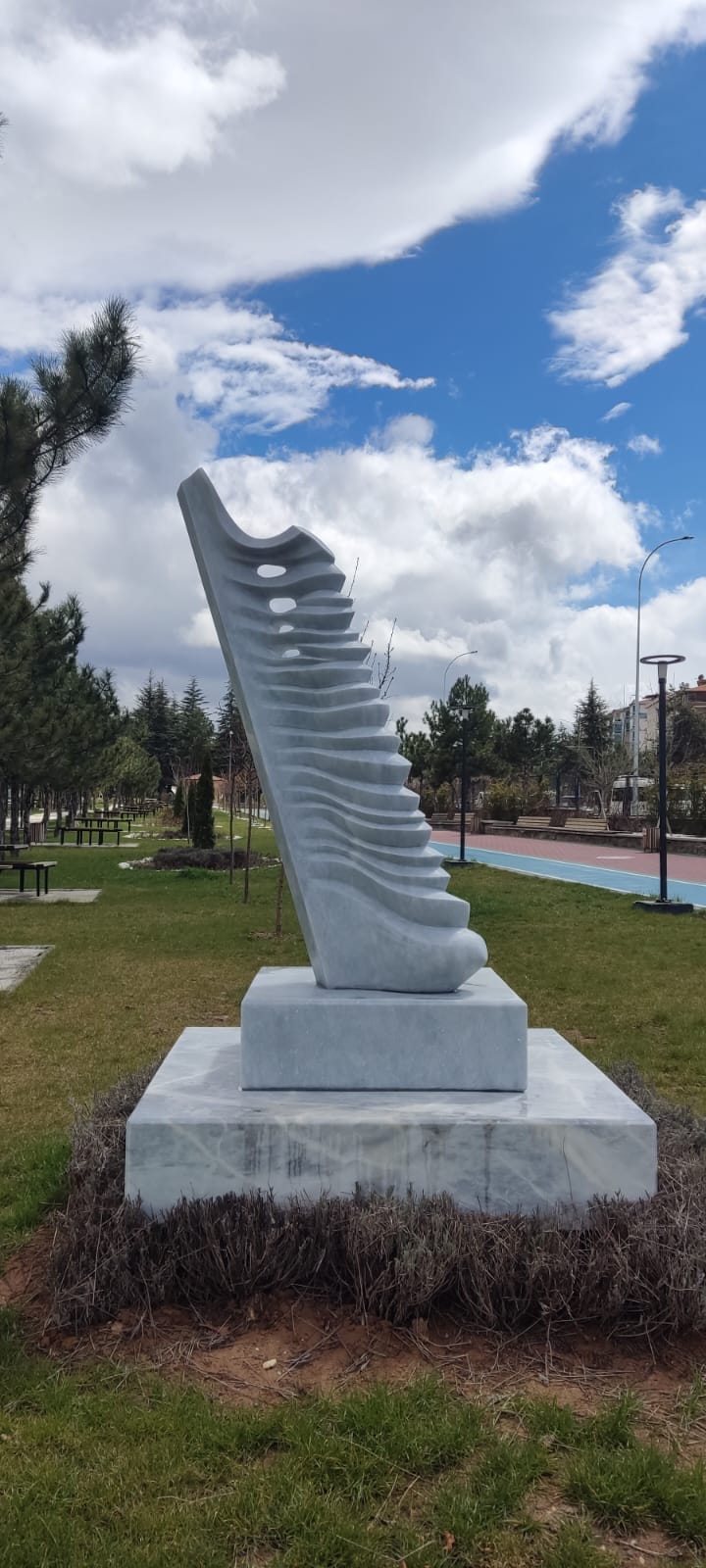
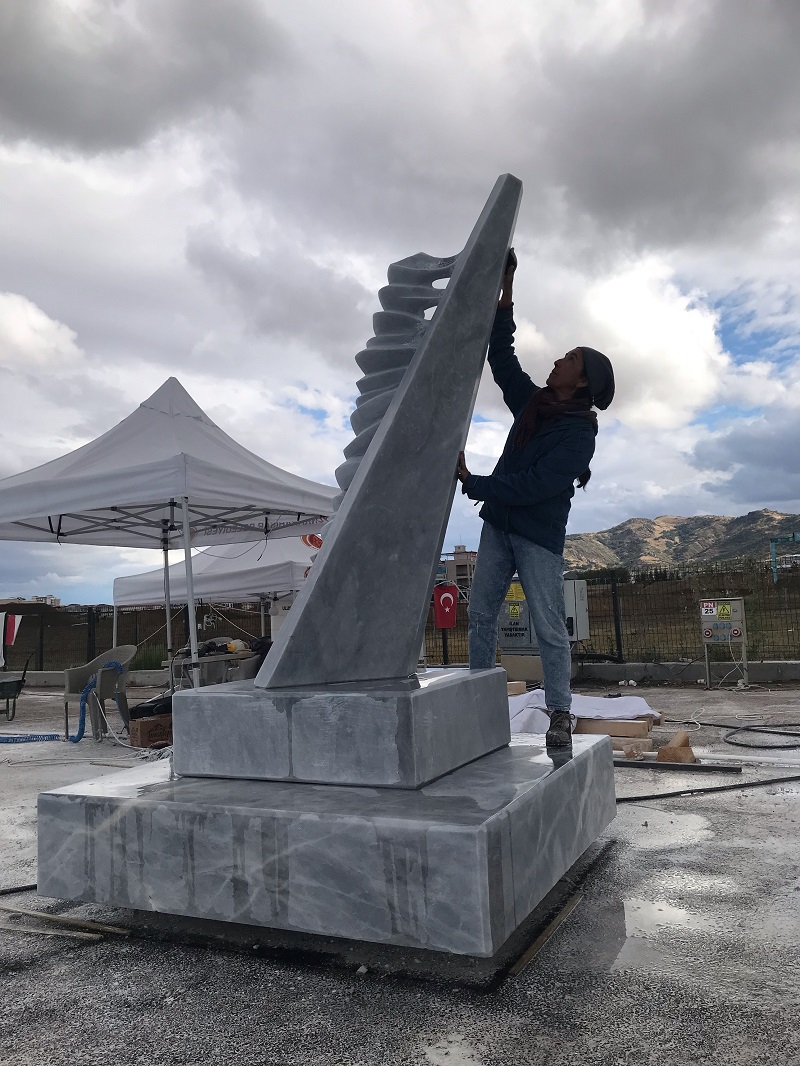
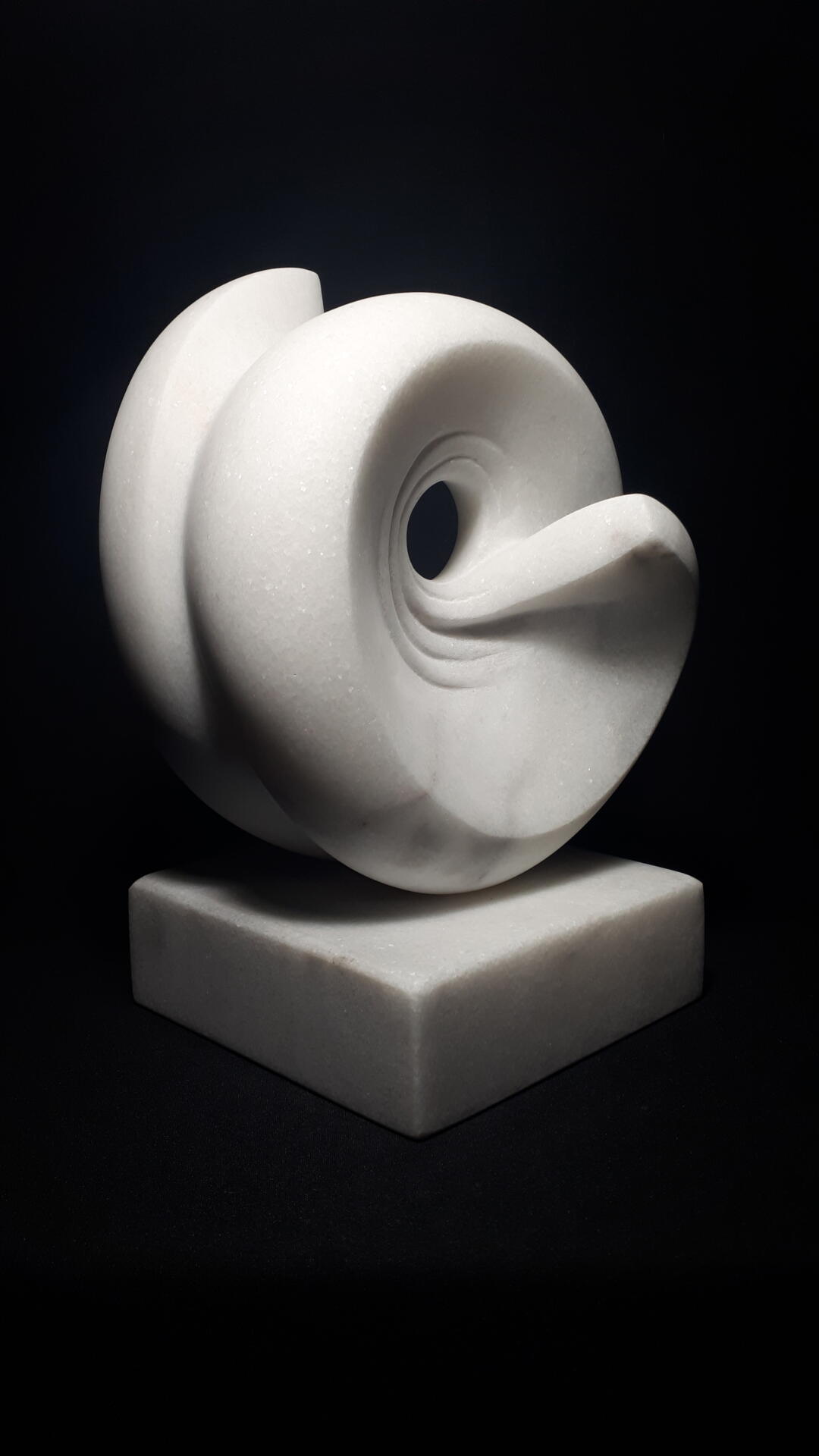
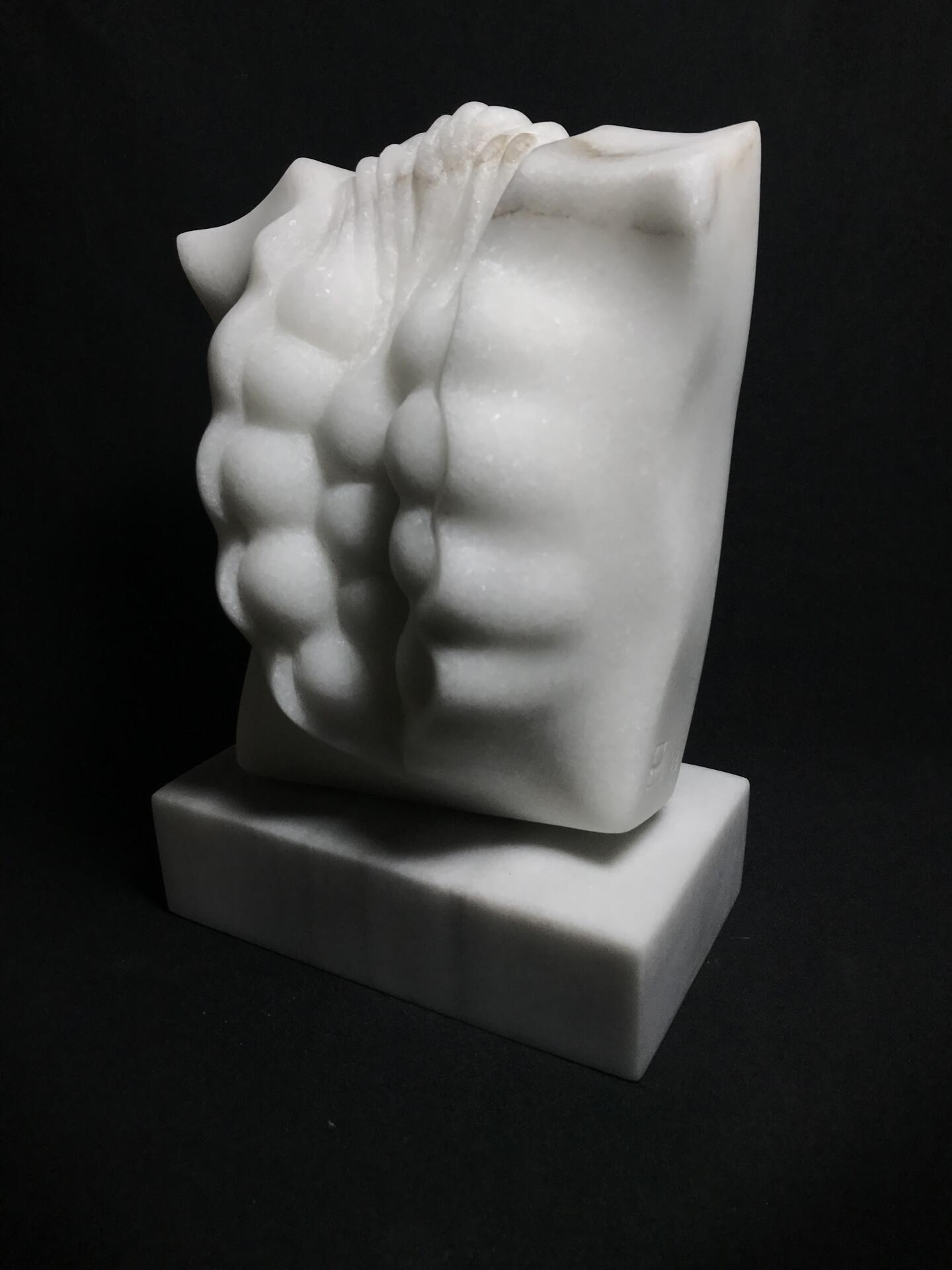
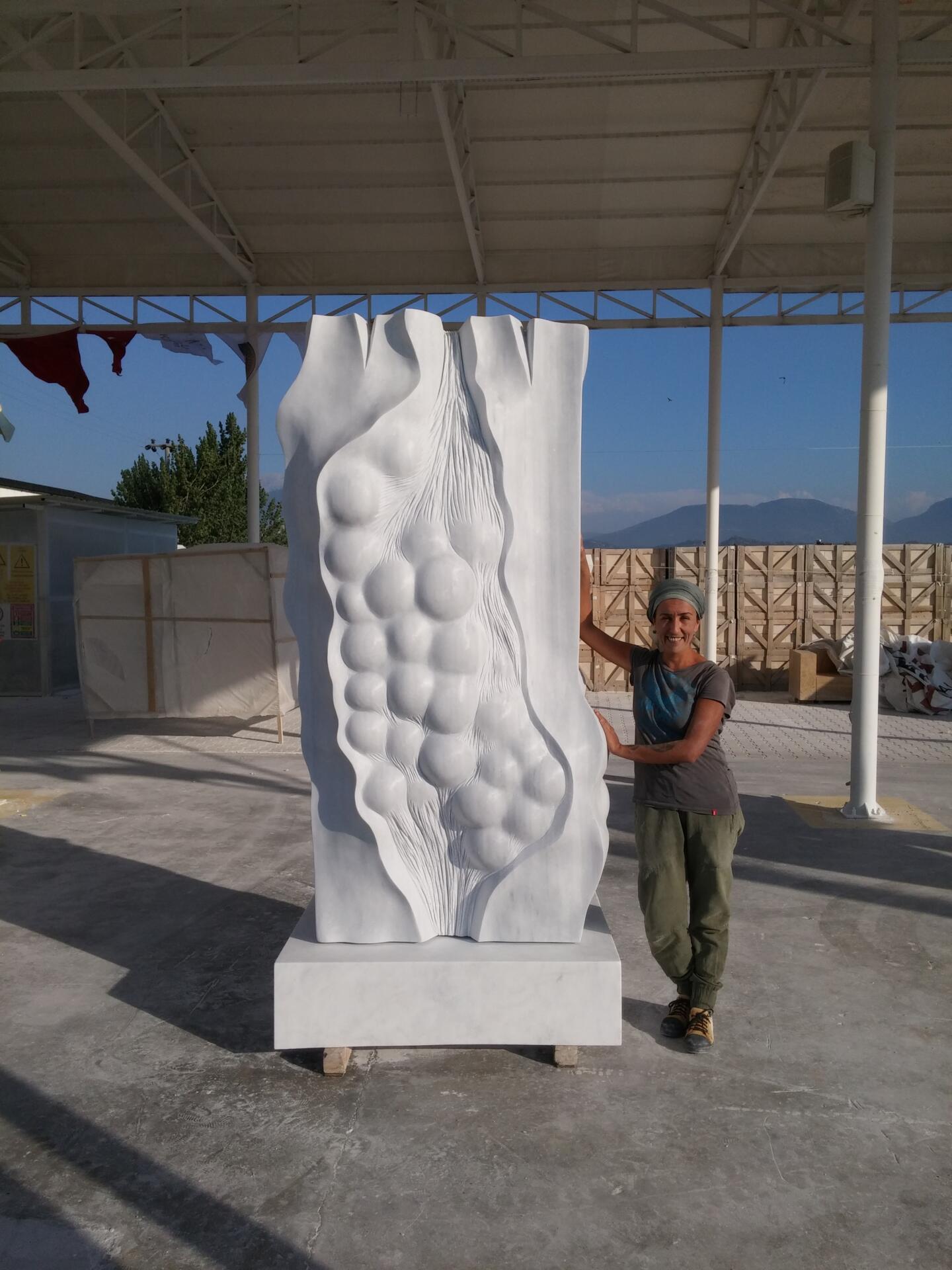
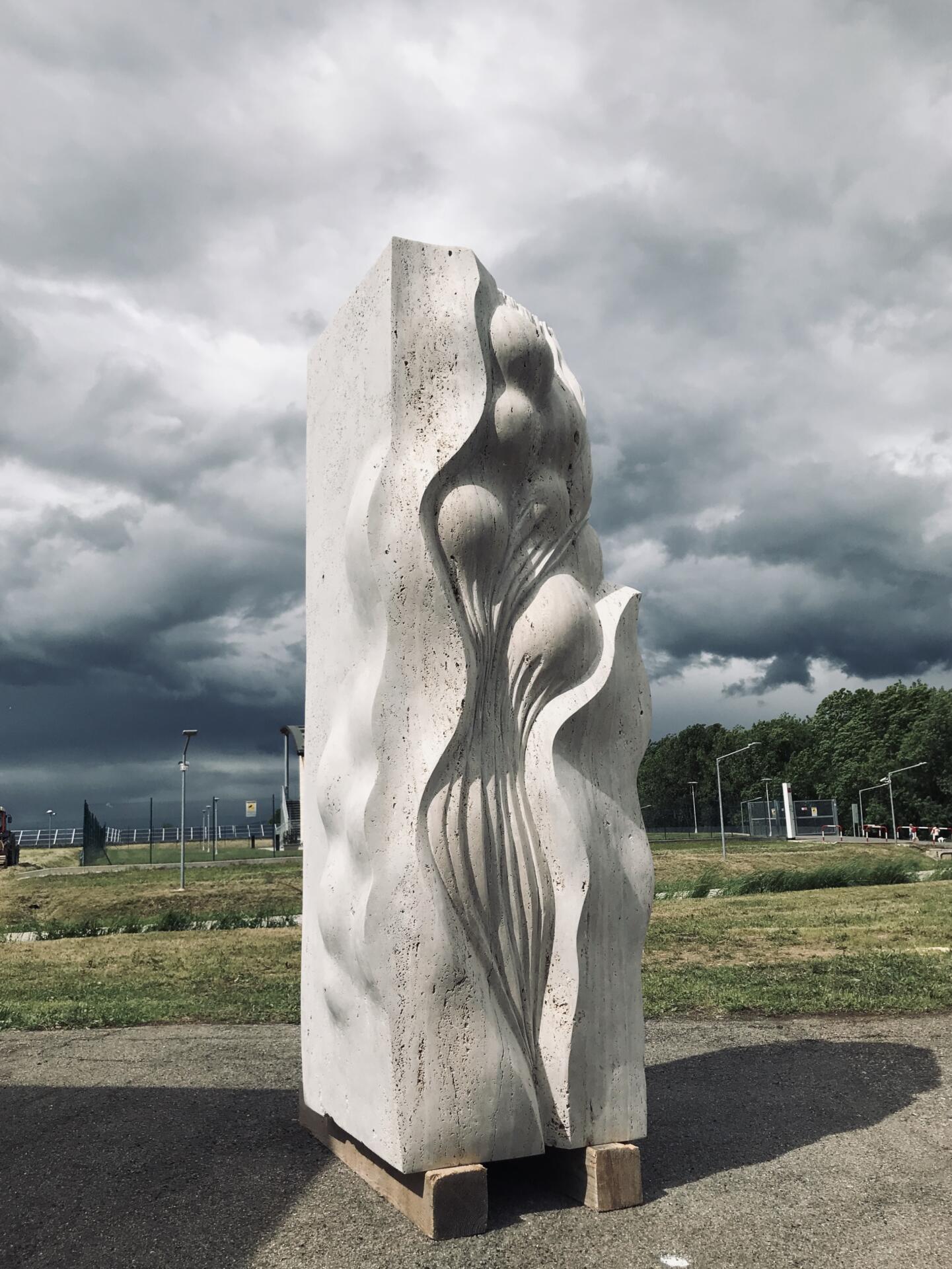
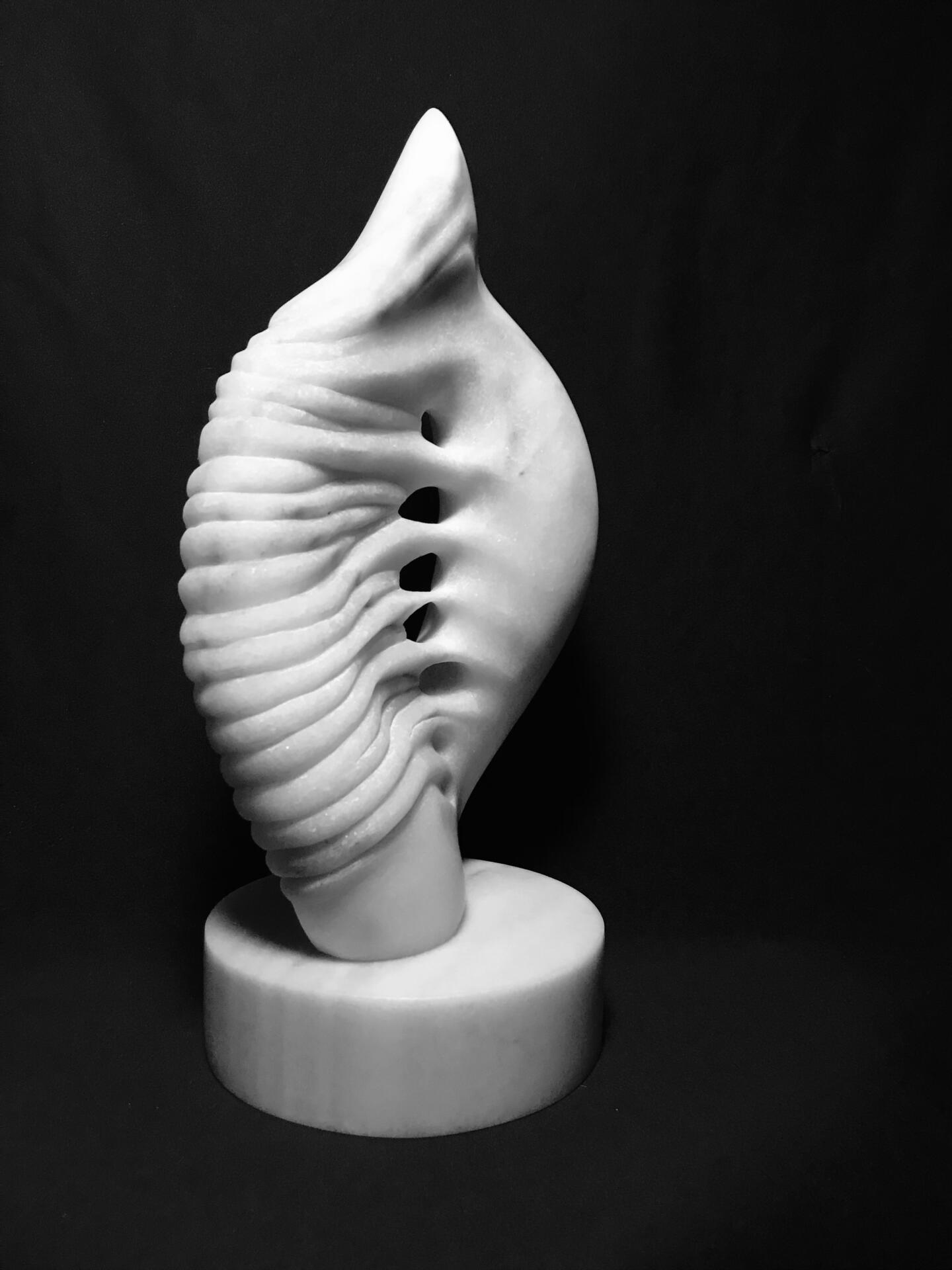
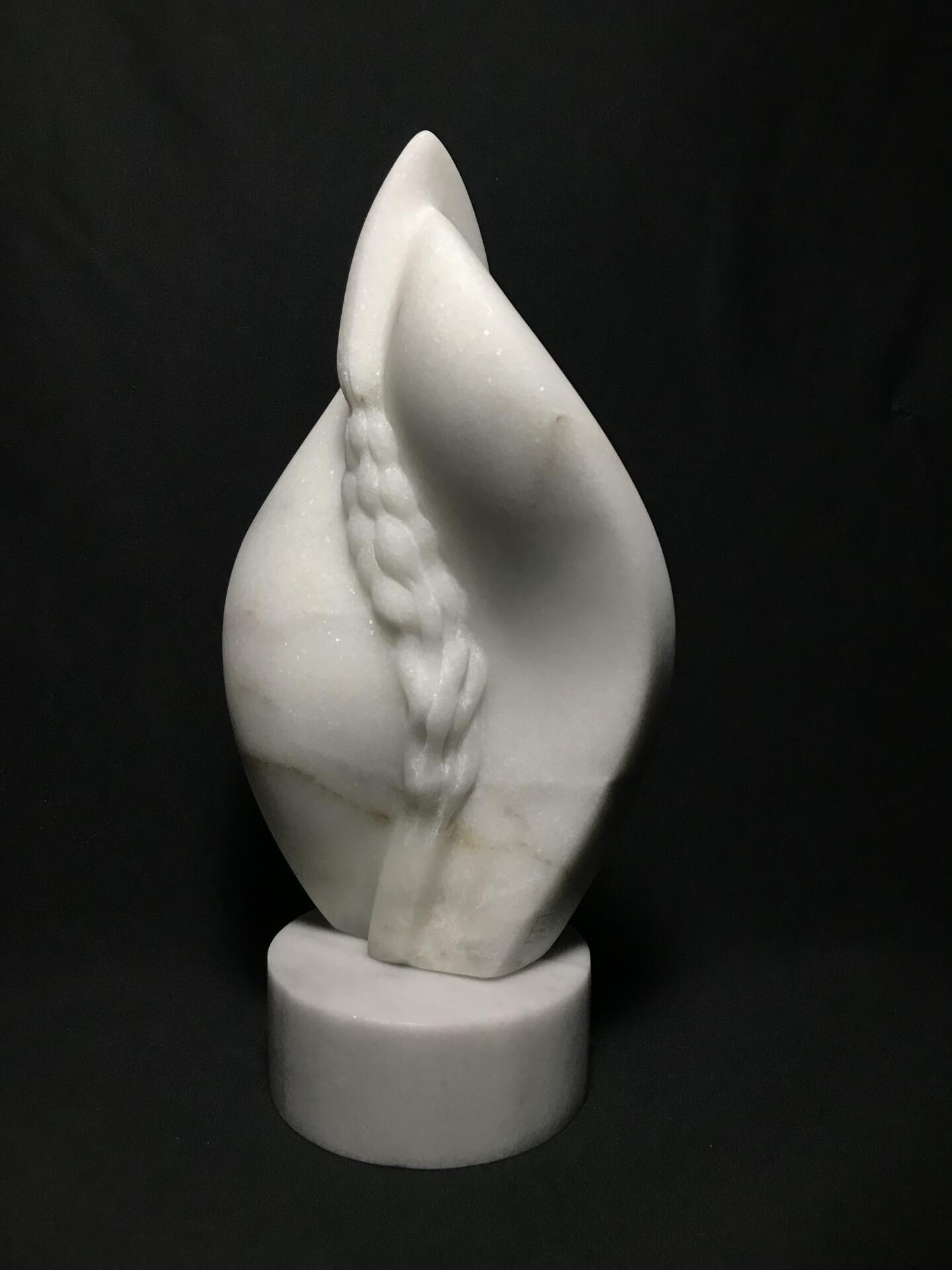
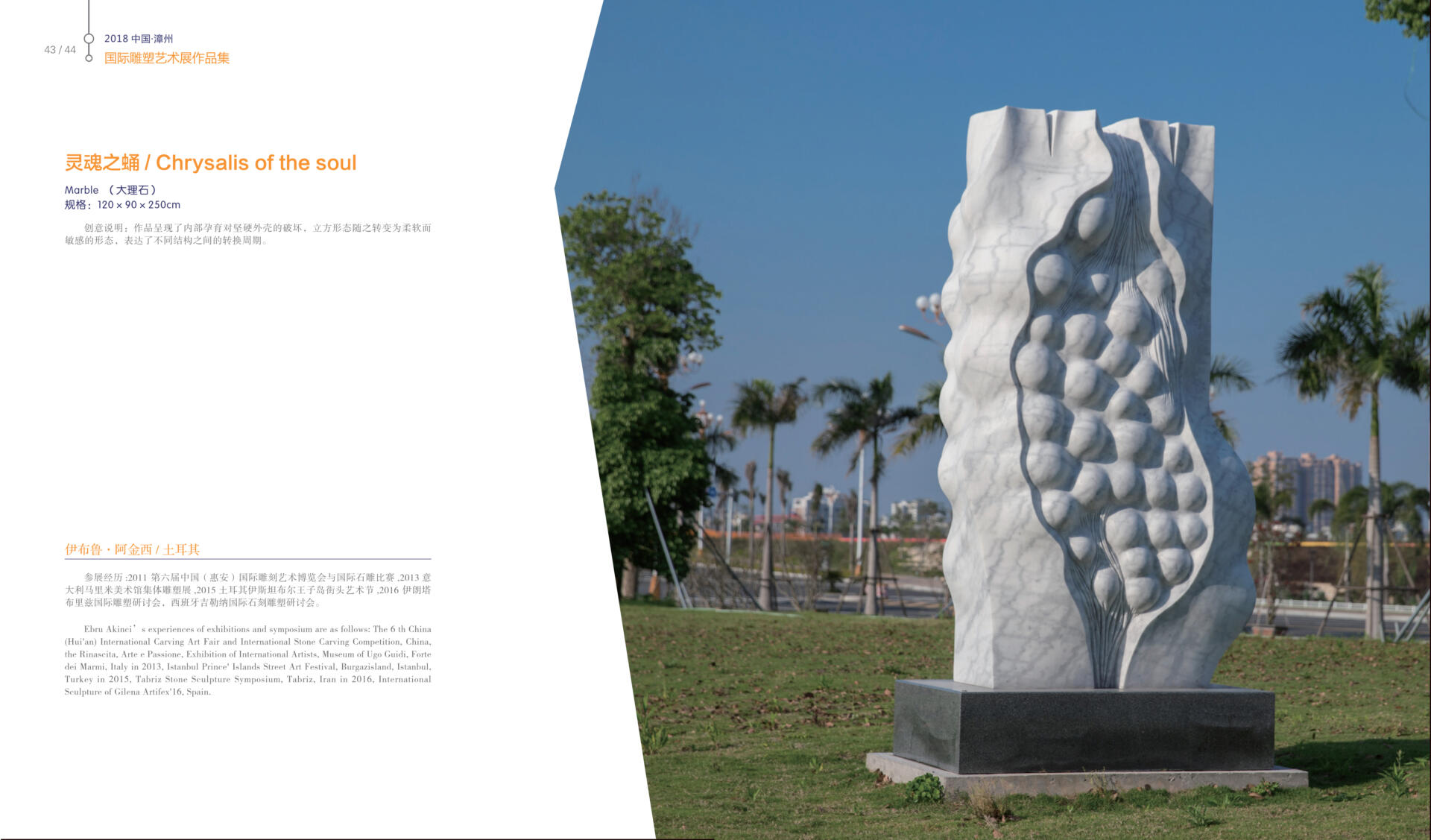
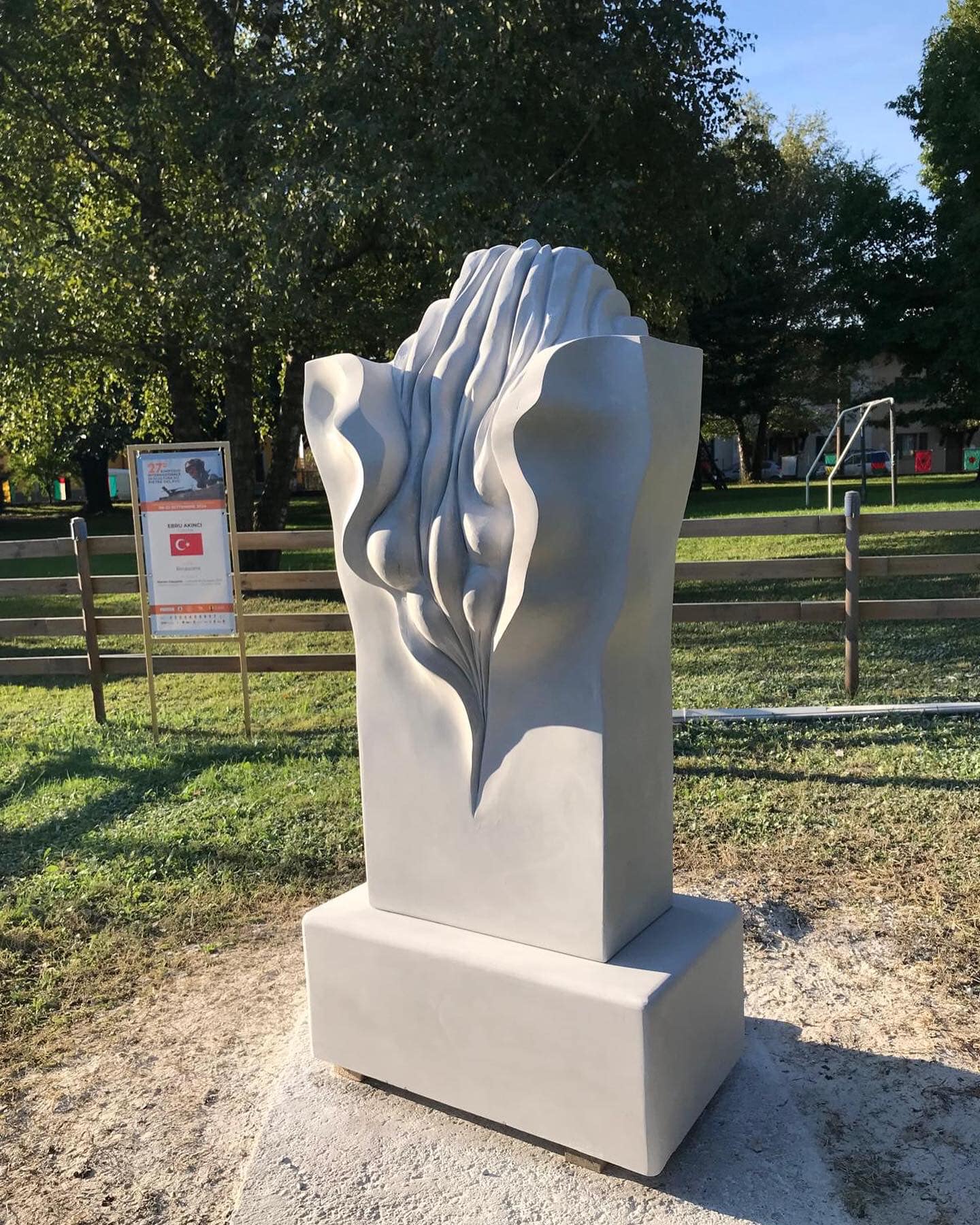
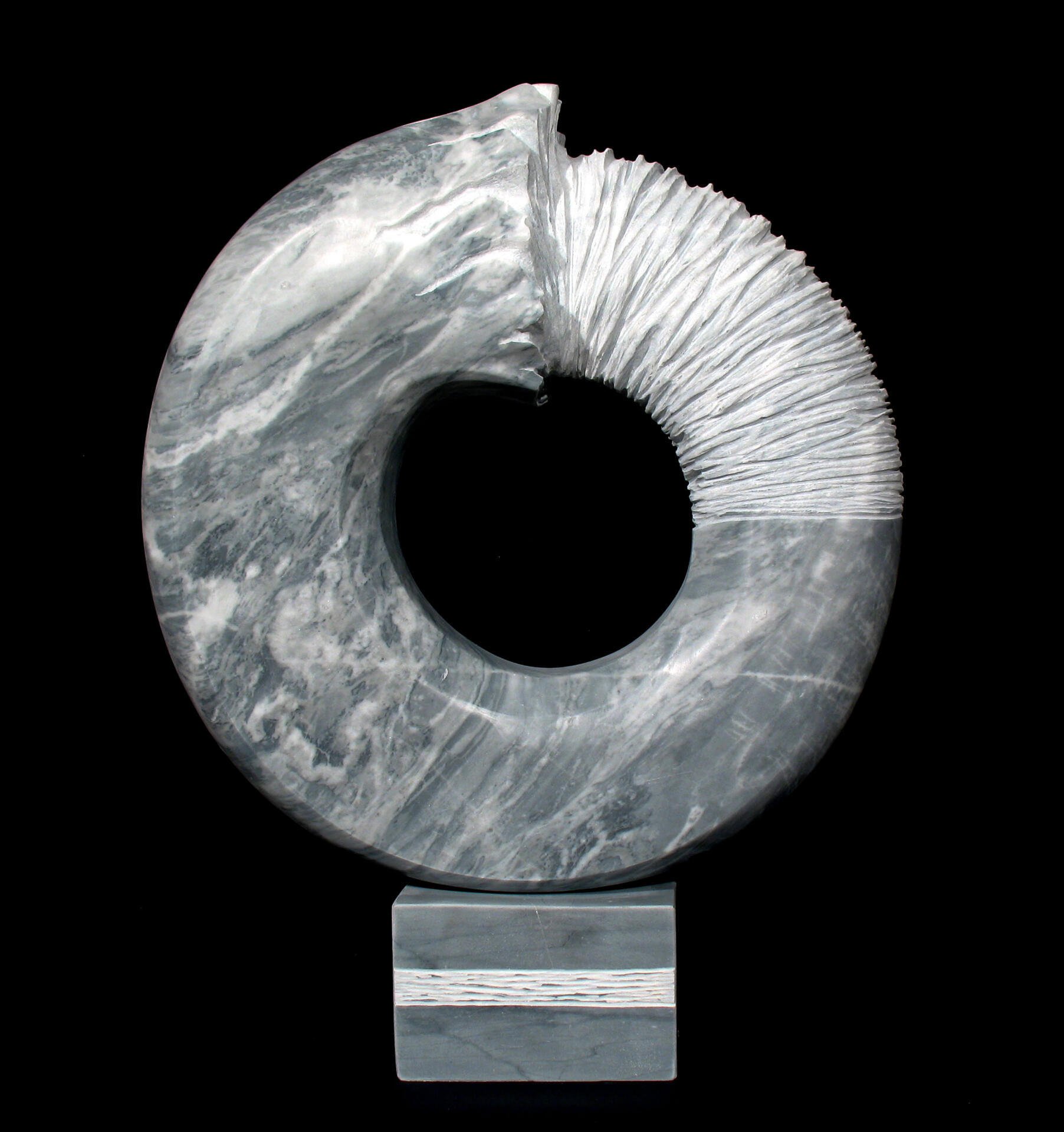
In my works, the coexistence, interaction, or tension of opposing principles in nature manifests itself as a composition of contrasts in form and texture. These forms, which constitute the fundamental principle of form, exist in a dynamic balance. While the massive outer forms define the sculpture’s relationship with its surroundings, the textures and inner forms express the sculpture’s inner state of mind. The relationship between the sculptural, geometric elements and the organic, soft, fluid-textured elements in the sculptures expresses this dialogue while also highlighting the fact that stone, alongside its massive, heavy, and hard appearance and qualities, is also incredibly fragile, soft, and delicate. Consequently, natural stone also contributes to the works through its own inherent qualities.
For me, opposites are not conflicting forces, but forces that bring each other into being. Hard–soft, heavy–light, introverted–extroverted… The delicate balance established between these opposites forms the spirit of the form. In my sculptures, I generally seek a fluid movement and a soft texture within a hard material. The tension between the stone’s rigidity and the form’s fluidity is the fundamental dialogue I establish with the viewer.
What does the contrast between inner and outer forms mean to you? How do you conceptualize the relationship between these two layers?
Internal and external form, in essence, represent the relationship between what is visible and what is felt. The external form invites the viewer, but the true story begins within. Cavities, voids, transitions… For me, these are not merely formal elements but also emotional spaces. In my sculptures, emptiness is just as important as fullness; because meaning is often hidden there.
What does working with natural stone mean to you? How do you assess the expressive possibilities of this material?
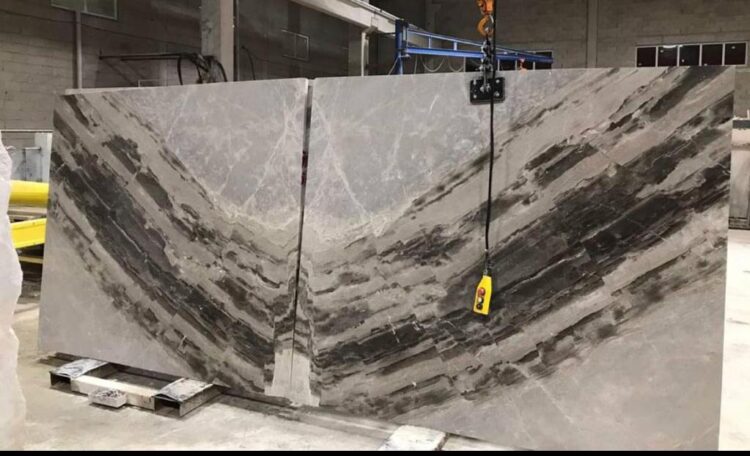
Stone is my indispensable medium; I love its durability, yet despite all this perception of durability, mass, and weight, I also love the sensitivity, fragility, and softness within it. Stone also takes on a role in my works that supports the formal characteristics and the subject matter, giving them their identity. Marble, which carries the Earth’s life story in its folds, texture, and colors, adds its own process to this journey
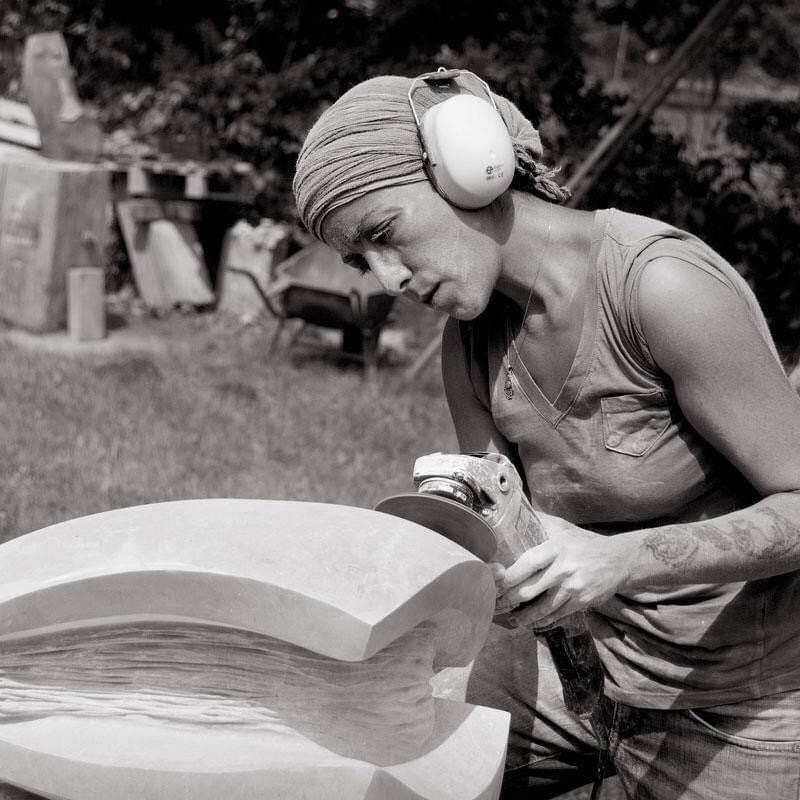
Working with natural stone means working with history and process. You are touching a material formed by the accumulation of millions of years. This is a great responsibility. Stone does not reveal itself to you immediately; it demands patience and respect from you. Instead of pushing its limits, you learn to move in harmony with it. The possibilities for expression emerge precisely through this dialogue.
Which stones do you use most frequently as a material in your work, and why?
Marble is one of the most powerful mediums of expression for me. Especially homogeneous, dense stones like Afyon, Marmara, and Muğla marble. They all offer a wide range of colors and textures. I usually select the color and texture that will best convey and support the expression of my project. Sometimes I also turn to harder stones; because the material’s resistance directly influences the form’s character. Every stone has its own language, and I prefer to proceed by listening to that language.
What are your thoughts on Turkish natural stones? In your opinion, what are their standout features compared to other stones?
Turkey is a very rich region in this regard. The diversity and character of Turkish marbles are quite strong. They are particularly unique in terms of their vein structures and color transitions. This opens up a broad field for the artist, both aesthetically and narratively. Creating with local materials is especially meaningful to me; because you establish a connection with your land and the geography you inhabit, you become one with it.
What are your observations regarding the current state of sculpture art in Turkey?
Sculpture in Turkey has become more visible in recent years, but it’s still difficult to say it has found its rightful place in the public sphere. Young artists are very productive, but support mechanisms are limited. Despite this, there is strong potential. The output is quite rich in terms of materials, techniques, and concepts.
What advice would you give to young artists, and especially those interested in working in sculpture?
First and foremost, patience. Sculpture is not a field where results come quickly. You need to get to know the material and spend time with it. It’s also important to make room for intuition as much as technical knowledge. Instead of copying others’ styles, they need to find their own voice. And most importantly: keep creating. Consistency is the most defining element of this path.
Ebru Akıncı


 +90 532 585 51 95
 +90 532 585 51 95